


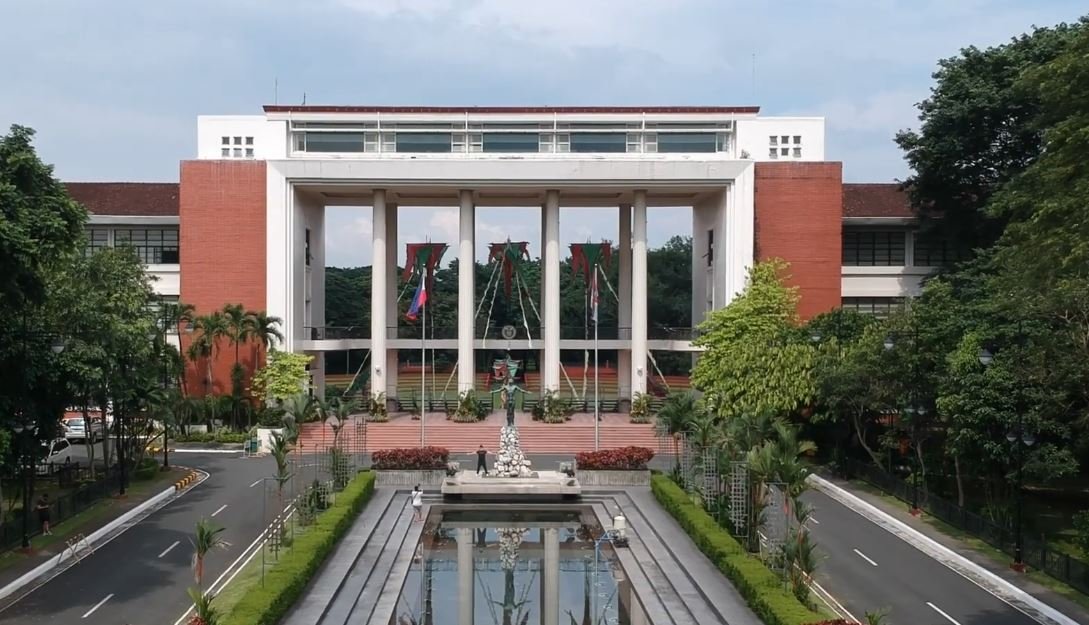
In Quezon City, there is a specific location along Katipunan Avenue where it seems as though the city’s noise just stops. There is a change, but not entirely—Manila never truly becomes quiet. There is a slight shift in the air. Trees encircle the area on all sides. Additionally, if you happen to look past UP Diliman’s university gates, you will see something that is becoming more and more uncommon in this area of Metro Manila: open space, real greenery, and the impression that someone at some point chose not to build over everything.
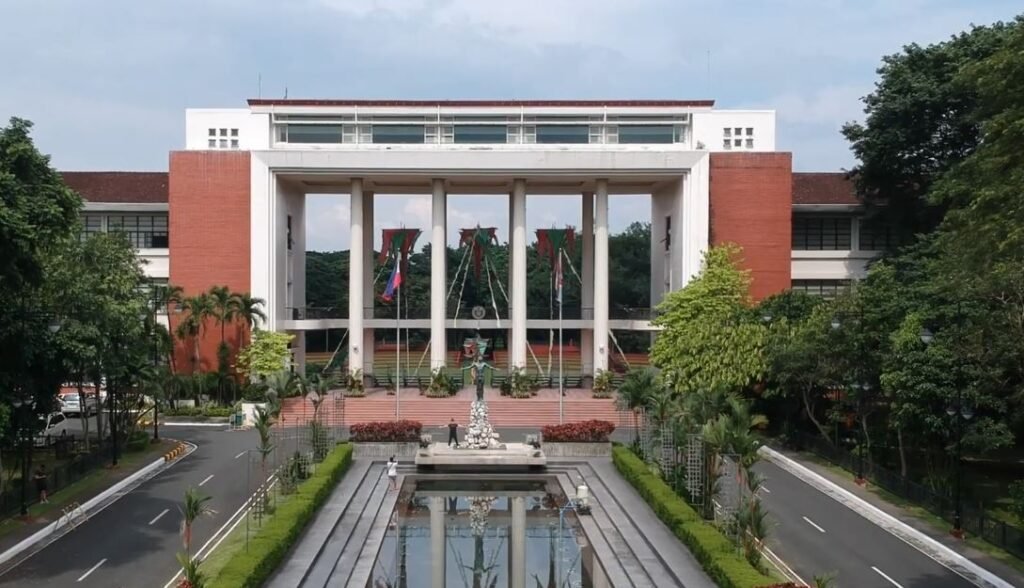
The decision is becoming increasingly difficult every day. The University of the Philippines Diliman has long held a unique place in the urban fabric of Metro Manila. It is one of the few locations in the metro where the land hasn’t been completely turned over to concrete, spanning about 493 hectares in Quezon City. The Sunken Garden, the Lagoon, and the tree-lined section of University Avenue make up nearly half of the campus. In real shade, students stroll between classes. Faculty members eat lunch by the water. It may sound unremarkable, but in comparison to its surroundings, it is truly remarkable.
However, the current initiatives go beyond protecting historic trees and peaceful walkways. UP is in the midst of a more ambitious and contentious endeavor.
The SDG Urban Farm and Wellness Park, the university’s premier sustainability project, is planned to be built on a 24-hectare lot located deep within the Diliman campus. Urban farming, environmental preservation, socialized rental housing, community wellness areas, water and waste management systems, and more are all integrated into a single development that is based on the Sustainable Development Goals of the United Nations. On paper, it appears to be a model for the responsible use of land by a land-rich institution. It has revealed something messier in practice.
Parts of that 24-hectare property have been inhabited by families for many years. Residents created human barricades when fencing equipment arrived and construction notices started to circulate. The images were striking because they revealed the kind of tension that institutional press releases tend to downplay, rather than because they were violent. UP responded cautiously, clarifying that no demolitions were mandated. Instead of displacement, the objective was on-site relocation. The university’s legal ownership of the land has been upheld by courts on numerous occasions. Additionally, the Department of Agrarian Reform and the Supreme Court have declared that the site is not covered by agrarian reform.
However, human reality and legal clarity don’t always coincide. When you attempt to construct something truly new on land that already has a history, it’s possible that some of that conflict is just inevitable.
Walking through the campus’s older areas gives the impression that UP Diliman has always been in some sort of negotiation with the surrounding city. One of the most researched sections of institutional green space in Quezon City is the Katipunan corridor, which passes by UP, Ateneo, and Miriam College. These campuses act almost like ecological buffers, absorbing road noise, cooling the air, and providing what researchers have called restorative environments that lower stress and promote cognitive health, according to landscape architects. In addition to students, the Sunken Garden attracts locals, families on weekends, and early-morning runners.
A smaller version of this instinct was captured by the UP Sanctuary, which opened in late 2023 close to the Faculty Center lagoon. Together, a student organization and a campus office came up with the concept for a small park with trees surrounding it and enough lighting to make visitors feel safe even after dark. Although it was framed around mental health, what it really highlighted was something more general: when the city becomes too much, people turn to the campus environment as a kind of public resource.
Because of this, the current moment is both fascinating and genuinely challenging to read. Expanding green space, constructing affordable housing, accommodating informal communities, and integrating sustainable systems are all goals that UP Diliman is attempting to accomplish simultaneously, and each of those objectives conflicts with the others in ways that are difficult to resolve. It’s still very much unclear if the SDG Park will realize its full potential or if the conflicts within the community and institutions surrounding it will limit what is truly feasible.
The underlying assumption—that a university situated on nearly 500 hectares in the center of Metro Manila has an obligation to carefully consider what that land does—seems more difficult to refute. Not only for those within the gates, but also for the city that is encroaching from all sides. That kind of thinking is more important along Katipunan than it might be elsewhere because development only proceeds in one direction.
