


The majority of Filipinos are unaware of the world found deep within Mindanao, where the Agusan River meanders out into a vast tangle of oxbow lakes, floating communities, and carbon-black peatlands. To get to school, kids paddle canoes. The floodline causes houses to drift. Furthermore, the marsh itself still determines life’s rhythms, such as when to plant, fish, and perform rituals, rather than any official calendar.
This has been the home of the Agusanon Manobo people for a longer period of time than recorded in written history. However, something has begun to change beneath the surface in the last few decades. Plantations that produce palm oil have moved in from the periphery. Once-clear tributaries are now clouded by mining runoff. Peatlands, which are among the planet’s most carbon-dense, have been burned and drained to make way for crops that yield little more than money. The marsh has literally been getting smaller.
In this context, individuals such as Datu Maximo have evolved beyond local leaders. Indigenous datus have a different kind of authority in a situation where there are legal protections on paper but uneven enforcement. This authority is based on ancestral domain rights, community trust, and a long-standing relationship with the land. Press conferences and international forums haven’t been the main source of Maximo’s efforts to protect and revitalize the wetland. It has resulted from the slower, more laborious process of establishing territorial boundaries, organizing communities, and reminding both his own people and external actors that the marsh is not unused land.
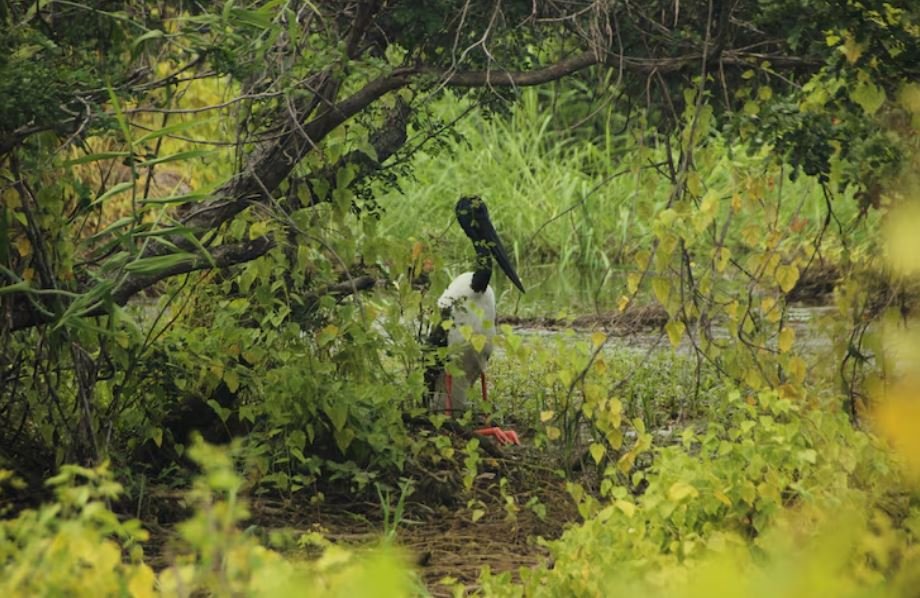
Although its overall ecological footprint is much larger, the core area of the Agusan Marsh Wildlife Sanctuary is approximately 14,836 hectares. It contains the most intact peat swamp forests in the Philippines, filters water for communities downstream, absorbs floodwaters during the rainy season, and serves as habitat for 213 known bird species in addition to dozens of endangered fish, mammals, and reptiles.
An estimated 22.9 million tons of carbon are stored in the Caimpugan Peat Swamp alone, more than any other comparable forest type in the nation. These figures are not abstract. They describe a living system that, if it vanishes, will release carbon, cause river hydrology to become unstable, and deprive communities of the natural buffer that has shielded them from drought and storms for centuries.
Speaking with local conservationists, it seems that the marsh has endured for this long in part because it is hard to access and in part because the Manobo communities who live there have continued to regard it as sacred rather than exploitable. The “original inhabitants,” as some refer to the spirits of the marsh, are still involved in rituals. Animals are blessed by a tribal chieftain prior to sacrifice. As a sign of respect, blood is offered. These aren’t shows for tourists. They are a functioning cosmology that regulates how people interact with their surroundings. This cultural continuity may have contributed more to the preservation of wetlands than any Manila-produced policy document.
However, the threats have persisted. The Agusan Marsh is not exempt from the widespread loss of wetlands over the past three centuries, according to a recent study published in the journal Nature. Pollution from mining operations enters the watershed upstream. The boundaries of the sanctuary are still being pushed by palm oil companies. Additionally, the peatlands, which ought to be stable and wet, have been sufficiently drained in some areas to become fire-prone, transforming what ought to be a carbon sink into a possible source of emissions. The irony of a location that stores millions of tons of carbon being burned to cultivate crops is nearly intolerable.
In its broadest sense, the Agusan Marsh Initiative is an effort to reverse that trend by utilizing the resources at hand, including community monitoring, protected area laws, ancestral domain certificates, and the moral authority of indigenous leadership. Datu Maximo’s involvement in that movement reflects a broader trend throughout Southeast Asia, where indigenous governance structures are increasingly acknowledged as the most resilient basis for conservation rather than as barriers to it.
It is genuinely unclear if this acknowledgment will result in the kind of long-term financial, political, and legal support that the marsh truly requires. Celebrated leaders and overlooked wetlands abound in the history of conservation. The marsh is still present, though. The canoes are still navigating the water. And that’s not a minor issue right now.
