


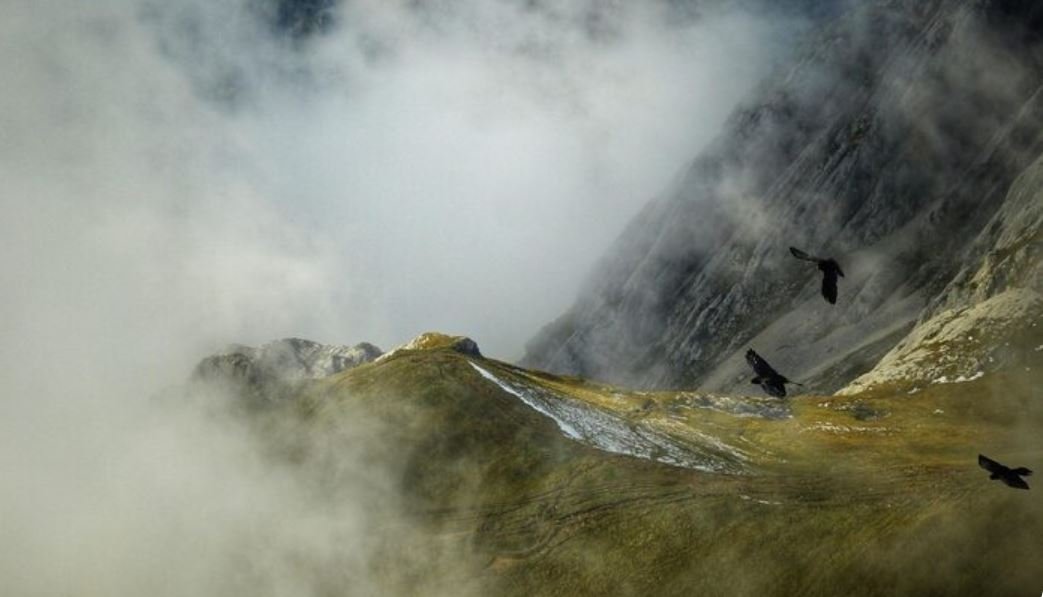
When the wind drops, a certain kind of silence descends upon Scotland’s high plateaus. Open rock, thin soil, and the kind of sky that seems closer than it should—no trees, no cover. A tiny wading bird with a rusty-orange chest would spend its summers incubating eggs on the stony ground somewhere up there, or at least once. It’s possible that the dotterel won’t be returning to much of that area for very long.
What conservationists had long feared is confirmed by new survey results published by the RSPB in 2025. Since monitoring started in 1988, the number of breeding dotterels in the UK has decreased by 89%. It’s difficult to comprehend that figure. Over the course of a human lifetime, nearly nine out of ten birds have perished. Additionally, since the last national count in 2011, when numbers were already concerning enough to place the species on the UK’s Red List of Birds of Conservation Concern, the rate of decline has actually accelerated.
The location of these birds’ homes, or places they must live, is what makes the dotterel tale so remarkable. They do not breed in coastal marshes, hedgerows, or suburban parks. Mountaintops, particularly the rocky plateaus and sparse alpine vegetation of locations like the Grampian Mountains in Scotland’s northeastern Highlands, are where they breed. For thousands of years, this preference worked perfectly for them, but it is now somewhat of a trap. Dotterels and other species are driven to ever-higher elevations in search of the conditions they require as temperatures rise and montane habitats change. There is eventually just no more mountain.
In short, the birds are vanishing in real time, right in front of researchers’ eyes, according to Dr. Leah Kelly, an RSPB conservation scientist who worked on the survey. Only 22 of the 217 locations surveyed nationwide had breeding males. In England, Wales, and southern Scotland, no breeding dotterels were found. Only 33 males were found in all surveyed areas, which translates to an estimated 112 breeding males in the UK. To be honest, this number feels less like a conservation statistic and more like a final warning.
The fact that decline rates inside designated Special Protection Areas were almost the same as those outside of them is one of the findings’ more disturbing details. No protection was provided by protected status. This consistency suggests that the threats are more widespread and more difficult to contain than localized ones, such as disturbance, poaching, and changes in land use that are unique to a particular valley or hillside. Whether or not a line has been drawn on a map, every mountain range seems to be experiencing climate change at the same time.
Additionally, the image isn’t totally straightforward. Because dotterels prefer low-growing alpine vegetation, overgrazing has exacerbated the damage. Cranefly larvae, their favorite food, appear to have decreased at UK mountain sites as well, perhaps due to changing environmental conditions. This type of compounding pressure has no single solution. Climate change and biodiversity loss are two crises that are colliding at the same time, according to Dr. Nicola Largey of NatureScot.
Conservationists can still make a difference, at least on the periphery. Improved grazing management, less disturbance from dogs and hillwalkers, and maintaining the remaining habitat in a suitable state could help the remaining birds survive a little longer. To put it mildly, it’s unclear if that will be sufficient to stop an 89% decline that was primarily caused by rising temperatures.
The dotterel’s signals may be more important than the bird itself in this scenario. A particular kind of threshold would be reached if this species were to become the first in the UK to be forced out of its breeding range due to climate change, going extinct locally even if populations in other parts of northern Europe continue to exist. No longer a forecast. A recorded incident. The kind that eventually attracts others to follow.
