


Between 50,000 and several million birds are silently flying over Chicago or Philadelphia on a clear autumn night. The majority of people never raise their heads. The majority of cities never shut down. Thus, completely derailed, the birds—warblers, thrushes, and sparrows, sometimes traveling thousands of miles on instinct—descend into a jumble of glowing towers, lit lobbies, and flood-soaked parking lots.
It’s difficult to ignore how straightforward the requests made by scientists and wildlife advocates are. not a brand-new law. Not a habitat fund worth billions of dollars. During the weeks when birds are actually moving, simply turn down the lights later in the evening.
Approximately 80% of bird species in North America migrate, and the vast majority do so at night. This isn’t a coincidence. Because the air is colder, there are fewer predators, and the stars provided a dependable navigational grid for millions of years, night travel evolved. Deforestation and climate change are not the only factors upsetting that grid. From 30,000 feet above every mid-sized city on the continent, there is an ambient orange glow that draws birds toward it like an invisible current.
It’s worth taking a moment to consider the numbers involved in this. In the US, building collisions are thought to claim the lives of one billion birds annually. Mostly office parks, glass bus shelters, and low-rise buildings, not just skyscrapers. Many of those birds weren’t even attempting to land. They were pulled in the direction of the light, circled in fatigue, and then struck glass that didn’t seem solid to them. Approximately 400 million birds can travel across the continental United States in a single night during peak spring migration. It is truly hard to comprehend the magnitude of the loss.
This conservation problem is unique in that it appears to be tractable. Perhaps the most well-known illustration of the idea in action is the 9/11 Tribute in Light in New York City. Every year during migration season, thousands of birds were drawn into tight, confused spirals by the two enormous beams. The clouds of circling birds dispersed, sometimes in a matter of minutes, when organizers started turning off the lights for 20-minute intervals throughout the night. That isn’t a metaphor. It was almost instantaneous.
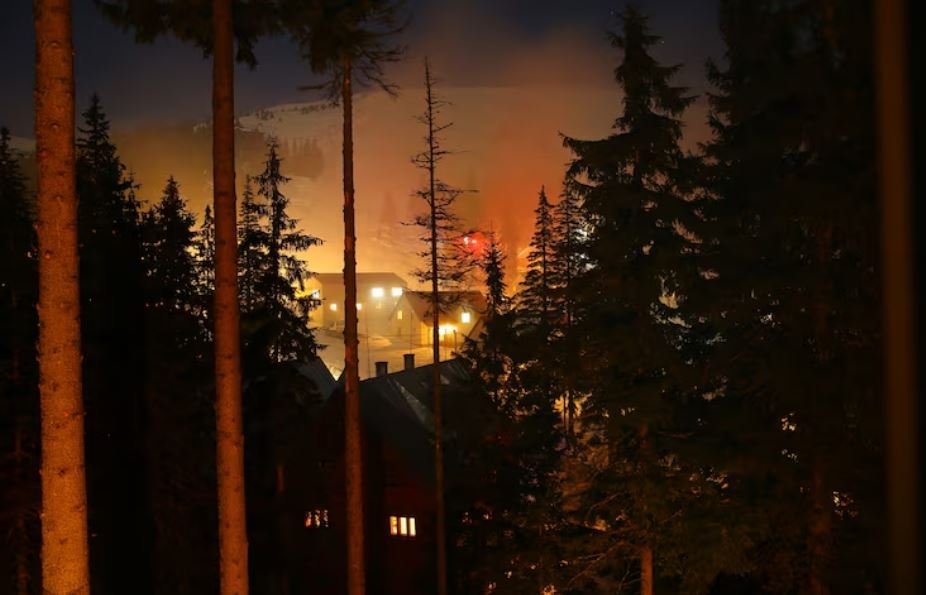
During peak migration windows, which are usually April 15 through May 31 in the spring and mid-August through mid-November in the fall, cities like Philadelphia, New York, and Chicago have implemented official Lights Out programs that instruct commercial buildings to turn off non-essential lighting. In 2025, the Department of Environmental Conservation in New York State expanded the model to state-owned buildings, directing agencies to go dark from 11 p.m. to dawn. These are not broad directives. They resemble coordinated nudges, and preliminary data indicates that they are effective.
Not always included in the conservation coverage, there is another noteworthy secondary effect. Artificial lighting at night disturbs more than just birds. Moths, which are essential pollinators for many flowering plants, spiral toward light fixtures rather than flowers that bloom at night. The ambient glow causes fireflies to lose their mating signals. Cities routinely override the ways that the entire nocturnal food web, from insects upward, is calibrated to darkness. There are other reasons to dim municipal lights besides birds. It concerns the effects of darkness on an ecosystem that has developed within it.
The practical request for people is genuinely modest. During the migration season, draw blinds after 10 p.m. Install downward-shielded floodlights in place of upward-facing ones. Use warmer, dimmer bulbs instead of steady-burning white or red ones, which are particularly attractive to birds. Make use of motion sensors. If you are not using any lights, turn them off. In any meaningful way, none of this calls for sacrifice.
Whether enough municipalities will give this the priority it most likely deserves is still up for debate. Even though the effects of urban light pollution build up in ways that are equally consequential over time, they rarely generate the urgency of a pipeline dispute or a logging controversy. Cities that are situated directly beneath migratory flyways appear to have a unique opportunity to restore something without having to build anything, spend a lot of money, or wait for others to relocate. Simply switch it off. Let the stars take care of the rest.
