


The way Anna Balcells tackles a problem has a subtle determination to it. She doesn’t use abstract language when discussing forests or use the rhetoric of large-scale environmental movements to describe her work. She discusses particular trees, birds, and areas of land on Leyte that the majority of people have already written off. Her Leyte Restoration Project is worth closely examining because of this focus.
The project is based on the idea that secondary-growth forests—the tenacious, regrown vegetation that takes hold after agricultural land is abandoned—can accomplish significant conservation work. Ten years ago, this idea would have seemed too modest to serious conservationists. Not the best job. not as effective as an old-growth canopy. But enough to help Leyte’s sunbird populations, which have been gradually losing habitat due to the Eastern Visayas’ declining forest cover.
This strategy might not have gained much traction if recent studies hadn’t changed ecologists’ perspectives on regrowth. According to a 2025 study conducted in Ecuador’s Chocó Forest, regenerating forests exhibit remarkable species diversity even in small-scale agricultural mosaics, and bird communities recover in observable, quantifiable ways along second-growth gradients. Recovering patches had significantly greater functional diversity, especially when remnant trees were left standing. Balcells has repeatedly cited this type of evidence to justify her decision to act without waiting for old growth to reappear.
Leyte poses a unique set of difficulties. Over many generations, farming and timber production have broken up the island’s forests, leaving behind a patchwork of scrubland, secondary regrowth, and tiny remnants. Sunbirds are sensitive to landscape connectivity and rely on flowering vegetation for nectar, so fragmentation is more than just an annoyance.
It interferes with the movement patterns necessary for healthy populations. Forest fragments surrounded by terrestrial matrices, even modified ones, support significantly more bird species than isolated forest islands, according to a 2026 study published in the Proceedings of the National Academy of Sciences. Crucially, local bird extinctions can be decreased by vegetation within 300 meters of a forest fragment. What “restoration” actually needs to look like in practice is altered by such findings.
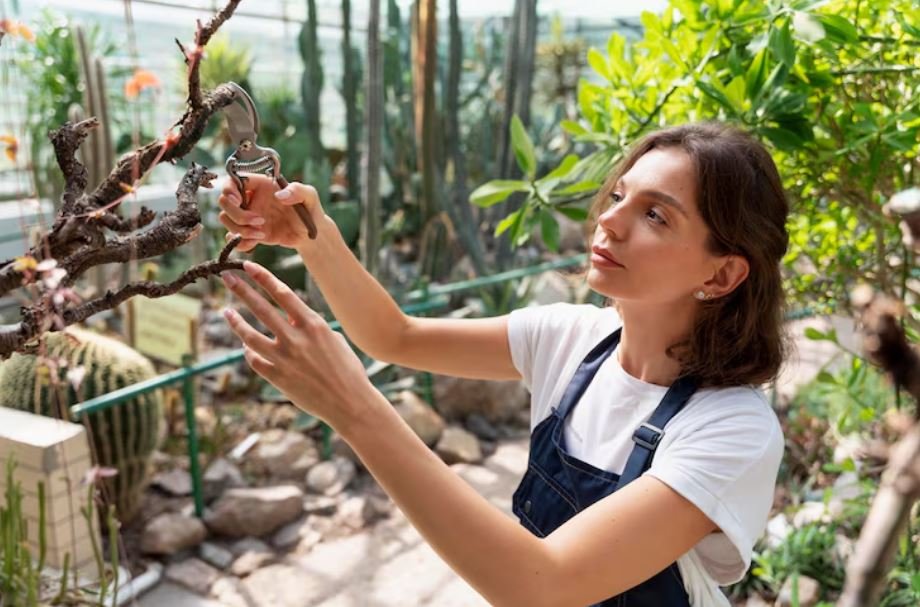
Balcells appears to have incorporated that reasoning into the framework of her Leyte research. Her project maps what is already present in the regrowth and attempts to connect those patches through corridor planting and community-level land management agreements, rather than concentrating only on what has been lost. A stand of young secondary forest on an abandoned coconut plot or a strip of riparian trees along a drainage channel may be more important to a sunbird than any policy paper would imply. She seems to have a deeper understanding of the reality on the ground than those who rely solely on satellite data.
Timelines are the area where skepticism is worth clinging to. The structural complexity that specialized species actually rely on takes decades to develop in secondary forests. Even mature plantations cannot match the layered canopy structure and thermal buffering that old-growth forests offer, according to research from Oregon State. Balcells does not assert that her restored patches will operate similarly to primary forests. Whether sunbird populations on Leyte will stabilize before the habitat deficit becomes irreversible is still up in the air.
Secondary growth buys time, which is what she is arguing and what the new science seems to support. It’s not a flawless solution, but it’s a genuine one based on what the landscape has to offer rather than what it no longer has. That kind of pragmatism might prove to be the most honest approach to conservation in a place like Leyte.
