


Every spring, a tiny bird weighing less than a handful of coins sets out on the final arduous leg of a journey that began in Central America somewhere over the Pacific flyway. In April and May, dozens of species, including Wilson’s warbler, yellow warbler, and orange-crowned warbler, migrate north through California in search of two things above all else: insects and cover. More and more, what they discover in Silicon Valley is neither.
The air on the campuses is sufficiently green. That much is clear. Wide lawns, perfectly trimmed ornamental hedges, and sporadic groves of non-native trees planted for shade and aesthetics can all be seen when driving through Cupertino, Santa Clara, or Mountain View. It appears to be a habitat. It works similarly to a grassy parking lot.
It’s not just that tech companies don’t give a damn about birds. Some actually do. Google’s Mountain View campus has worked hard to restore some of its grounds with wetland features and native plants. Around 2014, a few Silicon Valley businesses started implementing bird-friendly glass standards in response to growing evidence that birds were being killed at a startling rate by reflective and transparent windows. Because migratory birds couldn’t tell the difference between glass and open air, they would fly straight into buildings and perish. Those were significant actions. However, they mostly ignored a more subtle issue while addressing the most obvious one.
It’s not enough for migrating warblers to stay away from glass. They must eat. It is difficult to overestimate the amount of energy that a warbler uses to travel hundreds of miles in a few days. When it lands, it requires the dense, high-protein insect life found in and around native trees and shrubs, such as caterpillars, aphids, and tiny beetles.
Even a spotless row of crape myrtles and a lawn of Bermuda grass provide very little. Only a small portion of the insect diversity found in native oaks, willows, or elderberries is supported by ornamental plantings. The deeper irony is that, rather than being intended for animals attempting to survive a transcontinental migration, the entire aesthetic of the Silicon Valley corporate campus—that tidy, pleasant, parklike appearance that has defined the region’s identity since the Stanford Industrial Park was developed in the 1950s—was created for humans looking at it through conference room windows.
It appears that the landscape designers and architects who created these campuses didn’t give the land much thought. They were contemplating an image. According to environmental historian Jason Heppler, Silicon Valley was founded on the concept of “clean industry”—a clear rejection of the soil contamination and smokestacks of earlier industrial areas. That branding included lush, well-kept greenery. In reality, it was never an ecological choice.
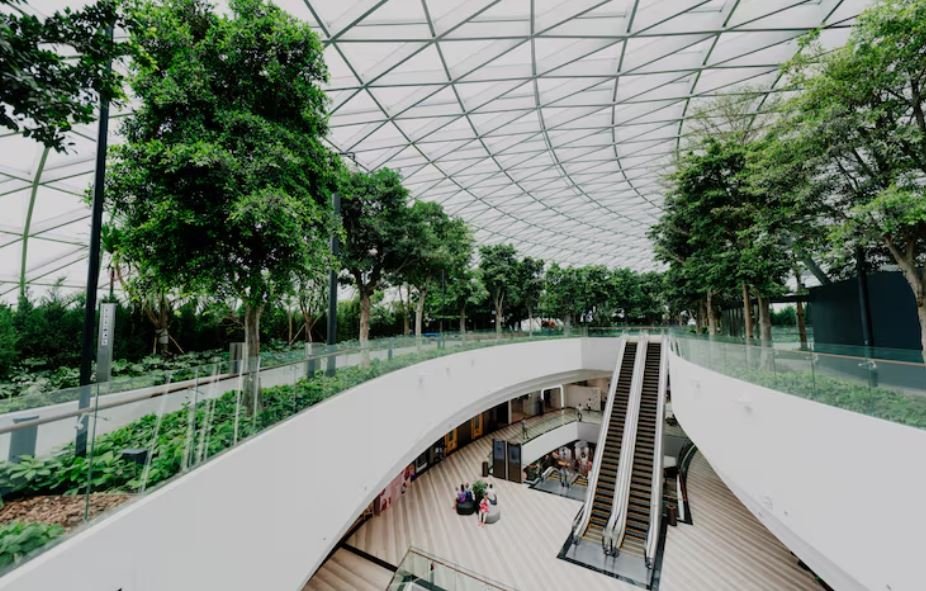
What migrating birds truly require from cities has been revealed by research. The number of migrating species a city can support is directly correlated with the amount of tree canopy cover, especially native trees, according to studies using eBird data from hundreds of American cities. During stopovers, warblers in particular typically forage in the middle and upper canopy of deciduous trees. Hundreds of insect species can live on a single mature oak. It cannot be a parking lot surrounded by decorative pears. This is what bird migration researchers have been saying for years. Cities can serve as true stopover habitats, but only if their vegetation serves an ecological purpose rather than an aesthetic one.
This is frustrating because the opportunity is clear. Large tracts of land are under the control of Silicon Valley corporations. The campuses are sizable, the landscaping budgets are substantial, and in certain instances—Google’s Googleplex being the most obvious example—there is already expressed interest in habitat value. It is not necessary to give up the aesthetic appeal that Silicon Valley’s corporate culture obviously values in order to replace portions of turf grass with native plantings. It necessitates something more akin to a change in priorities: acknowledging that a slightly less homogeneous lawn, with native grasses that seed irregularly and shrubs that draw insects, is actually accomplishing something that the more orderly version could never.
This is becoming more, not less, urgent due to climate change. There is an increasing discrepancy between when birds arrive and when food is available, according to research on cerulean warblers in Indiana, where migration timing is drifting slightly earlier while insect peaks are shifting more dramatically. Breeding success is already being impacted by that disparity. Nowadays, stopover locations that can genuinely supply food are more important than they were twenty years ago. One of the most significant migratory routes in North America passes through Silicon Valley. Thousands of acres make up its campuses. In any case, the birds will land there. When they do, is there anything in store for them?
