


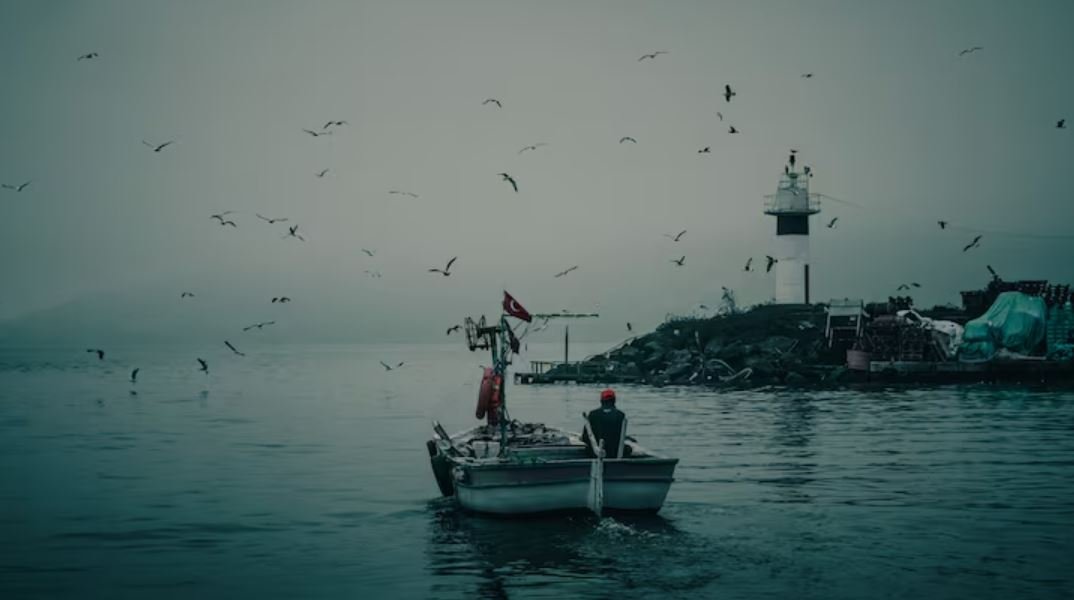
The Sulu Sea is difficult to describe for some reason. It is located in the middle of one of the world’s most biologically rich and politically complex bodies of water, sandwiched between the Indonesian archipelago to the south, Malaysia’s Sabah coastline to the west, and the Philippines to the north. Its surface may appear surprisingly serene. However, a different reality has been developing for decades beneath the naval press releases and policy reports.
The Sulu Sea poses a unique kind of trap for pelagic migrants, those who travel across open water in pursuit of employment, safety, or just survival. It is a confluence of multiple threats that are stacked on top of one another and feed off one another. This route has become much more dangerous than most people outside the area realize due to piracy, human trafficking, porous borders, and the silent neglect of coastal communities.
Although Philippine military campaigns have significantly weakened the Abu Sayyaf Group since its peak, it still operates in isolated areas of the sea. Although large-scale kidnapping operations have decreased, there are still occasional reports of suspicious vessels in the region, and the threat has never completely disappeared. That uncertainty is not abstract to someone traversing these waters on a small fishing boat or unofficial vessel, as many labor migrants do. It influences choices, paths, and those who are compensated to turn a blind eye.
The economic reality that underpins this entire system is rarely mentioned in the security briefings. In their respective nations, coastal communities near the Sulu and Celebes Seas are typically among the most economically isolated. Hundreds of thousands of Filipino migrants in Sabah are denied access to formal jobs, healthcare, education, and any kind of legal standing.
Exclusion like that doesn’t remain passive. As workers, couriers, and passengers who don’t ask questions because they have no other options, it creates a population that criminal networks have found remarkably easy to exploit.
The story of Mindanao is comparable. The Autonomous Region of Muslim Mindanao’s per capita income is significantly lower than the national average, and there is still limited access to public services. There is a perception that the area has long been neglected in national planning, acknowledged in times of crisis but ignored in financial plans. There is more to the disparity between Manila and the southern islands than just economic data. People are drawn to informal economies and crossings, including over a sea where regulations are, at best, laxly enforced, by this type of slow grievance.
Real coordination has resulted from the Philippines, Malaysia, and Indonesia’s Trilateral Cooperative Arrangement, including increased coast guard presence, intelligence sharing, and cooperative patrols. Ignoring these efforts would be unjust. However, enforcement capability only tackles a portion of the real issue. A patrol boat crossing a smuggling route more frequently does not make it vanish. It moves, adjusts, and locates new carriers, typically those who have run out of options.
Vulnerable people are still being trafficked through the Sulu corridor, with boats that don’t show up in any manifest transporting them across three national borders. The international community, including the US, Japan, and regional allies, has intervened with equipment and training while Philippine authorities have seized illegal drugs and started awareness campaigns. However, it is difficult to ignore the fact that the majority of the energy is directed toward detection and interception rather than the circumstances that initially make these crossings seem necessary.
Additionally, there is the potential loss to the sea itself. One of the world’s most biodiverse marine habitats is the Sulu Sea. The ecosystems that coastal communities rely on have been harmed by uncontrolled fishing, conflict spillover, and the general chaos that results from ongoing insecurity. People migrate—often across the same water they once fished—when fish stocks decline and legal livelihoods become scarce. Human displacement and environmental damage are related issues.
Sharper enforcement is important, but it may not be what the Sulu Sea most needs. Sustained investment in the communities along its shores—the kind that creates schools, stable incomes, and the fundamental sense that the state is present and accountable—might be something slower and more difficult to capture on camera. There aren’t many headlines about that work. However, it’s likely the only factor that alters the fundamental computation for those who are presently stranded in these waters and are not visible to those who aren’t searching for them.
