


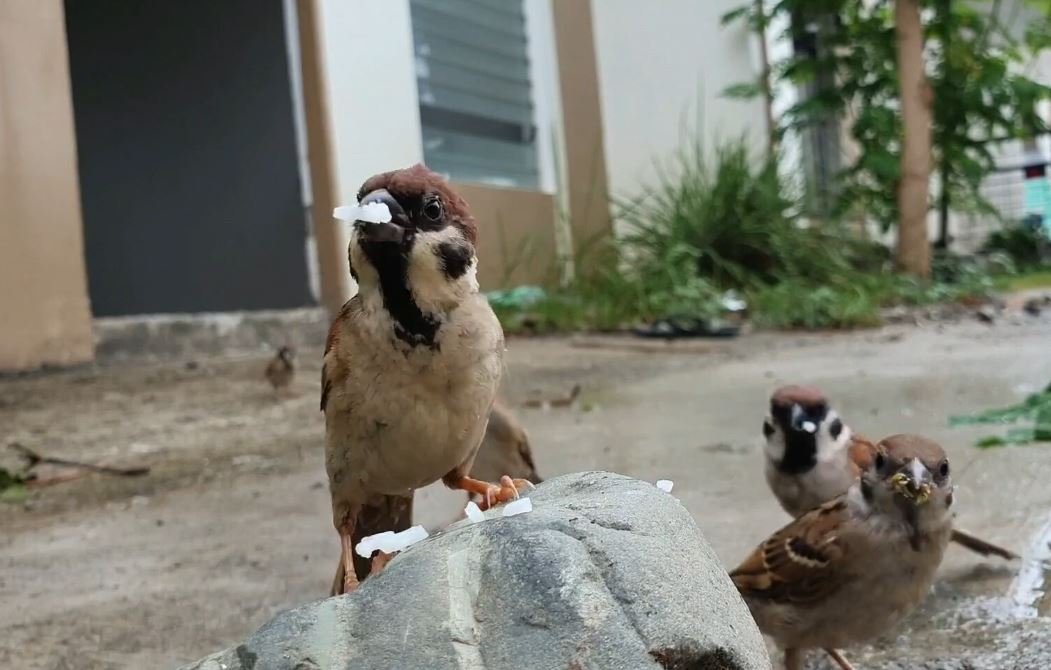
You’ll likely see one if you stroll through practically any Metro Manila neighborhood, whether it’s across a jeepney terminal, past a sari-sari store, or along a concrete school wall. Pecking at rice grains close to someone’s feet, small and swift. For generations, Filipinos have referred to it as maya. However, it’s likely that most people have never given the bird’s true identity any thought.
It turns out that the solution is a little convoluted. The Eurasian tree sparrow, scientifically known as Passer montanus, is what the majority of Filipinos refer to as maya, or more formally, mayang simbahan. It is not indigenous to the Philippines. It was presented. And depending on your point of view, that introduction can be either the origin story of a bird that subtly became a part of Filipino daily life or a footnote in colonial history.
The Eurasian tree sparrow is a small bird that weighs just 24 grams and is about 12 to 14 centimeters long. The first thing you notice is the chestnut crown, a warm reddish-brown cap with a characteristic black patch on top of white cheeks. Unusually for sparrows, both males and females have the same plumage, which makes it simple to identify the species once you know what to look for. They move in loose groups close to the acacia trees on the grounds of UP Diliman in Quezon City, stopping on concrete walkways before dispersing when a shoe scrapes too close.
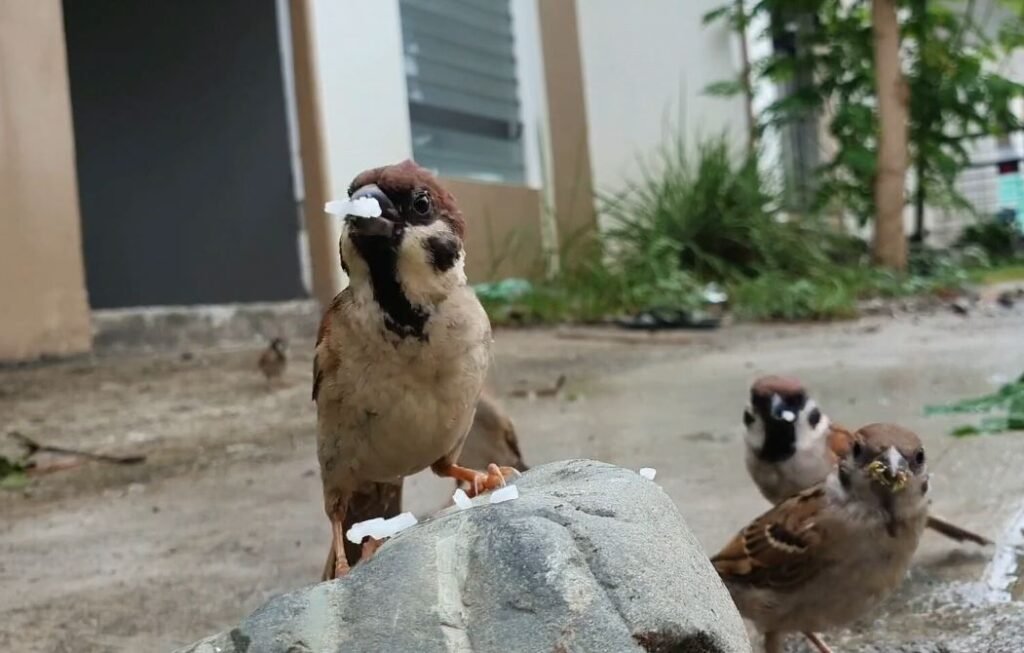
The bird has an amazing range. Passer montanus is found throughout most of Southeast Asia and temperate Eurasia. Among other places, it was successfully introduced to Micronesia, the Philippines, and eastern Indonesia. In Europe, it prefers open farmland or the edges of wooded countryside over crowded cities. However, it flourishes in urban settings in eastern Asia, which includes the Philippines. One of those little paradoxes of animal distribution is that the behavior of the same species varies greatly depending on its final location.
In this tale, there is another sparrow that is less noticeable but perhaps more intriguing in terms of conservation. Originally from the Indonesian islands of Java, Bali, and Madura, the Java sparrow, also called the Java finch, has spread to the Philippines. With its large pinkish beak and light gray plumage, this bird has an eye-catching appearance that makes it popular in the pet trade. The Java sparrow is now considered endangered in its natural habitat due to its widespread use, habitat loss, and competition from tree sparrows.
Despite its difficulties at home, this globally endangered bird managed to spread. As early as February 1946, specimens were recorded in Manila. Today, sightings are reported from major islands throughout the nation, with the exception of Palawan and Mindoro.
In reality, the Maya name encompasses both historical blur and folk taxonomy. Throughout Philippine history, the term has been used indiscriminately to refer to a number of small passerine birds, not a single species but rather a group of small, frequently observed birds that most people didn’t feel the need to distinguish from one another. In everyday life, that makes sense. If you’re attempting to monitor population shifts or conservation requirements, it’s less helpful.
Globally, there is no immediate threat to the tree sparrow itself. It has a large number and a broad range. However, population declines in Western Europe, which are associated with increased herbicide use and the disappearance of winter stubble fields, indicate that even common birds may quietly lose ground when agricultural practices change. The species is considered a pest in some regions of Australia and eastern Asia. It is primarily regarded as furniture in the Philippines. It has simply always existed.
In that ordinaryness, there’s something worth stopping for. A bird that was brought to the Philippines—probably via trade routes and human migration long before records of such things were kept—became so ingrained in daily life that it gained a folk name and a place in Filipino childhood. It’s still there, lingering around school canteens and rice grains, technically a foreigner according to science but a local by all other standards that count on a Monday morning.
