


In the summer, a certain silence descends upon the English countryside that seems out of place. Not tranquil—incorrect. In July, the scratchy, looping song of a skylark soaring overhead should be heard in a lowland meadow in Hampshire or Wiltshire. Its characteristic calls should cut through the afternoon as its lapwings tilt in the wind over rough grassland. It has neither more and more.
For decades, the numbers underlying that silence have been accumulating, and they are not getting better. Since the 1970s, England’s farmland bird indicator, a composite measure that tracks dozens of species throughout agricultural land, has been declining, indicating a roughly 60% decrease in farmland bird abundance since that baseline. The indicator saw its biggest five-year decline on record between 2019 and 2024 alone, falling 13%, according to a report released by the RSPB last year. It’s not a gradual erosion. It’s an acceleration.
At the center of this is Southern England. The region used to have some of the richest bird habitats in the nation due to its heavily farmed landscapes, which included managed grasslands, arable lowlands, and rolling chalk downs. Common sightings included species like the turtle dove, corn bunting, grey partridge, and yellowhammer. Since the 1970s, the number of grey partridges in the UK has decreased by about 90%. In most of its former range, the turtle dove is no longer functional. These are not rare species. They were a part of the everyday fabric of rural existence.
It’s important to be open about what motivated the majority of this. The conditions these birds required to survive were taken away by agricultural intensification during the second half of the 20th century, including the move toward larger fields, the elimination of hedgerows, the increased use of insecticides and herbicides, and the switch to autumn-sown cereals.
Particularly, grassland birds require rough, insect-rich, and structurally diverse habitat. Farming’s ability to sustain wildlife declined as it became more effective at producing food. It turned out that there was actual tension between the two things.
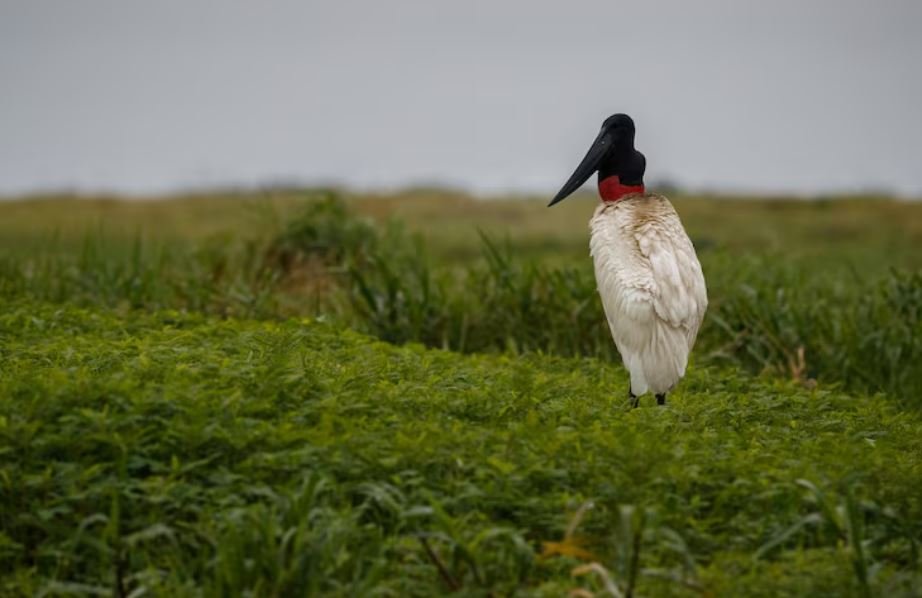
What was already a stressed system is under additional strain due to climate change. An increasing amount of data indicates that warmer springs are interfering with the timing of insect emergence, which is the food source that many grassland birds use to feed their young. When food demand is at its highest, birds that are unable to quickly modify their breeding schedule will find less food than they require. Even for lowland species that aren’t typically thought to be climate-vulnerable, this mismatch may become one of the more important causes of decline in the upcoming decades.
The situation of the dotterel, a mountain-breeding wader, provides a clear example of where climate pressure can go. According to the 2025 national survey, there are only 33 males in the entire UK, an 89% decrease since 1988. In essence, the bird is running out of viable altitude. In the south, grassland birds are caught in a different version of the same trap: they are squeezed between intensive agriculture and climate change, running out of suitable habitat at ground level, and have nowhere to migrate.
Cautious hope has some foundation. When implemented effectively, agri-environment programs—government initiatives that compensate farmers for managing their land in ways that promote wildlife—have demonstrated tangible outcomes. The bittern and white-tailed eagle are two examples of species that have recovered from near extinction thanks to targeted conservation efforts. There is knowledge of what functions, at least in theory. Scale is the problem. Conservation initiatives that focus on a small number of estates or nature reserves have not yet been implemented widely enough to buck national trends.
It’s difficult to avoid experiencing something akin to grief when strolling through a well-kept lowland meadow where conservation efforts have been carried out—hearing yellowhammers in the hedgerow, seeing a hare cross an uncut field margin, etc. And how much more rare it could become if the rate of decline in grassland birds in Southern England is allowed to continue unchecked for the next ten years.
