


A heron has an air of leisure. Most people pass it as it stands motionless at the edge of a creek or fishpond with its neck folded in. Most Filipinos in the Philippines are familiar with the name of that bird: tagak. However, what is the Philippine heron exactly, and why does it so gently confuse both curious locals and birdwatchers?
The short answer is that the term “Philippine heron” refers more broadly to the members of the heron family that live in the archipelago than to a single species. At least 21 species of the family Ardeidae have been identified throughout the Philippines, according to birding records and ornithological surveys. This is a surprisingly high number for a nation where wetlands are constantly under stress from development and land conversion.
The most prevalent herons in the Philippines are the Nankeen Night Heron, which has a subspecies called Nycticorax caledonicus manillensis that is unique to the Philippine region, the Black-crowned Night Heron, and the Striated Heron, which is locally referred to as bakaw or bakaw itim. The Manila Zoo is home to a small colony of the Nankeen Night Heron, also known as the Rufous Night Heron due to its warm brown plumage. This colony may be the only one still in Metro Manila. That particular detail has a hint of melancholy.
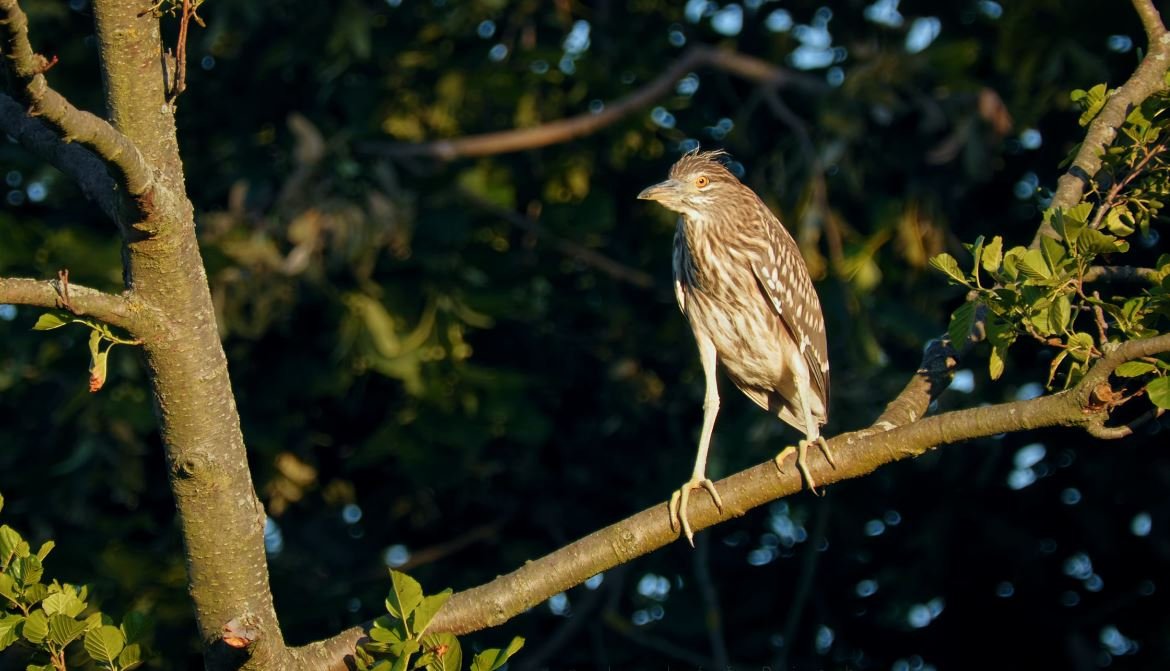
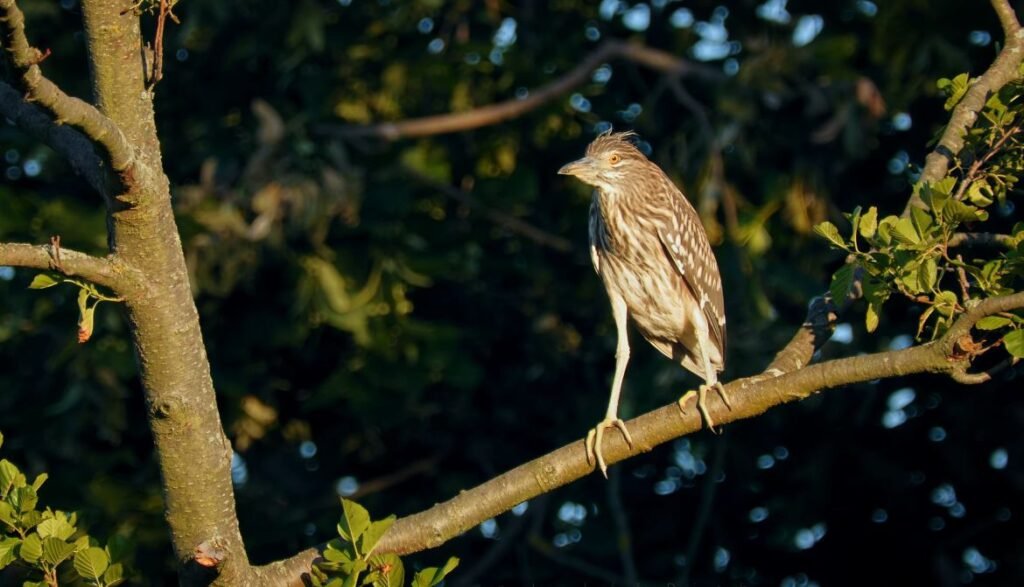
The juvenile night heron is the bird that frequently causes confusion, especially on social media. Young Nankeen and Black-crowned Night Herons resemble their parents in almost every way; they are pale and streaked brown, have spots on their wings, and have a hunched posture that gives them the appearance of being hurt or lost. Online reports of enigmatic birds discovered in Philippine city gardens, parking lots, and schoolyards are common, and the answer is nearly always the same: juvenile night heron. They’re not gone. They’re not ill. Despite their youth, they are remarkably adept at remaining motionless in public.
Perhaps the most common of the group is the Striated Heron, also known as the Little Heron. It appears in a remarkable variety of habitats, including riverbanks, fishponds, mangrove edges, and even urban parks. It is small and compact, with an overall grey-brown coloring and a propensity for solitary behavior. It can be seen in photos taken by eBird contributors at the Las Piñas-Parañaque Wetland Park, SM by the Bay in Pasay, Olango Island in Cebu, and Balinsayao Twin Lakes in Negros. This geographic range, from rural Visayas to the outskirts of the capital, indicates that the bird is doing fairly well in a fragmented environment.
The efficiency with which these birds hunt is what makes them worth observing. In the purest sense, herons are ambush predators. The Black-crowned Night Heron, a nominate subspecies that ranges from Eurasia to Southeast Asia and reaches the Philippines, will stand still at the edge of a body of water for long stretches of time, only extending its neck when absolutely necessary. Some heron species have been shown by researchers to use bait to entice fish by dropping objects into the water within striking range. This puts them in rare company among birds that use something that resembles a tool. When you’re staring at what appears to be a grey lump on a pier, it’s simple to ignore that complexity.
The Manila Zoo’s colony of Rufous Night Herons serves as a reminder of something more general. Wetland remnants and urban green spaces are more than just nice features. In cities that have grown significantly over the past few decades, they represent the last viable habitat for many bird species. The herons’ adaptability and lack of fussiness contribute to their survival. However, adaptability is limited, and reclamation and informal settlement continue to put pressure on wetlands in the Philippines.
As of right now, the tagak can still be seen at dusk on fishponds, on the banks of creeks in small towns, and sometimes in schoolyards, where it briefly frightens students who have never seen one up close. The attention doesn’t seem to bother it. After all, there are more crucial things to be aware of.
