


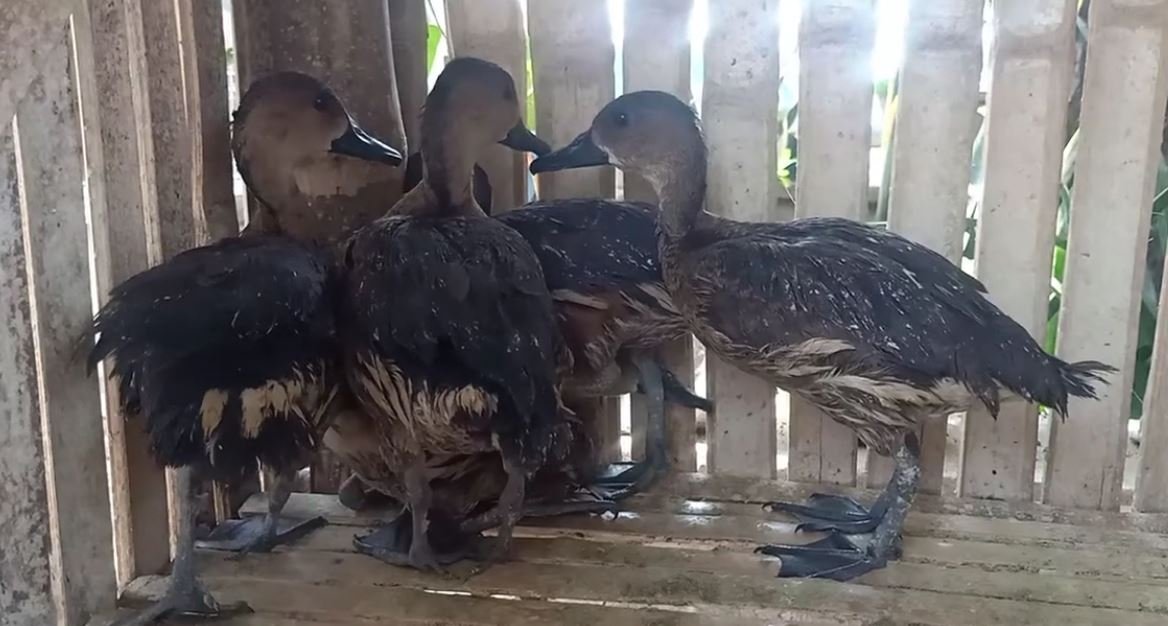
Wild ducks are proliferating in a lake in Leyte that is sulfur-rich, sour to the taste, and near enough to the highway for passing cars to occasionally see them with the unaided eye. Not in enormous quantities, and not without years of diligent labor, but still growing. That is significant in a nation where wetland after wetland has silently vanished over the previous fifty years.
The Philippine Duck, also referred to locally as the gamaw or, in older Tagalog, the patong gubat, or forest duck, is the bird at the heart of this tale. The fact that it is the only endemic duck species in the Philippines may seem remarkable, but you would be surprised to hear how close the species was to going extinct. The gamaw is a big, noticeable bird. Its head is cinnamon-orange, its body is greyish brown with a flash of bright green when its wings open, and its dark crown is striped down into an eye line. It’s not subtle. However, it was vanishing for decades with little public awareness.
Its population has been estimated in a variety of ways, and not always with confidence. The number of mature individuals is now estimated by BirdLife International to be between 15,000 and 30,000, an increase from previous estimates that put the number as low as 5,000. Although the precise reason why previous surveys were so far off is still unknown, the challenge of counting birds across thousands of islands, dense wetlands, and partially converted farmland gives you an idea of the issue. The sharp drops that began in the 1970s, mostly due to hunting and the drainage of freshwater marshes for aquaculture and agriculture, appear to have stabilized. It looks like the population is holding.
One of the best examples of how that stabilization is taking place on the ground is the Mahagnao Volcano Natural Park in Burauen, Leyte. One of the park’s three crater lakes, Malagsum Lake, has developed into a sort of haven for the Philippine Duck. There were about 1,000 birds counted by observers in 2017. That figure doubled by 2023. Strict enforcement of hunting laws and community education are credited by local officials. In 2019, authorities discovered a dead bird and a snare, marking the last recorded instance of duck trapping in the region. The ducks have been in charge of the lake ever since.
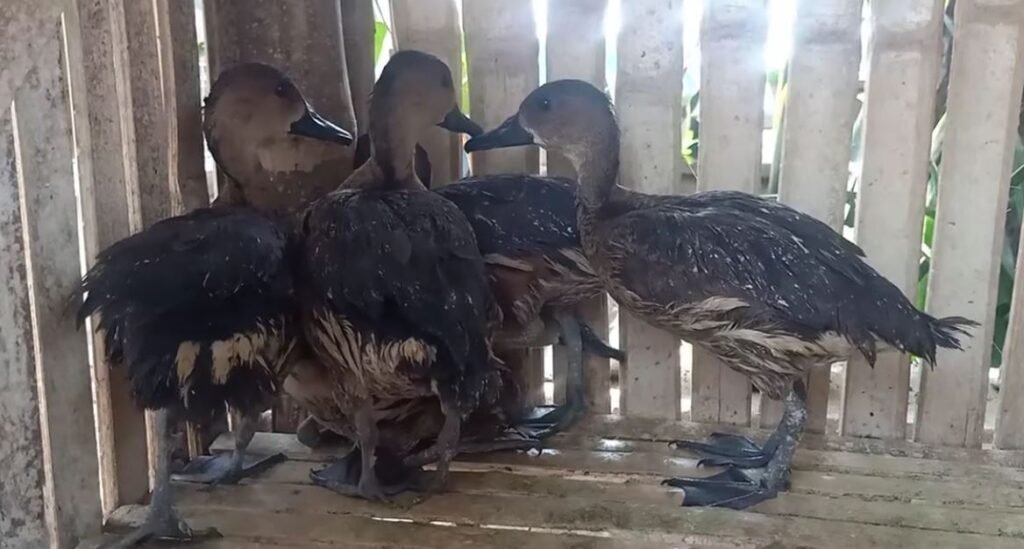
It’s worthwhile to consider how that change occurred. According to Elma Retostos, the head of the park’s ecotourism association, hunting wild ducks was once widespread in the village. It’s just a habit, not a crisis. It took slow, unglamorous work that doesn’t receive much attention to change that, such as local authorities enforcing wildlife laws, tourism officers explaining why it matters, and communities being asked to view birds in a different way. These days, spotting scopes and a dedicated bird hide are used to attract tourists to Malagsum for birdwatching. The ducks, which are occasionally the most resilient form of defense, have turned into an asset.
Throughout the archipelago, the Philippine Duck can be found in brackish flats, rice paddies, mountain lakes, and coastal mangroves. In that way, it is flexible. However, when the landscape continues to shrink, adaptation can only go so far. Once home to flocks of up to 10,000 birds, the Candaba Swamp in Pampanga has mostly been turned into farmland. What’s left is fiercely pursued. Any hope for the species’ recovery is clouded by that history.
Hunting the Philippine Duck is prohibited by Republic Act 9147 and carries severe consequences, such as jail time and fines. Depending on where you are and who is observing, the law may or may not be consistently enforced. It appears to be effective in protected areas like Mahagnao. The picture is more difficult to determine in wetlands that are not as closely monitored.
A bird that has endured for so long in a nation of 7,600 islands despite decades of hunting, the gradual eradication of its wetland habitats, and its continued appearance in lakes and rivers throughout Mindanao and Luzon has a subtly striking quality. The gamaw is still having problems. However, it has found a few locations where people have decided to allow it to remain, at least for the time being.
