


It seems normal, even unremarkable, to see a duck paddling across a calm lake. Beneath its feathers, however, is a biological paradox that has long baffled wildlife researchers and epidemiologists. The bird shows no symptoms of illness and carries one of the most dangerous pathogens in the world, releasing virus particles into soil and water. The waterfowl mystery that underlies the current worldwide bird flu crisis is defined by this imperceptible harmony between host and pathogen.
Avian influenza A viruses naturally reside in waterfowl, including ducks, geese, swans, and related species. Waterfowl frequently carry the virus with perfect indifference, in contrast to chickens or turkeys, which become ill and die when infected with highly pathogenic strains. While shedding millions of viral particles through its saliva, nasal secretions, and droppings, a mallard infected with H5N1 will swim, feed, and socialize normally. This asymptomatic carriage seems to be an adaptation that has been honed over centuries, if not millennia, rather than a defect in evolution. A biological détente has been reached between the virus and the host.
This arrangement has far-reaching effects that go well beyond a single lake or marsh. These viruses are carried by waterfowl during their yearly migrations across continents in the fall and spring. By October, a flock leaving Central Asia in September could bring highly pathogenic avian influenza to breeding grounds in Scandinavia. The virus then spreads to Africa, the Americas, and eventually isolated ecosystems like Antarctica, where penguin and seal colonies have suffered devastating losses.
The sheer effectiveness of viral shedding is what makes waterfowl carriers so powerful. Large amounts of virus are released into the environment by an infected duck, especially in its feces, which contaminate water sources that other birds use. There is enough virus in one drop of tainted water to infect dozens of species downstream. These are the same waters that raptors, gulls, and herons drink from. Unknowingly, poultry farmers bring contaminated mud from a nearby wetland onto their farms on their boots. At a customary stopover location used by domestic geese, a migrating swan touches down. These networks are remarkably easy for the virus to traverse.
Detection is the really unsettling part. An H5N1-infected waterfowl hardly exhibits any symptoms. It doesn’t falter or become uncoordinated. Its feathers are still smooth and undisturbed. The seemingly active flock passing overhead is actually a highly sophisticated virus factory, but an observer standing on a riverbank would have no way of knowing this. This invisibility makes it more difficult for wildlife managers and public health officials to monitor the spread of avian flu. A signal—a sad but obvious warning—is provided by dead birds. Such a luxury is not provided by asymptomatic carriers.
The virus itself is designed for this function by forces that are merely evolutionary rather than malevolent or intentional. In the 1990s, highly pathogenic strains of avian influenza, like H5N1, first appeared in commercial poultry operations in Asia. Over time, these strains evolved to spread throughout wild populations. When an infected bird died, viruses that swiftly killed their waterfowl hosts would vanish. Viruses would spread if the host could live, move, and release particles for weeks. Because the asymptomatic phenotype guaranteed the virus’s own survival, natural selection favored it rather than out of biological mercy.
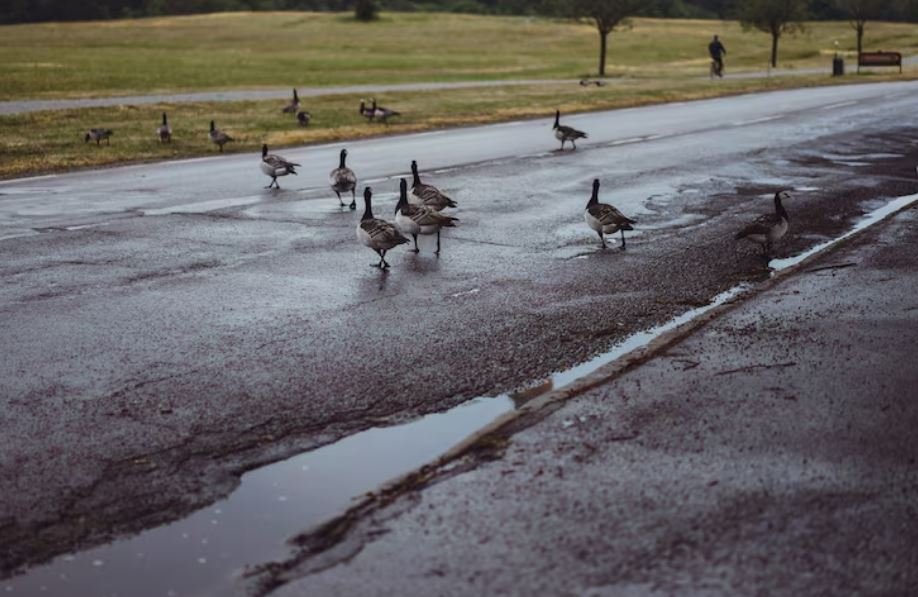
Researchers looking into this phenomenon have found certain genetic sequences in the virus that might give waterfowl this benign relationship. The same sequences that make it possible for a duck to carry H5N1 without getting sick would probably make a chicken or a human very sick. This illustrates a basic idea in epidemiology: the pathogen’s genetic composition and its past coevolution with the host species both influence the pathogen’s virulence.
The ramifications are sobering. As long as the virus is present throughout the world, waterfowl will most likely continue to carry and spread highly pathogenic avian influenza. It is not possible to launch a large-scale vaccination campaign against wild birds. Migration cannot be stopped by population-level interventions. The virus, which is carried by asymptomatic hosts, is now a constant in the environment around the world. It spreads through the routine rhythms of animal life, such as a duck landing on a farm, a flock mingling in a winter refuge, or a single drop of water carrying millions of particles downstream, rather than through drama or obvious disaster.
Comprehending this dynamic causes the discourse surrounding bird flu to move from fear to realism. The threat is genuine and enduring, but it follows biological logic rather than chance. Waterfowl are just living as their physiology allows; they are not plotting to spread illness. Recognizing this invisible transmission network and developing surveillance, containment, and prevention systems strong enough to coexist with it—not to defeat it, but to manage its effects before the virus continues to adapt—are the challenges facing humanity.
