


Just before high tide, a certain kind of silence descends upon a salt marsh. The cordgrass is nearly motionless. A Saltmarsh Sparrow threads its way through a habitat it has been dependent on for thousands of years, darting low between the stems. Then, as the water rises more quickly than before, that quiet moment begins to feel more like borrowed time than peace.
Although most people drive by salt marshes without giving them much thought, they are among the planet’s most productive ecosystems. In addition to serving as nurseries for fish, crustaceans, and numerous bird species that nest virtually nowhere else, they also filter water, store carbon, and buffer storm surges. They cover hundreds of thousands of acres along the US east coast alone, offering a foundation for coastal life that receives far too little recognition.
However, the foundation is collapsing. The marshes that once kept up with the rising sea levels along the U.S. East Coast by accumulating sediment are now falling behind as sea levels rise at a rate of about 3.3 millimeters per year. Only roughly two-thirds of the sediment required to keep up with rising waters is flowing from coastal rivers into the Georgia Bight, a large marsh that stretches from South Carolina to Florida, according to research from the University of Georgia’s Skidaway Institute of Oceanography. On paper, the deficit might not seem significant—a millimeter here and there—but over decades, it adds up to marshland that just vanishes.
The issue is partially upstream. Sediment that formerly flowed freely to the coast is trapped by dams and reservoirs constructed on piedmont rivers during the 20th century, lowering discharge by about 2% every ten years. Ironically, a large portion of the sediment that initially formed these marshes was actually produced by centuries of European agriculture and land-clearing. They are now being silently starved by the same desire to manipulate and engineer the landscape.
Ignoring the nesting consequences is getting more difficult. One of the few bird species that primarily builds its nests in tidal marshes along the Atlantic coast, the Saltmarsh Sparrow, is already facing severe challenges. Its low-lying nests in the cordgrass are timed to coincide with lunar tidal cycles, which used to provide just enough dry time for the eggs to survive. Nesting attempts fail more frequently each year as tidal flooding increases in frequency and severity. The species may become functionally extinct in a few decades if substantial action is not taken. Once thought of as a worst-case forecast, that result now reads more like a trajectory.
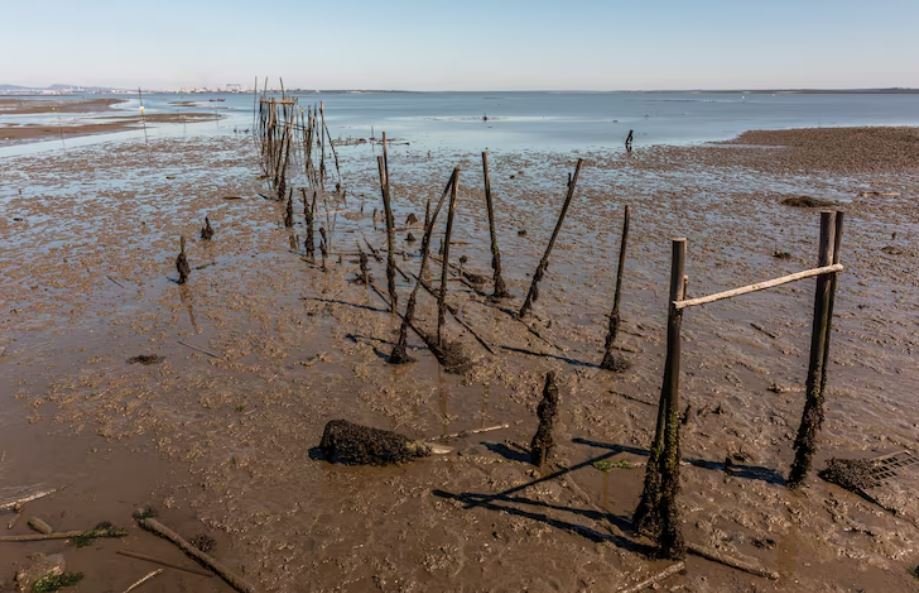
The geography of development further complicates the situation. Sea walls, roads, and structures prevent coastal marshes from migrating inland even as they drown from below. The marsh has nowhere to go in many places. What researchers sometimes refer to as “coastal squeeze” is more of a physical reality than a metaphor: habitat that is trapped between hardened shoreline and rising water with no way out. In 2018, British researchers examining marshlands in southeast England issued a warning that certain regions might disappear by 2040. The direction is constant, but the timeline varies by area.
There are reasons not to give up completely. When the conditions of the sediment permit it, some marshes have demonstrated an unexpected ability to increase elevation more quickly. In locations where communities and organizations have the political will to allow it, managed retreat—intentionally letting low-lying coastal land flood and turn into new marsh—has proven successful. A significant conservation partnership is currently focusing on a million-acre salt marsh corridor that stretches from North Carolina to Florida in an effort to protect what is left before the window closes.
There is a feeling that these areas have been absorbing change for a very long time when you stroll along the edge of a salt marsh in the late afternoon and observe the tide ebbing between the grass stems. It’s still genuinely unclear if they will be able to handle what’s coming.
