


The hedgerows begin to bloom in the early spring, before the bees are fully awake and the warmth has taken hold. Goat willow and blackthorn push their blooms out into the chilly air, and inexplicably, those flowers are pollinated. Nobody could adequately explain how for a long time. The answer may finally be found in a recent study that was published in the Journal of Ecology: part of the work is being done by the birds singing through those branches.
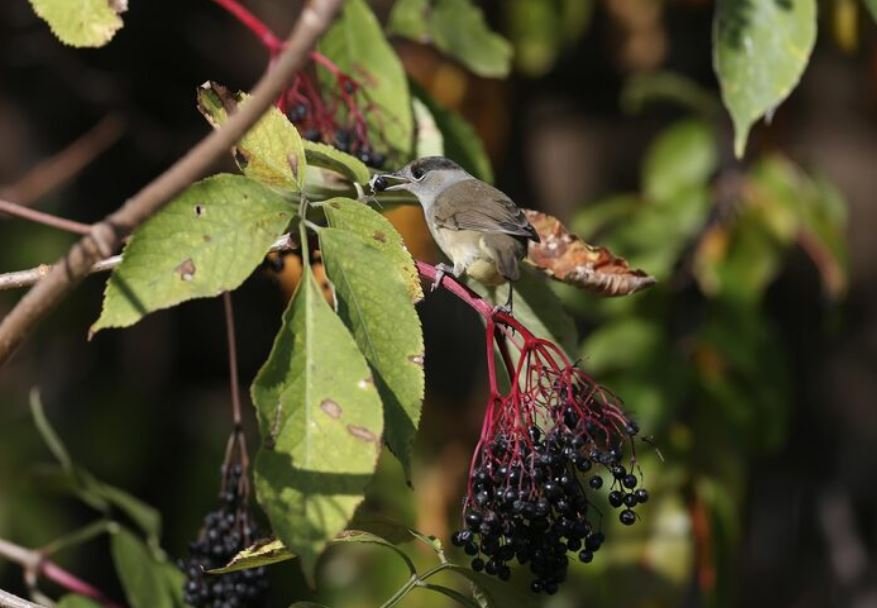
At the National Trust nature reserve in Cambridgeshire, Wicken Fen, researchers caught birds in fine nets and examined them for pollen. What they discovered was startling. Eighty-nine percent of the birds that were sampled carried pollen. Not a single trace here and there, but significant quantities that would indicate these birds were frequently visiting different flowers. Nine species in all—residents like the blue tit and wren, Mediterranean migrants like the blackcap and chiffchaff, and African migrants like the willow warbler and whitethroat—were found to be important pollen carriers.
Dr. Sandra Anderson of the University of Auckland, who oversaw the study, stated, “Our study is the first to show that native birds pollinate and contribute to fruit set in native flowering trees in temperate Europe.” After doing similar research in New Zealand and realizing that springtime in Britain raised similar issues, she came up with the concept. For decades, European ecologists may have simply believed that insects were responsible for pollination. Arriving with new eyes, Anderson wasn’t entirely certain.
The timing is what makes the finding especially helpful. Goat willow, blackthorn, hawthorn, and buckthorn are the plants that these birds most frequently visit. They bloom early, when temperatures are still low and insect pollinators are, at best, erratic. Unlike insects, birds do not slow down in the cold because they have warm blood.
As they continue to move and feed, they continue to transfer pollen from one flower to another. Fruit production significantly decreased when researchers physically prevented birds from visiting specific blooms. The relationship is no longer theoretical.
This is consistent with previous research from Oxford University’s Wytham Woods, where researchers studying great tits found that the birds’ ability to adapt to climate change was directly influenced by the condition of the nearby oak trees. The timing of egg-laying was more successfully adjusted by birds that bred close to healthier oaks; at the fastest sites, it was advanced by up to 25 days, while at the slowest, it was only advanced by 7.5 days. It turns out that the bird and the tree are much more intertwined than anyone had realized. One has an impact on the other in ways that spread throughout the larger ecosystem.
The pollination discovery also contains a conceptual change that merits consideration. It has long been believed that pollinators visit flowers based on their shape and color; large, vividly colored blooms attract birds, while small, pale flowers with concentrated nectar attract insects. According to Anderson’s team, framing might be overly strict. They contend that if a small, pale flower is easily accessible, plentiful, and available at a time when birds are hungry and insects haven’t yet appeared, it can be ideal for a bird. Context is more important than the categories in the textbook indicate.
How common this phenomenon is throughout Britain and whether certain bird species are more consistently successful pollinators than others are still unknown. Although the sample size at Wicken Fen was significant, nature reserves don’t always accurately represent conditions in fragmented or degraded habitats. Furthermore, the question of what happens to early-spring pollination if these species decline is one that should be taken seriously, given the pressure that habitat loss, agricultural intensification, and climate disruption are placing on songbird populations. The bees can’t just cover every void.
For the time being, though, this research offers something worthwhile. The blue tit with yellow pollen all over its head and the chiffchaff calling from the willows in March have been doing this for as long as the trees have been in bloom. We simply weren’t paying enough attention to see it.
