


A bird with an eight-foot wingspan soaring over the wetlands of the Norfolk Broads is truly stirring. The white-tailed eagle, which had been extinct in England for more than a century due to persecution by 1918, is making a comeback. And depending on who you speak with, that could be one of the best conservation tales of the decade or the beginning of a gradual catastrophe for the poorest farmers.
Like many British rewilding tales, the story starts in Scotland. Young eagles were transported from Norway and released on the Inner Hebrides’ Isle of Rum in 1975. Before the first chick was successfully raised on Mull, a full decade passed. It turned out that the most crucial resource for conservation was patience. The birds have since expanded, proliferated, and progressively moved south. In Great Britain, there are currently an estimated 200 breeding pairs. For the first time in 250 years, a white-tailed eagle chick hatched in England in 2023.
That achievement is significant. However, depending on where you were standing, it landed differently.
The reintroduction in Norfolk dates back to 2021, when more than 20 local landowners and rural organizations supported a consultation led by the Ken Hill Estate, a progressive farm on the county’s coastal outskirts. Farmers themselves spearheading a rewilding initiative rather than opposing one was a unique moment. The project was approved by Natural England, and the birds have been settling in. They are already drifting east from releases from the Isle of Wight. The Norfolk Broads provide the ideal habitat for these birds because of their combination of open water, reed beds, and agricultural land.
However, the Broads are unable to provide a barrier between sheep and eagles. At that point, the tension becomes more intense.
White-tailed eagles have been a part of Scottish farmers’ lives long enough for them to develop strong opinions. Fourth-generation Argyll farmer Ricky Rennie estimates that in 2024 alone, he lost two-thirds of his lambs to the birds, costing him about £30,000 in a single year. He hasn’t held back when discussing what he believes English farmers should do in the event that reintroduction plans arise: fight them hard before the birds establish themselves and the situation becomes irreversible. His worry isn’t theoretical. It’s the kind of loss that quietly mounts until a farm is no longer profitable.
Eighty-five percent of farmers in Cumbria, North Yorkshire, and Durham were against the reintroduction of white-tailed eagles in their regions, according to a May 2026 National Farmers’ Union survey. That’s not a fringe viewpoint; rather, it captures the anxiety that upland farming communities are currently experiencing. Before any more releases take place, the National Sheep Association has demanded a thorough impact assessment that considers farm viability and farmer mental health. “Mental health” and “farm viability” both accomplish a lot in a single sentence.
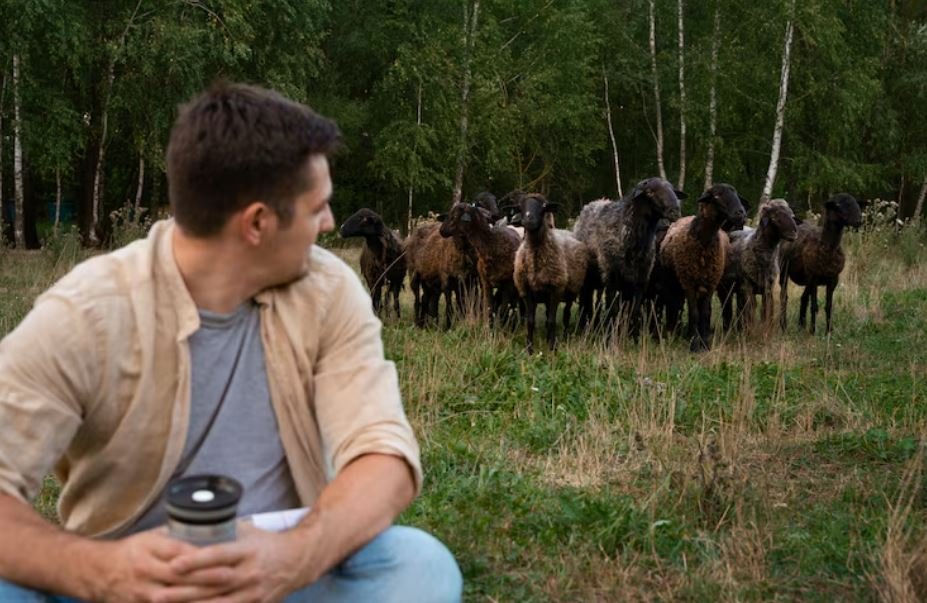
Since this debate tends to harden into opposing certainties, it is important to be truthful about what the science actually says. It is still up for debate whether the eagles are primarily killing healthy lambs or scavenging from dead animals. Since the 2019 releases, there has been no evidence of livestock predation at the Isle of Wight project, according to conservationists. Scottish farmers cite their own experiences, which appear to be very different. Different landscapes, different stocking densities, and different eagle populations at different stages of establishment can all be present simultaneously.
Additionally, there is an economic counterargument that merits careful consideration. Over a hundred full-time jobs are supported by tourism related to white-tailed eagles on the Isle of Mull, which brings in between £4.9 million and £8 million annually. In areas where farming margins have been squeezed for years, wildlife tourism is a significant source of income. According to a 2022 RSPB survey, 29% of visitors to Mull cited the eagles as a primary motivator. The Broads already draw birdwatchers, but it’s unclear if Norfolk could duplicate that kind of appeal. A flagship apex predator would not go unnoticed.
However, the question of who pays for that increase in tourism is legitimate. Something is wrong with the arrangement if a farmer loses lambs so that tourists can take pictures of eagles from a hire boat and the compensation plan doesn’t cover the actual losses.
In one way or another, the eagles are coming. They have already been seen over Exmoor, whose own release program was approved by the government in May 2026. The range is growing. The farming community is essentially requesting, and this is not an irrational request, that they not be left to bear the consequences on their own while the conservation narrative is told elsewhere.
