


At dawn, a certain type of silence descends upon a coastal wetland, one that is noticeable when it abruptly breaks. In recent seasons, shorebirds have disturbed the tranquility along the tidal flats of Capiz in the western Visayas region of the Philippines, a surprise to ecologists. Many of them. More than normal. Furthermore, in science, it is rarely cause for celebration when nature does something unexpected in large quantities; instead, it is usually cause for concern.
Ornithologists and wetland ecologists working throughout the East Asian–Australasian Flyway, one of the busiest and most ecologically stressed bird migration corridors on the planet, have taken the increase in migratory shorebirds along Capiz’s coastline very seriously. More birds may seem like good news at first glance. However, scientists who study the behavior of migratory shorebirds are aware that a sudden gathering in one place frequently indicates disruption rather than abundance elsewhere along the route.
A sort of ecological displacement seems to be taking place. Shorebird species that travel between their breeding grounds in Siberia and Alaska and their wintering locations in Australia rely on a series of strategically placed stopover locations, which are coastal wetlands where they land, feed heavily, and replenish their fat reserves in preparation for the next leg of their journey. Birds don’t just disappear when a stopover site deteriorates or disappears completely. They reroute, frequently packing into any nearby habitat that is still operational. Birds that once dispersed throughout a larger network of sites may now be absorbed by Capiz due to its comparatively intact intertidal flats.
Because stopover locations are not interchangeable, that is extremely important. A shorebird arrives at its breeding ground later, lighter, and in worse condition if it expends more energy traveling between a suitable feeding flat and a secure roosting location.
When nearby high-tide roosts were absent or disturbed by human activity, migratory great knots and bar-tailed godwits—both long-distance travelers in this flyway—were forced to commute nearly three times farther than their energetically optimal distance, according to research done at the Yalu Jiang Estuary in China’s northern Yellow Sea. The cost of energy wasn’t insignificant. Alarm flights and long commutes alone were estimated to have cost those birds three to four days’ worth of foraging effort. That is time and fuel that a bird with a set migration window simply cannot afford to squander.
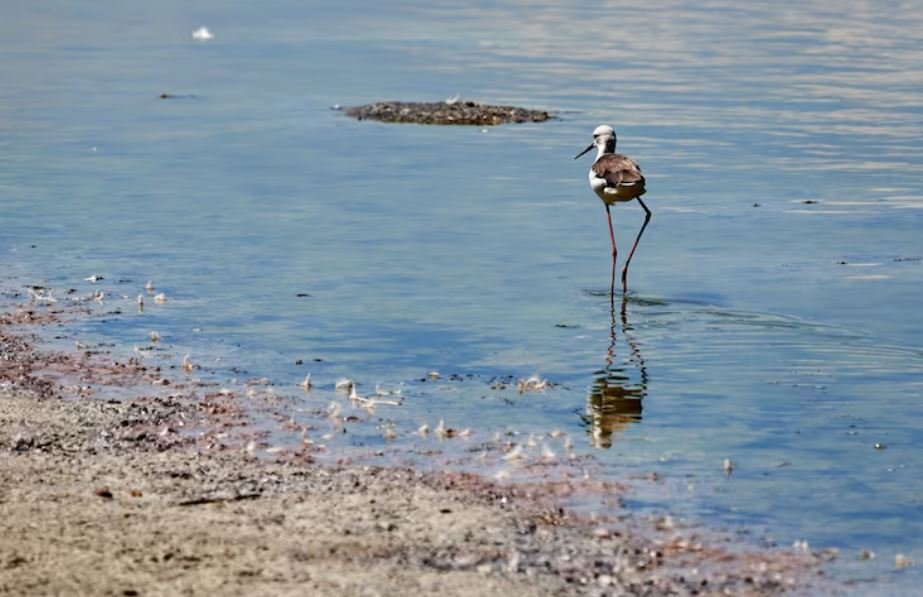
It’s possible that over-disturbed or degraded sites further north are now sending overflow populations to Capiz. It’s also possible that the local habitat has temporarily improved, attracting birds, though this is more difficult to determine without longitudinal survey data. One of the challenges in interpreting the surge is that the two explanations are not mutually exclusive. In this area, ecologists are cautious not to make exaggerated claims based on data from a single season. However, the discomfort is genuine.
According to a recent study from Cambridge University, 12 out of 20 migratory shorebird species experienced declines between 2009 and 2023, with species that rely heavily on coastal stopover sites experiencing the steepest declines. The researchers noted that conservation efforts have traditionally concentrated on breeding and wintering grounds, largely ignoring the intermediate stopover sites, which serve as the system’s connective tissue. On the Qinghai-Tibet Plateau, nearly two-thirds of the locations utilized by tracked birds are still unprotected. Capiz’s seeming abundance may be hiding a far more precarious reality if that pattern continues along the Philippine coast.
What happens when too many birds share too little space is another issue. The carrying capacity of intertidal feeding flats is limited. Stress levels rise, competition for food becomes more intense, and departure conditions deteriorate when shorebird densities exceed what a habitat can sustain. Reduced breeding success, increased vulnerability during lengthy overwater flights, and weaker populations the following year are among the compounding risks faced by birds that depart a stopover site underfueled.
It’s difficult to ignore the gravity of what’s being witnessed when you watch this happen from the outside. These birds travel thousands of kilometers on paths that have been shaped over thousands of years, arriving at locations that they have been programmed to trust. Ecologists are worried about more than just the numbers for this season. It’s about what those figures are subtly telling us: that Capiz is currently holding more of the chain than it should and that it is under stress.
