


If you remain motionless long enough, you can hear them before you see them on a specific corner in Pasadena. The sound of traffic and the rustle of palm fronds are interrupted by a sudden outburst of sharp, overlapping calls. Then a flash of bright green appeared overhead, with six, eight, or even a dozen birds flying across the sky with an almost reckless assurance. They are red-crowned parrots, and their presence was not intended.
These birds, which peaked in the 1970s, came to the Los Angeles basin as pets from eastern Mexico. A few got away. A few were set free. Cages were opened to save the birds during a pet store fire, according to a few accounts. Regardless of how they left, they remained. After that, they multiplied. The LA basin’s population is estimated to be in the thousands today, with Pasadena emerging as one of their most prominent strongholds.
When researchers take a closer look, they are discovering what elevates this from a colorful footnote in the history of urban wildlife. In order to understand how the birds have changed biologically since coming to California, a group from Occidental College’s Moore Laboratory of Zoology has been performing genetic analyses of the Pasadena population. The findings are revealing a more nuanced narrative than anyone anticipated. Not only have these parrots survived, but they have also adapted, interbred with other species, and established a stable ecological niche that native birds had mainly left unoccupied.
Urban ecologists are being forced to reconsider some fundamental presumptions as a result of this reality. In a significant study that was published in the journal Science Advances in early 2023, researchers from UC Berkeley resurveyed birds at 71 historical locations in Los Angeles and the Central Valley. These locations were first recorded more than a century ago by zoologist Joseph Grinnell, who started observing birds in the vicinity of his childhood home in Pasadena in the late 1890s. For native species, the results were depressing. Over one-third of the region’s bird species have declined as a result of urbanization and a city that is now more than four degrees Fahrenheit hotter than it was in the 19th century. Compared to a century ago, 40% of species are now found at fewer locations. Ten percent had grown.
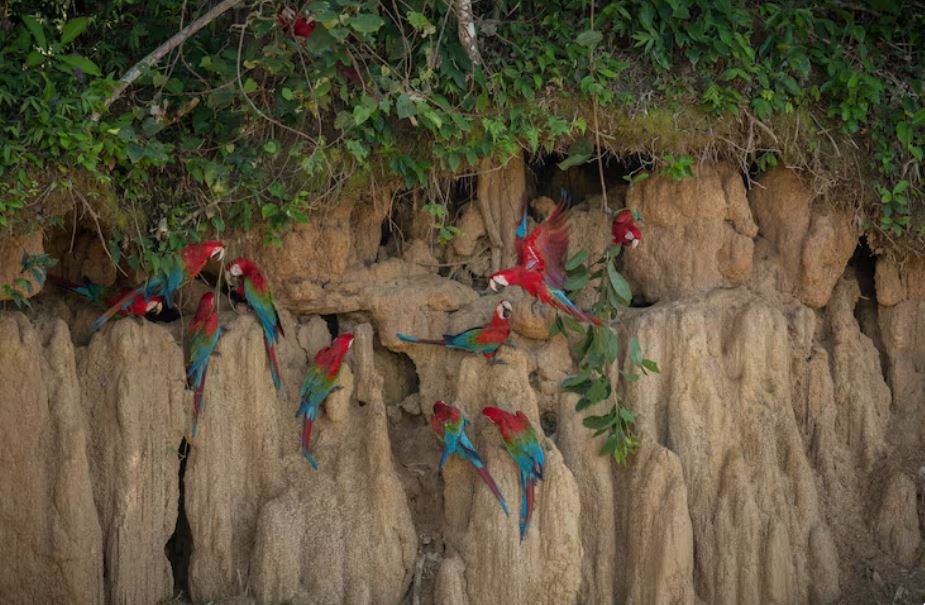
However, that story does not fit the parrots. They’re not getting worse. They primarily consume imported ornamental fruit and nut trees, which are species that flourish due to human planting and watering. In the city, there aren’t many natural predators. They don’t really compete with native birds for territory or food. They are not considered invasive in California. This is an odd ecological result: accidental arrivals of red-crowned parrots are now, in some quantifiable sense, doing better in California than they are in their native range in Mexico, where there may be as few as 2,000 of them.
Beyond the Pasadena survey, conservation biologists have taken notice of this irony. According to Brad Shaffer of UCLA, feral parrot colonies like this one may serve as unofficial assurance populations, providing species that are losing ground in their native regions with protection against extinction. Not everyone agrees with this controversial notion. Critics point out that the parrots’ current good behavior is not a guarantee for the future and that it is actually difficult to predict which non-native species will remain benign.
Tidy conclusions are still complicated by the Pasadena case. When it comes to California birds, urban ecology has long operated within a rather bleak framework: climate heat, habitat fragmentation, and disruption of the food web. These pressures are genuine and persistent. The parrot survey introduces a variable that most previous models did not account for: a non-native species that is flourishing as a result of urbanization rather than in spite of it. Excluding land use change from extinction risk forecasts, according to researchers, results in models that are, at best, inadequate and, at worst, deceptive.
What that means for conservation planning or long-term policy is still unknown. However, there is a sense that Pasadena’s birds are not waiting for scientists to catch up, as evidenced by the parrots banking low over traffic and vanishing into the decorative trees lining the streets on a weekday morning.
