


For a long time, “sharp” was the only adjective that seemed to matter when it came to wildlife photography. Kingfishers have sharp feathers. A snow leopard with keen eyes. Technically flawless, crisp, sharp, and yet somewhat hollow. At least among photographers who have been doing this long enough to grow weary of perfection, there is a growing perception that something significant was consistently absent from that fixation.
The shift hasn’t been particularly loud, but it has been slow. It has no manifesto. However, if you spend enough time observing what wildlife photographers are producing these days—the swirling backgrounds, the painterly glow, the subjects half-dissolved into light and color—you begin to see that clinical sharpness is no longer the only objective. It’s not even the main one for many.
One statement made by UK-based photographer George Samuel Devereux, who is well-known for his work with the Lomography Petzval 85 Art Lens, stuck with me: “Modern lens culture has reduced everything to a single metric, and whatever happened to character?” He was correct. The distinctive swirling bokeh of the Petzval is not accidental or faulty; rather, it is the whole point. The art is in the blur.
As a purposeful aesthetic, dreamy bokeh succeeds because it allows for emotion, something that technically flawless images frequently fail to do. The observer isn’t cataloguing the feathers when a bird emerges from a wash of soft, glowing green. They sense the forest. It’s a different kind of communication, and wildlife photography may have required it for a longer period of time than most photographers would acknowledge.
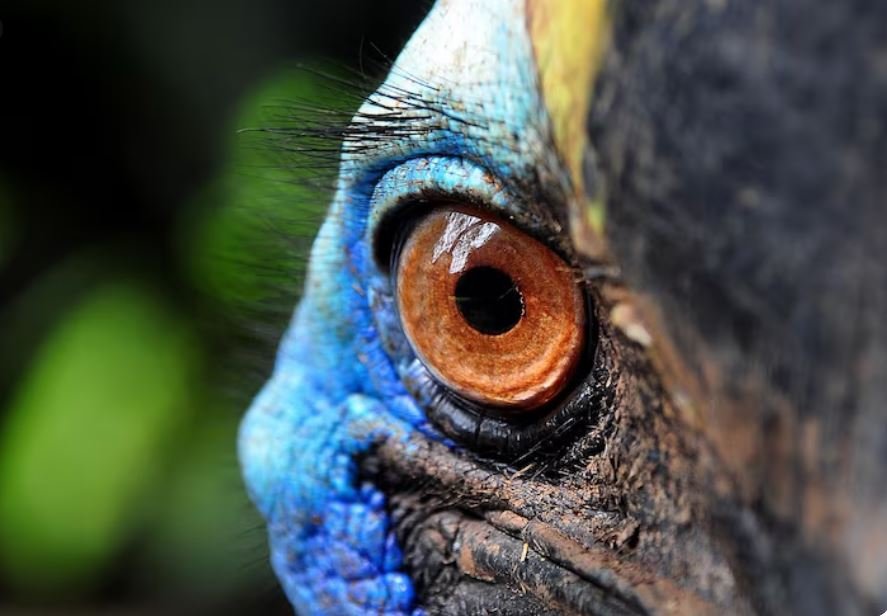
For years, nature photographers like Jay Patel and Varina Patel have been pushing this trend. The most straightforward method, breathing on the front element of the lens prior to the shot, produced some of their most powerful images. An otherwise literal scene is transformed into something more like memory than a documentation by the condensation, which also softens the contrast and diffuses the highlights. Considering how much the industry spends on optical engineering, there’s something pleasingly low-tech about it, and it takes practice to get the right amount of moisture.
By incorporating that dreaminess right into the glass, Lensbaby’s Velvet series goes one step further. The lens appears to blur the distinction between subject and background at wide apertures, wrapping highlights in a gentle glow. The effect is more akin to painting than photography when applied to macro subjects, such as a close feather, a resting insect, or a single dewdrop. That’s not a critique. That’s the idea.
When writer and photographer Massimo Vignoli considers the words of French wildlife photographer Vincent Munier, he discovers a true question hidden in all of this: if the art is already present in nature, what precisely is the photographer adding? The “gaze”—the culmination of decisions regarding light, angle, timing, and yes, lens character—seems to hold the key. Bokeh and blur are decisions, not mistakes that need to be fixed. They show the photographer’s perspective rather than just what they observed.
It’s still unclear if this is a long-term change in wildlife photography or if technical accuracy will return once the novelty wears off. However, it’s difficult not to sense that something genuine is taking place when observing the emerging work, which is atmospheric, emotionally rich, and soft-edged. The sharpest picture used to be the ideal one. It may be the most truthful one increasingly.
