


A small group of birdwatchers gathered at Caernarfon Harbour in north Wales in early June, their telescopes focused on a lone bird that was silently feeding among the moored boats. It was a western reef heron, a species that had never been seen in the UK before that weekend. It is situated between the Indian subcontinent and West Africa. It had no right to be in Wales. And yet there it was, completely unaffected by the commotion it had caused, picking its way through the shallows. It was an incredibly happy moment for birdwatchers. It was more complex for ecologists.
Western reef herons have been observed in Spain and France more frequently in recent years, suggesting that the heron traveled through Europe before crossing the channel. The British Trust for Ornithology’s experts were cautious not to exaggerate. The bird most likely did not fly in straight from Africa, according to Nick Moran, the BTO’s training manager. It might have even originated in southern Europe. Even though a sudden influx shouldn’t be anticipated anytime soon, he did say that more sightings are likely to occur in the upcoming years.
The lone bird is not what makes this noteworthy. It’s the underlying pattern. A squacco heron, another tropical species that is rarely seen more than a few times a year in Britain, was entertaining birdwatchers in Lincolnshire at the same time that the reef heron was attracting large crowds to Wales. This summer, Norfolk has seen another sighting of the black-winged kite, which was first observed in the UK in 2023.
Last year, the zitting cisticola, a Mediterranean warbler, bred for the first time in Britain. Slowly, species that were previously incapable of withstanding a British winter are now settling in. “It’s much easier to survive in the winter now than it was 50 years ago,” Moran observed, pointing out that shallow water bodies no longer freeze over with any regularity—exactly the kind of habitat these herons depend on for feeding. The explanation is simple but unsettling: winters here aren’t as harsh as they once were.
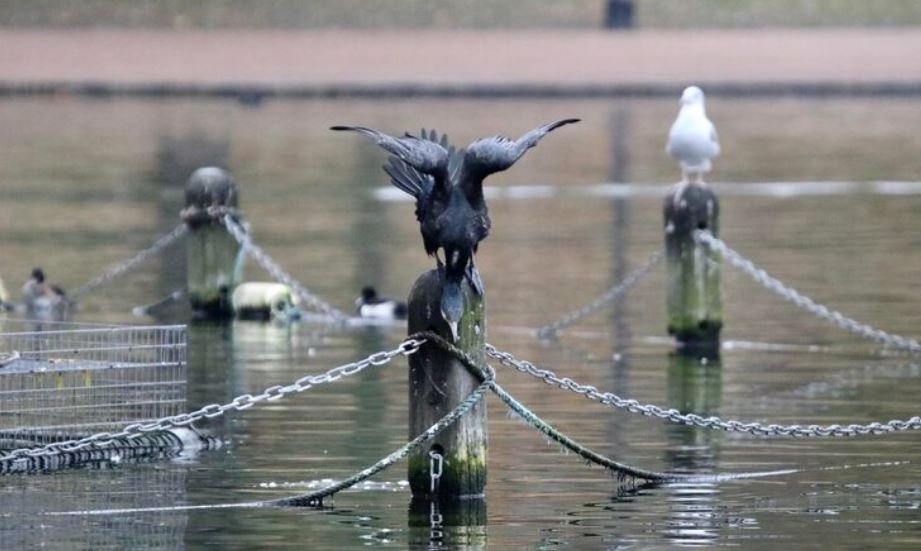
The biodiversity reader at Manchester Metropolitan University, Alexander Lees, put it simply. As the climate warms, the ranges of these species are moving northward. A bird from the Mediterranean region came, stayed, and eventually bred. In previously unheard-of locations, tropical species are emerging. This is the real-time manifestation of a biodiversity redistribution.
All of this is made more complex by the Thames Estuary. Declared biologically dead in 1957, the river is now home to over a hundred fish species, seal colonies, seahorses, and internationally significant populations of wintering wildfowl, making its recovery story truly amazing. This section of coastline is traversed by the East Atlantic Flyway, a migration route used by about two million birds annually. The UK government has proposed it as a potential Natural World Heritage Site in part because of this.
However, the estuary is a system under stress as well. Over the previous 130 years, saltmarsh habitat has decreased by 43%. The native oyster population has decreased by over 95%. Meadows of seagrass have drastically shrunk. In comparison to the previous century, sea levels in central London increased at a rate that was almost three times faster between 1990 and 2018.
Chemical contamination, microplastics, and agricultural runoff continue to be major issues. There are serious concerns about ecological stability, competition for food, and what a warming estuary ecosystem will truly look like over the coming decades due to the introduction of tropical species into this already stressed environment.
The genuine wonder of seeing a West African bird feed in a Welsh harbor can coexist with the unsettling question of how it got there. There is a celebratory version of this tale that shows how Britain’s reviving waterways are bringing in new life. But it’s more difficult to accept the bigger picture. While native species’ habitats continue to deteriorate, the Thames Estuary is attracting birds that it was never intended to sustain.
It’s likely that the western reef heron will move on. There will probably be another in the coming year or two. Furthermore, the real question that scientists are trying to answer is not why this particular bird came, but rather what will happen next and whether the ecosystem in its path is ready to absorb it.
