


The cameras were set by researchers who had low expectations. That’s not cynicism; rather, it’s the pragmatic attitude that snow leopard field conservationists typically acquire with time. The wind comes off the ridges in gusts that make tripod work truly challenging, you hike for hours above the treeline, your breathing becomes labored at 4,000 meters, and you bolt a weatherproof camera housing to a rock face on a narrow ledge where the scrape marks in the soil suggest a cat has passed thru at some point in the recent past. After that, you descend again and bide your time. frequently for weeks. frequently for no reason at all.
Decades of verified near-misses and absences have earned the snow leopard its moniker. Since field researchers first began deploying camera traps in significant quantities, the camera traps located in the Himalayas, the Karakoram, and the Mongolian Altai have been returning photos that are fuzzy, incomplete, or simply empty. When viewed against a limestone scree slope, the animal’s coat—a pattern of erratic dark rosettes on pale gray-brown background fur—achieves something that nearly seems deliberate. The color of the rocks is the same. The pattern of the shadows is the same. Even in daylight, the cat just doesn’t resolve into what the viewer would expect to see.
Although image quality was a significant factor, it wasn’t the only thing that changed with the first truly high-resolution trail-cam captures. It was the result of combining behavioral context with sharpness. When camera photos were available in the past, they just captured a shape, which was sufficient to verify the animal’s existence but insufficient to conduct a thorough analysis. Close-up, high-resolution photos captured by a triggered sensor revealed distinct rosette patterns that might be used to identify individual cats, much like a fingerprint can. The difference between knowing a species uses a landscape and being able to analyze how particular animals travel thru it, what territories they hold, and how frequently they return to specific sites is the transition from presence-confirmation to individual identification.
The practicalities of obtaining those photos require months of planning crammed into a landscape that penalizes taking short ways. The initial step in researching snow leopard migration is to locate possible travel corridors, which are the natural bottlenecks in mountain terrain where an animal traveling down to water or over a ridge is directed to a particular ledge or gap. If you know what to look for, these passageways are marked by scat deposits, claw marks on noticeable rocks, and scrape sites. When the trigger is pulled, cameras are positioned low and slanted to take a full-body frame. At altitude, battery life and the housing’s ability to withstand daytime and nighttime temperature variations that can surpass thirty degrees Celsius are important factors.
Snow leopards inhabit vast areas and live alone. In regions with little prey, a single animal may traverse a home range of several hundred square kilometers, inspecting marking locations on a rotation that may take weeks to finish. Because of this speed, a camera installed on a particular ledge might not activate for a month before the local cat returns. Setting, checking, rebaiting, and replacing failed batteries across several seasons are all patience-intensive tasks that are necessary for conducting a worthwhile camera trap study. It’s the labor.
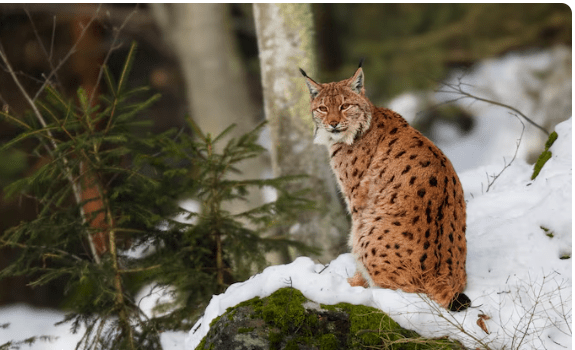
Written field notes and sporadic direct sightings could never fully accomplish what the resulting photographs are doing. They are using visual evidence that non-scientists may directly interact with to support particular conservation decisions. In a manner that population estimates alone cannot, a shot of an obviously healthy adult female descending a specific valley in the Spiti region that is sharp enough to discern the whisker pattern places a genuine animal in a real spot. The abstraction of “approximately 4,000 to 6,500 individuals remaining” is anchored to something much more readable.
