
Some of the best scientific instruments are constructed with a certain irony. Millions of common people pointing their phones at butterflies, backyard mushrooms, and the odd bewildered weasel stuck in a toilet—not in labs, not through grants, not through committees. With iNaturalist, which currently has over 300 million observations from over 4 million users worldwide, that is essentially what happened. It was not intended to become the most extensive biodiversity tracking system in the United States. It simply did.
Pausing on that number is worthwhile. 300 million observations. That amount of field data could not have been collected in a dozen lifetimes by any federal agency, university research department, or coalition of professional ecologists. And yet here it is, put together observation by observation by people who, for the most part, merely wanted to know what kind of bird was perched on their fence.
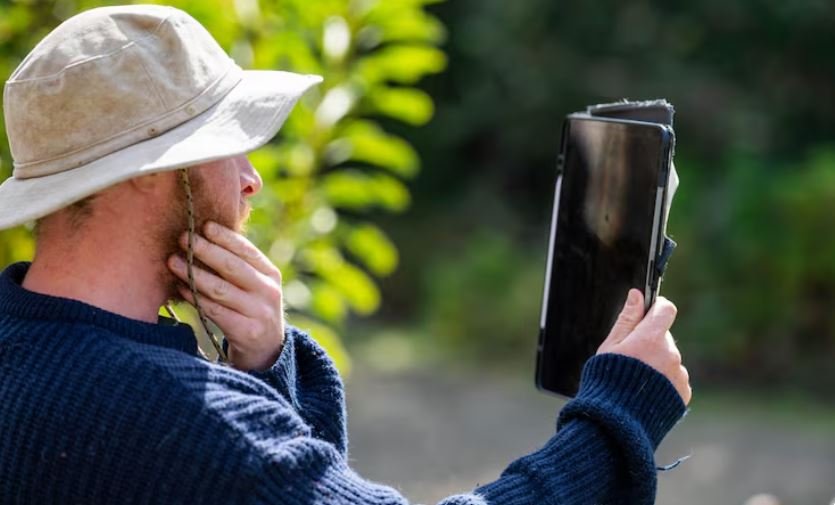
All of this was made possible by the smartphone in ways that seem clear now but weren’t at all clear when these apps first came out. These days, a phone has a GPS, an internet connection, a high-resolution camera, and—increasingly—an AI identification engine that can quickly identify hundreds of different plant and animal species. What Duke University researchers observed in 2013 is still relevant today: the gadget in your pocket is essentially acting as a low-orbit satellite. The distinction is that rare moths are not found in New Zealand backyards by satellites.
In fact, citizen scientists have accomplished that. The first photograph of a frosted phoenix moth, which locals refer to as the “Holy Grail” of New Zealand moths, was uploaded to iNaturalist in 2024 by an amateur observer. In 2018, a Colombian weasel was discovered in a restroom. In 2022, two pictures of the extremely rare De Winton’s golden mole surfaced. These are not footnotes. These are real scientific discoveries made by untrained individuals using tools they already had.
The use of this crowdsourced data in peer-reviewed papers increased tenfold between 2020 and 2025, according to Brittany Mason, a data management analyst at the University of Florida who has researched the scientific impact of iNaturalist. For a platform that, to the majority of its users, probably feels more like a nature hobby app than a research tool, that is an amazing trajectory. “It’s not replacing professional data,” Mason said, “but it is complementing it and allowing us to answer questions that we might not be able to through professional surveys.”
The most honest way to describe it is probably that complementary role. Time, money, and location are limitations for professional ecological surveys. There is only so much ground that a group of researchers can cover. The remainder is covered by citizen scientists who are dispersed throughout all states and types of habitats, frequently without realizing they are filling important gaps in the scientific record. There are currently over 2 billion sightings on eBird, the birding version of iNaturalist. There is just nowhere else that has the same level of temporal and spatial coverage.
Watching all of this build up gives me the impression that, at some point in the past ten years, conservation science quietly crossed a threshold without anyone noticing. The tools changed, the data increased, and all of a sudden the picture of what’s alive and where it lives became more accurate than it had ever been. This wasn’t due to a government program or a significant scientific discovery, but rather to people becoming more aware of their own neighborhoods and having a way to document what they observed.
It remains to be seen if that focus results in real protection for endangered species. Habitat loss cannot be stopped by data alone. It does, however, make the case more difficult to disregard. Furthermore, the baseline may prove to be the most enduring contribution of the citizen science movement rather than any particular discovery. A living, comprehensive account of what was there, where it was, and when. The type of document that will be used by researchers in the future to determine what has been lost and what may still be preserved.
