


In a peaceful suburb of Chicago, there is a yard that appears somewhat untamed at first. clusters of milkweed close to the fence line. Slightly off-center is a small birdbath. A bee, a monarch, or a sparrow searching the leaf litter for something are all constantly in motion. Neighbors ask the homeowner questions. To explain herself, she received a sign. And for some reason, that sign seems to represent something more significant that is subtly taking place throughout suburban America.
Native plant societies have been arguing for decades that the well-kept, cherished, and billion-dollar-maintained American lawn is essentially dead space. Not, in a dramatic sense, dead. Simply ecologically devoid. There are no insects worth eating. No nesting cover in layers. There isn’t a corridor that joins one piece of green to another. Just clipped, chemically maintained grass that repeats block after block like a carpet and contaminates the rivers when it rains.
Instead, these groups are creating something much more organic and less neat. Even though the implementation needs some persuasion, the concept is simple: private gardens, no matter how tiny, can serve as links in a chain. They cease to be individual gardens and begin to behave like corridors when enough of them group together, filled with native grasses, flowering plants timed to local pollinator cycles, and trees that evolved alongside local birds. They are traversed by wildlife. Genes pass through them. In a particular area, species that were silently going extinct begin to reappear.
The science underlying this is no longer very contentious. Urban backyards can serve as ecological corridors between native vegetation fragments that are isolated in urban landscapes, according to research. Since 30% of Australia’s nationally listed species are found in urban areas, private gardens should be an active component of conservation efforts rather than just a nice addition.
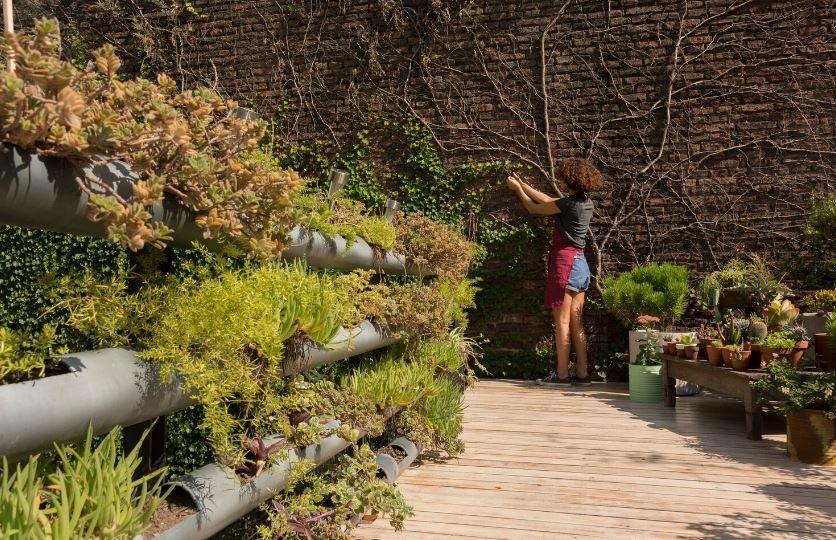
The eight-kilometer Pollinator Corridor in Melbourne is made up of over 70 separate gardens. A government budget was not necessary. People who were prepared to tear out their lawns were needed.
Since formally beginning the effort in the 1970s, the National Wildlife Federation has certified about 250,000 wildlife habitats in the United States. Local Audubon chapters, Wild Ones, Pollinator Pathways, and other organizations have added their own certification programs, all of which encourage homeowners to make the same fundamental decisions: get rid of invasive ornamentals, stop using pesticides, and leave autumn leaves on the ground for insects to overwinter. A small but expanding network includes the sign in front of the milkweed garden.
The entry point’s tendency toward personalization is noteworthy. A monarch butterfly is spotted by someone. Another person wants more native salvia after witnessing a hummingbird browse through a stand of it. It turns out that biophilia, the innate human tendency to relate to living systems, is a reasonably successful recruiting strategy. Seldom do those who talk about their native plant gardens sound like abstract environmentalists. They sound like people who are unable to stop watching something happen.
It’s possible that because this movement takes place in backyards, its greater significance is undervalued. In the public’s mind, conservation typically entails vast areas of land, government protection, and acronym-filled plans for species recovery. Even those who should know better are still shocked by the notion that a quarter-acre lot with 80 native species can serve as significant ecological infrastructure. However, the data from urban ecology consistently indicates that small spaces are important when they are connected, and private gardens can offer connectivity at a scale that no park system could possibly match.
There are still significant obstacles. For native plants that appear to be neglected to the untrained eye, homeowner associations have imposed fines. It is still challenging to find truly local ecotypes, or plants that evolved in a particular area as opposed to merely a broad species category. Most garden centers sell heavily hybridized cultivars under native names, but they may not have the exact qualities that local insects need. The certification symbol is useful. Education is more beneficial. However, even though the cultural shift is obviously in progress, it is not yet complete.
It’s evident that those performing this labor—planting by hand, removing invasive species, and observing an increase in bird counts—are not waiting for approval. They seem to have already realized what the research shows: ecological recovery occurs outside of wilderness areas as well. Sometimes it begins with a slightly off-center birdbath in a yard that was once the subject of a neighbor’s complaint.
