


In rural America, there once was a sound that characterized summer mornings. Something older than the creak of a barn door or the rumble of a tractor. From somewhere in the tall grass came a bright, descending whistle. The meadowlark of the East. Perched on a fencepost at the edge of a hay field with its head thrown back and its yellow chest blazing against the pale morning sky, you would hear it before you saw it.
It’s becoming more difficult to locate that sound. Eastern Meadowlark populations decreased by about 75% between 1966 and 2019. It’s not a rounding error. In a little more than 50 years, three-quarters of a species have vanished. Not much has changed for the Western Meadowlark. However, nothing seems particularly wrong to the majority of people who pass those same fencerows on their morning commute. There are still fields. The grass continues to grow. The fact that this crisis is occurring in a setting that the majority of Americans pass through without really noticing could be the exact reason it continues to go unnoticed.
Fundamentally, the meadowlark’s predicament is a habitat story. In order to survive, these birds require open grassland—not well-kept lawns, golf courses, or neat suburban parks, but actual, untidy, uneven grassland with dense ground cover where a female can nest in a shallow depression and raise a brood without being mowed over. For generations, that type of habitat has been subtly disappearing. The central grasslands of North America have shrunk to less than half of their former size. Approximately 96% of the eastern tallgrass prairie, which formerly stretched from Indiana to Kansas, has been transformed into cropland, development, and sprawl. What’s left is constantly under pressure, shattered, and contracting.
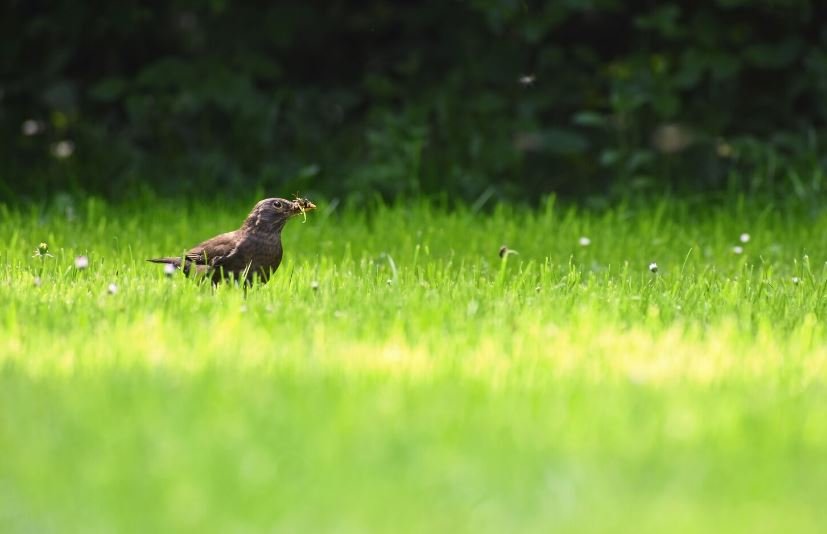
Small farms with grassy margins, varied pastureland, and unmowed field edges that once provided fallback habitat have mostly been replaced by industrial row cropping. The rough, weedy ground cover that meadowlarks rely on for nesting has been eliminated by larger fields, earlier mowing schedules, increased pesticide use, and tighter grazing. An entire season’s worth of reproduction is lost in an afternoon if a hay field is cut in May before the nestlings have fledged. This is a practical consequence that is rarely discussed. When this kind of disturbance is repeated year after year over millions of acres, it leads to population collapse.
What the meadowlark’s absence indicates about the soil itself is more difficult to measure but worth considering. A healthy grassland is more than just a setting for attractive birds. It is among the planet’s most productive ecosystems. In ways that tilled cropland just cannot match, native prairie roots can reach fifteen feet into the ground, creating organic matter, retaining water, preventing erosion, and storing carbon.
When grassland birds vanish, it’s frequently because the underlying ecological complexity—insect populations, plant diversity, and the unaltered soil structure that keeps the entire system functioning—has been eliminated. In actuality, the meadowlark is a gauge of the health of the soil. When it disappears, the land has already lost something essential.
Nearly half of Americans are unaware of grasslands as an ecosystem, according to a recent World Wildlife Fund survey, and about 70% of America’s grasslands have already disappeared. Perhaps the most concerning aspect of all is that awareness gap. Fighting for something you don’t know you’re losing is difficult.
Delayed hay-cutting programs, the Conservation Reserve Program, which pays landowners to maintain acres in grass, and focused initiatives to restore native prairie on marginal cropland are some of the conservation tools that are helpful. These are not radical ideas. They are useful, and for farmers who are willing to try them, they are frequently profitable. Scale is the issue. The loss is occurring more quickly than the recovery.
As you stand on the edge of a Midwest prairie patch that has been restored, you begin to see why there is such a commotion. The sound produced by the wind blowing through switchgrass is unique. The ground beneath your feet feels different—it’s alive and spongy. And occasionally, if you’re quiet and fortunate, you’ll hear that whistle once more, far away but genuine, somewhere beyond the field’s edge. That sound is worth preserving. For the sake of everything beneath it, not just the bird.
