


The air has weight when you stand at the edge of a tidal salt marsh in coastal Virginia in July. It smells of wet peat and sulfur, of something old and slowly rotting underfoot. You fall to your thigh if you take a wrong step. A woven cup of vegetation, possibly containing four eggs, is positioned almost precisely above the tide line when you step right and the grass parts. Those eggs won’t make it through the month if they are a few inches lower.
For birds like the saltmarsh sparrow, that margin—a few inches, a few days, or a 28-day window between lunar peak tides—is all that separates a successful nesting season from disaster. Additionally, that margin is getting smaller. Quick.
A long-term study that examined marsh-nesting birds in 186 plots in the lower Chesapeake Bay and compared counts from 1992 and 2021 was published in PLOS ONE in June 2025. It’s difficult to accept the numbers. Over the course of those 29 years, the total number of marsh-nesting birds fell by almost 66%. Eight of the ten species that were assessed saw a considerable decline. By the time researchers returned, four had essentially disappeared from focal marshes. The sedge wren has completely disappeared. The Virginia rail has decreased by 97%. The song “Sparrow” is down 97.5%. Nearly 95 percent are eastern meadowlarks.
Those aren’t variations. That is a collapse. The pattern beneath the numbers is what adds complexity and, in some ways, unease to this tale. The marsh specialists are not the birds that are disappearing the fastest. The first and most noticeable species to vanish from these marshes were the generalists, which could theoretically raise a brood in an upland field or a nontidal wetland. The birds that have nowhere else to go, known as saltmarsh obligates, have persisted longer. They accounted for more than 83% of all detections by 2021, compared to roughly 66% in 1992. Resilience is what it sounds like. It isn’t. It appears to be a final stand.
The Chesapeake Bay is located in what scientists refer to as a hotspot for sea level rise. Due in part to the land’s sinking, the rate of rise there is about twice that of the global average. Not only is the water rising, but it’s doing so more quickly than it did a generation ago.
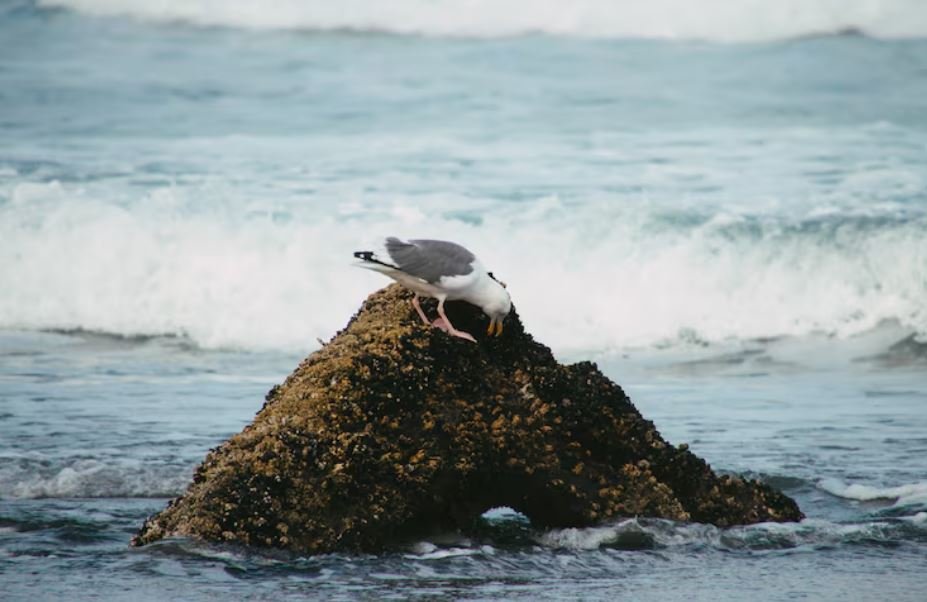
By building themselves upward and accumulating organic matter and sediment, salt marshes can occasionally keep up. They are no longer in charge of it in many parts of the Bay. The grass is pulling back. The high marsh, where song sparrows and meadowlarks build their nests amid salt meadow hay, is changing into either open water or black needlerush. By 2021, the tall cordgrass stands that provided shelter to marsh wrens in 1992 had mostly disappeared.
The way these birds are being undone has a certain, almost unremarkable quality. The orange-buff-faced, finely streaked saltmarsh sparrow times its nesting to coincide with the interval between monthly tidal peaks. Before the next major flood, it has about 28 days to construct a nest, lay eggs, incubate them, and raise the chicks to the point where they can climb into nearby vegetation.
According to research, if tidal conditions continue to deteriorate, this species may face functional extinction as early as 2035. Even federal protections for endangered species might only serve to buy time.
The damage that humans did to Atlantic coast salt marshes in the 1930s contributed to their precarious state even before sea level rise accelerated. Nearly 90% of Atlantic coastal marshes had hand-dug drainage ditches as a result of mosquito control programs; the full ecological costs of this massive intervention were not fully understood for decades. With uncertain outcomes, restoration efforts are just starting to address the degradation of sparrow habitat caused by the standing water disruption.
Clapper rails and red-winged blackbirds, the birds that have survived the longest, present an intriguing contrast. Clapper rails choose places to build their nests that are high and covered in vegetation. They seem to have some built-in flood risk adjustment. In contrast, red-winged blackbirds just moved. Phragmites, the invasive reed that has spread throughout the lower Bay, replaced the tall cordgrass. The marsh experts lack precisely that flexibility. They are not designed to be mobile. They are designed for this specific location and tidal rhythm. And they are losing that location.
The research clearly illustrates the hard irony of the specialist’s destiny. Because their environment was so harsh, these birds developed special adaptations, such as salt-tolerant kidneys, darker plumage believed to prevent feather degradation, and the capacity to recycle rapidly following nest loss. They bought time with those qualities. However, they did not purchase a way out. According to the study’s own framing, experts are essentially trapped as the marsh continues to deteriorate. Generalists depart. Experts remain until they are unable to do so.
The scope and effectiveness of the remaining management options are unknown. Predator control, removing obstacles to allow marshes to migrate upslope, and raising marsh surfaces through sediment addition are all being investigated. None have undergone testing on a scale appropriate for a troubled population. For the foreseeable future, the Chesapeake Bay will most likely remain a hotspot for sea level rise. The remaining marshes will experience more frequent and severe flooding. The window of opportunity for successful nesting will continue to shrink.
Looking at those survey numbers from 1992 makes it difficult to avoid feeling as though the 2021 data are missing something. The high marsh’s meadowlarks. Sparrows singing on the edge of the marsh. They were present. Most of them aren’t anymore. The marsh is quieter, but not in a pleasant way.
