


Dr. Kimberlie McCue stood under a massive saguaro cactus in Phoenix on a 105-degree afternoon and pointed to a wound in its trunk where one of its arms had broken off and fallen to the ground. The circumstances, according to her, are “far from normal.” Deliberate and restrained, that phrase somehow made it worse. When the truth is too big to bear comfortably, scientists often try to minimize it.
The story of those saguaros—thirteen arms lost in one summer at the Desert Botanical Garden, which has maintained records since 1939—is the kind that makes headlines for a short while before going unreported. People moved on after seeing pictures of enormous arms that had fallen to the ground. However, those who actually research these systems understand that the loss is more than just dramatic and visually appealing. It is structural. It is profound.
Across the American Southwest and into Mexico, the Sonoran Desert spans more than 100,000 square miles. It is the world’s most biologically diverse desert. And it is disintegrating at its seams by practically every measure that is currently available. Words like “unraveling” are used by climate scientists and field ecologists to describe what’s happening; it’s not collapse yet, but it’s moving steadily in that direction. The region has been experiencing a megadrought since about 2000. It is now much more severe due to climate change.
The slow pace of the saguaro’s story makes it useful. It takes ten years for a seedling to grow two inches. The plant doesn’t begin to bloom until it is between forty and sixty years old. Around the age of seventy, an arm begins to form. It takes about 125 years to reach full maturity. Therefore, when an arm falls or a cactus that has lived in the desert for 150 years suddenly begins to suffocate because nighttime temperatures never fall below 90 degrees, it symbolizes the accumulation of damage over years or even decades. Phoenix experienced the hottest and driest summer on record in 2023. However, McCue points out that you have to go back to 2020 in order to comprehend the losses of 2023. The death and the injury are not the same thing.
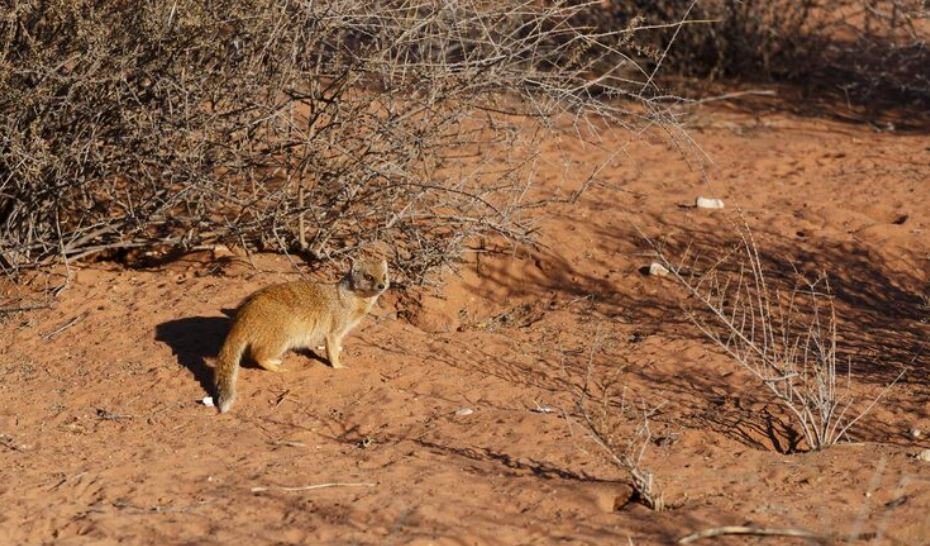
It’s difficult to ignore the implications for the other species that coexist in this area, the ones that lack the saguaro’s notoriety and striking visuals. According to U.S. Forest Service research, nearly 1,200 rare plant species in the American Southwest are thought to be in danger. The majority of people were unable to identify three of them.
Due to regional development, the desert tortoise, which is classified as threatened, is losing its habitat. For years, wetland communities in arid regions—which are already uncommon and undervalued—have been subtly disappearing. The continent’s most drought-tolerant perennial plant, creosote bushes, is dying. It is difficult to ignore the signal when the desert’s hardiest plants are having difficulties.
The jaguars come next. Recently, images of a jaguar in the mountains close to Tucson surfaced; this is the fifth jaguar seen in the region since 2011, and it can be recognized by its characteristic rosette markings. A jaguar in Arizona is an amazing sight. It also serves as a reminder of the thread’s thinness. Before being driven out by habitat loss and hunting, these animals used to roam freely throughout the American Southwest.
In the same way that any survival against the odds is encouraging, their hesitant, camera-trap return is encouraging. However, the shrinking habitat, shifting climate, and border barriers still exist. According to Susan Malusa, who oversees the University of Arizona’s jaguar and ocelot project, the jaguar continues to return because it is meeting its needs. For the time being.
For the time being, that phrase holds significance. It took millennia for the ecological relationships of the Sonoran Desert to develop. The insects that pollinate the cacti, the birds that nest in their cavities, the nurse plants that protect young saguaro seedlings from predators and extreme temperatures, and the predators that control populations throughout the food web are all intertwined. Plant ecologist Tesa Madsen-Hepp of UC Riverside characterizes the current situation as a “breakdown phase.” She claims that if it persists, ecosystem collapse may result. More than 40% of the land area on Earth is made up of dryland ecosystems. They store vast amounts of carbon. What occurs in the desert does not remain there.
This crisis’s silence is a contributing factor. These systems are sluggish. The dying takes place over several years. Under the surface of public awareness, the losses mount up in the form of species that don’t make the evening news, arms that don’t grow back, and seedlings that don’t make it through their first summer. The kind of disappearance that doesn’t make an announcement is, in a sense, the most honest.
