


The vastness of it all begins to seem almost unnatural when you drive through the flat, industrial farmlands of northern China or along the agricultural corridors of the American Midwest. Tens of thousands of birds crammed into spaces intended for maximum productivity in sheds that span hundreds of meters. It works well. It makes money. And it might be one of the most important choices that modern agriculture has ever made.
For a very long time, avian influenza has been spreading among populations of wild birds. That’s nothing new. The interface between those wild populations and the dense, commercially farmed flocks, which currently number in the billions worldwide, has drastically changed. On its own, the virus did not become more ambitious. It was given more chances.
Using GPS telemetry to track wild waterfowl, researchers have discovered something that seems almost too obvious: wild ducks using retention ponds, dairy lots, and beef cattle feedlots inside commercial livestock facilities, day and night, over months or even years. These are not sporadic visits. The birds exhibit high site fidelity, frequently returning to the same locations and spreading the virus between farm environments and natural wetlands in ways that are challenging to monitor and even more challenging to manage.
One northern pintail was observed migrating across continents to Russia. Anyone considering managing an outbreak should be seriously concerned about the distances these birds travel and the stops they make along the way.
A crowded wet market, a wild bird, and a spillover event are the traditional depictions of avian flu transmission. That image is not complete. In actuality, migratory flyways that connect isolated wetlands to commercial poultry facilities over thousands of kilometers operate similarly to viral highways. For example, Xinjiang has been found to be a seasonal transit and amplification node for H11 avian influenza, with viruses exhibiting genetic similarities to strains from Europe, South Asia, East Asia, and even Antarctica. Geographic dispersal of that kind is not gradual. It takes place on wings.
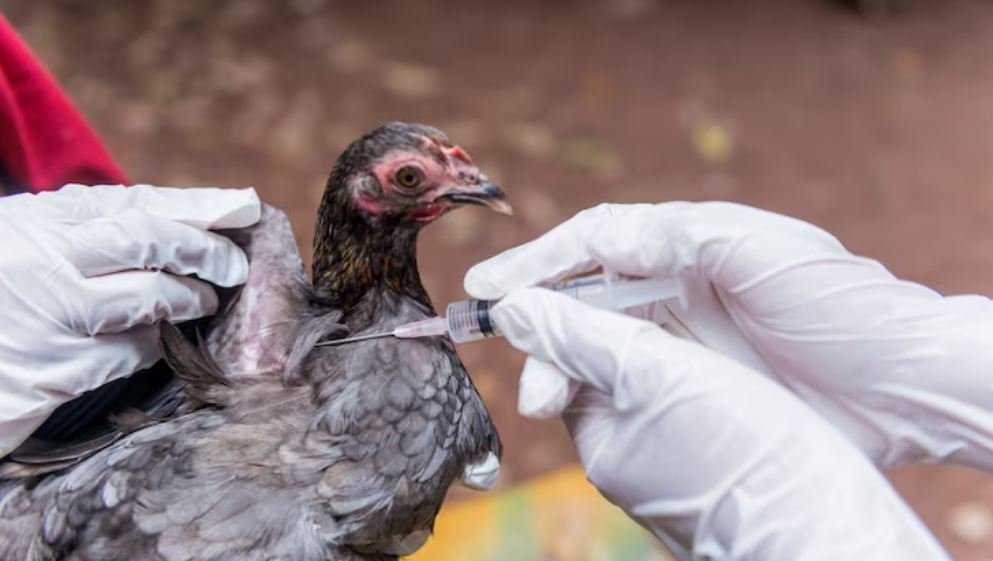
The sheer density at which commercial poultry now reside is what makes the current situation feel different and, to be honest, more concerning. The conditions for quick mutation and reassortment become nearly perfect when a virus infects a flock of 50,000 birds kept in close quarters. These conditions can lead to the evolution of highly pathogenic strains, which usually start from low-pathogenic precursors. In an industrial shed, a mutation that might burn out in a small wild population finds something completely different: an endless supply of hosts, little genetic resistance, and nowhere to release the pressure.
The frequency with which transmission at the waterfowl-livestock interface results in complete outbreak events is still unknown. The mechanisms are being researched and discussed. However, there is mounting evidence that even tiny or remote water sources close to buildings can draw wild birds, resulting in contact points that biosecurity protocols weren’t always intended to handle. Furthermore, the effects of a pathogen like HPAI H5N1 clade 2.3.4.4b, which is the predominant strain in the current worldwide outbreaks, spread quickly once it enters a commercial flock. Death rates can be as high as 100%. Whole flocks have vanished.
This is also part of a broader ecological picture. Since 2021, an extraordinary variety of bird and mammal species have been impacted by avian influenza, which has spread across continents at a scale that researchers describe as unprecedented. dairy herds in the United States. seals. Foxes. The virus is consistently finding new hosts, which suggests adaptation rather than chance. For the same fundamental reason as industrial farms, colonial breeding species—birds that build their nests in large numbers—are thought to be especially vulnerable because density speeds up the spread of disease.
Beneath all of this is the unsettling reality that the systems designed to feed the world’s expanding population might also be some of the most effective breeding grounds for the pathogens that pose a threat to it. That does not mean that modern agriculture should be destroyed overnight. Perhaps this is a reason to consider the costs of density more carefully, not only in terms of feed conversion ratios and per-unit economics, but also in terms of viral risk that quietly builds up over billions of birds, season after season.
