

Outside of a small, inconspicuous town in the American Midwest, there is a reservoir that is now home to several acres of dark blue panels that are slightly angled toward the sun. It resembles an odd floating parking lot when viewed from a distance. However, something different is taking place up close. Between the rows, coots paddle. Near the anchor wires, a great blue heron remains still, waiting for any fish that might be disturbed by the shade.
Strangely enough, that picture sums up the majority of the current discussion over floating solar. Over the past ten years, the technology has rapidly spread, especially in Asia, where there is an abundance of water surfaces and a shortage of land. Old quarry lakes, irrigation ponds, and reservoirs behind hydroelectric dams have all emerged as potential locations for arrays that might provide electricity without occupying agricultural land. It’s a compelling pitch. A different, more complicated topic is whether it’s beneficial for the birds who use the same waters.
According to preliminary data, the news is more positive than doubters anticipated. Large panel arrays have the tendency to calm a body of water, reducing foot and boat traffic close to the shore. That kind of tranquility is more important than most people realize for birds attempting to rest during a lengthy journey. Additionally, there is evidence that small fish and invertebrates may be drawn to the protected, shaded water beneath panels, providing new foraging opportunities for some species. It is currently being researched rather than verified, and no one anticipated it when the technology was first created.
However, not all aspects of floating solar are comforting. Polarized light pollution is a phenomena that can cause birds flying overhead to mistake the surface for open water due to the reflectivity of panels, which can be quite reflective at times. According to what has been reported thus far, collision incidences related to this are still uncommon, but rare does not equate to zero. Panel coatings and array configurations that could further lessen the impact are still being developed by engineers.
Additionally, there is the shading issue, which may seem insignificant at first. When sunlight is blocked from reaching the water, the surface temperature drops, which can subtly change the morphology of any aquatic vegetation that is growing beneath. Some species may have less food when there are fewer plants, but other species may benefit. How these alterations spread throughout a season, much alone several years, has never been thoroughly mapped. Ecologists are typically more concerned about this kind of gap than engineers, who are primarily concerned with output efficiency and structural durability.
The projects that approach this as a design issue rather than an afterthought appear to be the most sensible. It’s not glamorous, but leaving buffer zones of open water untouched, placing arrays away from known nesting areas, conducting bird surveys before construction starts and continuing them for years afterward—all of these factors make the difference between a project that quietly succeeds and one that later makes awkward headlines. Similar to how most industries adopt environmental review once a few early projects receive criticism, utility corporations appear to be gradually realizing this.
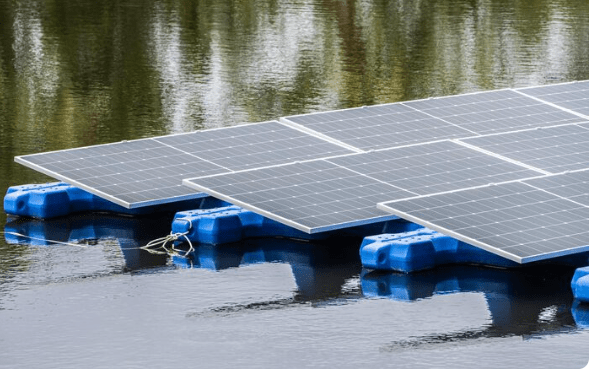
As the industry expands, there is a cautious optimism that is worth clinging to. In certain situations, floating solar may actually provide birds with a more peaceful location to rest than they had previously. It is not intrinsically antagonistic to wildlife. However, as the technology is still relatively new, its long-term ecological impact is still, to be honest, unknown. It will probably take another ten years of observation before anyone can declare with any degree of certainty how this all works out because the reservoirs being constructed today are essentially living experiments.
