


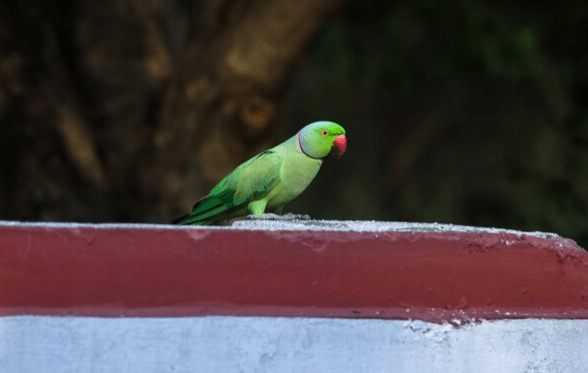
You’ll hear them before you see them if you go in Kensington Gardens on a gloomy February morning. A ragged, chattering shriek will cut thru the plane trees, followed by a flash of green arrowing overhead. For many years, ring-necked parakeets have been a feature of London’s skyline. How they got here is a mystery to everyone. The common narrative is that Jimi Hendrix released a pair on Carnaby Street in the 1960s, although most ornithologists regard that as lovely fiction rather than fact.
The fact that these birds have become so polarizing is not absurd. Parts of the shooting establishment and rural conservationists are on one side, claiming that the parakeets are destroying orchards, driving out native species, and acting like an ecological problem disguised in attractive feathers. On the other side, and this is where things get fascinating, are city dwellers who now consider the birds to be more like their neighbors. The neighbors are noisy and a little unruly, but they are still neighbors.
Regarding this, Chris Packham has been remarkably direct. According to him, there is an uneasy undertone to some of the animosity toward parakeets, more akin to mistrust of strangers than genuine concern for local fauna. Not everyone in the birding community agrees with his controversial assertion. However, it’s difficult to ignore how the vocabulary used against parakeets—invasive, foreign, and out of place—echoes language used in completely different, far more human talks that are currently taking place in Britain.
Beneath all of this is a scientific argument that merits more attention than it typically receives. According to some research, parakeets, especially in parks with older trees, compete with nuthatches and other cavity-nesting birds for the few available tree hollows. It’s genuinely unclear if this rivalry is causing population declines or if it’s just making species that are already under stress from habitat loss more stressed. In either case, researchers appear hesitant to make definitive judgments.
Parakeets might be lawfully shot for sport or pest control if they are included to quarry lists, according to a proposal made by the British Association for Shooting and Conservation. Animal welfare organizations and regular Londoners who had grown to love seeing flocks spin over Battersea Park at nightfall reacted negatively to that plan alone. It’s an odd collision: a bird that has almost unintentionally come to represent contemporary cosmopolitan city life collides head-on with traditional rural hunting culture.
It’s easy to assume that the parakeets themselves are innocent of anything other than being loud, green, and successful when you see this happen from the sidelines. They did not decide to turn into a metaphor. However, analogies tend to attach themselves to what is most obvious, and the most visible example of nature is a flock of screeching, vividly colored birds circling over a London tower block.
Ecology is arguably less important to Britain’s decision to cull them, protect them, or just debate them endlessly than the vision of the nation that people choose to believe in. It’s not really a bird issue. It was never the case.
