
It has an almost ridiculous quality. Grocery prices are sent into freefall, or stratospheric territory, almost overnight by a single-celled organism that is invisible to the unaided eye, incapable of thought or intention, and capable of doing what supply chain disruptions, fuel price fluctuations, and even trade tariffs frequently cannot. You can learn more about microbial economics from the empty dairy aisle or the unexpectedly high price of shredded cheese than from any quarterly earnings report if you happen to stroll through a supermarket on the wrong week following a contamination alert.
Listeria in soft cheeses was the cause. E. Coli in romaine lettuce caused it. Additionally, panic buying and supply chain anxiety brought on by a new pathogen during the early months of COVID-19 caused grocery price volatility to reach levels not seen in decades. There is no theoretical link between the macroeconomics of your weekly shopping trip and microscopic pathogens. It is reliable, well-documented, and most likely more significant than most customers are aware.
Understanding the mechanics underlying this is important because they are not as clear-cut as they might seem. A recall is the first action taken when a pathogen is found, such as Listeria monocytogenes in a dairy processing facility. Goods come off the shelves.
Facilities are closed for thorough cleaning and reexamination. Employees are sent home or reassigned. However, the factory gates are not where the ripple effect ends. Distributors who were dependent on that facility rush to find other vendors. Retailers change prices due to a shortage of inventory and anxious consumers. Sometimes they are left with no option. Due to the sudden increase in demand, rival suppliers also covertly raise their prices. Within days, a recall at one plant can lead to a shortage throughout the entire region.
Understanding precisely how bacterial pathogens behave at the cellular level—how they divide, spread, and evade both immune systems and antibiotics—is a growing area of study for researchers at organizations like Johns Hopkins. Researchers like Erin Goley, who investigates the motility and proliferation of bacteria, are developing more focused remedies for diseases carried by ticks.
In order to create more sophisticated antibiotics, Jie Xiao is mapping the structure of bacterial cell walls. The implications for public health are clear, and the science is convincing. However, there is a second aspect of this work that is frequently overlooked: every development in our knowledge of pathogen behavior is also, inadvertently, an economic intervention. Faster containment results from improved pathogen detection. Reduced recalls result from quicker containment. Reduced recalls result in less supply chain disruption and, eventually, more stable prices at the register.
It was impossible to overlook this connection during the COVID-19 pandemic. The SARS-CoV-2 outbreak affected every stage of the food supply chain, from harvesting and processing to packaging and distribution, according to research published in Food Control. Processing facilities suffer from a labor shortage. Distribution was slowed by transportation constraints.
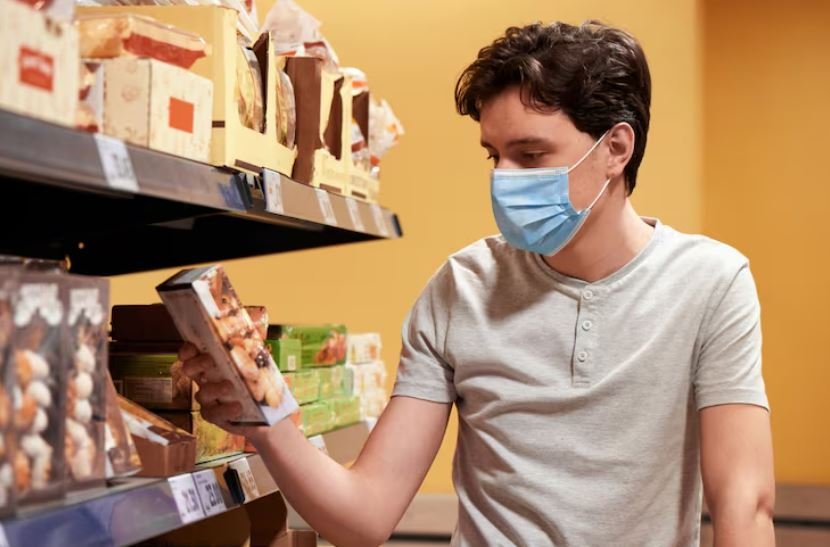
There are concerns about how safely meat and seafood could be transported from plant to consumer after the virus was found on packaging materials and in cold storage facilities. Panic buying, stockpiling, and price volatility on everything from eggs to canned goods were the expected outcomes. It is important to note that the chief economist for the FAO cautioned at the time that there would be no real way out of the pandemic without food security. He was correct, and the cost of groceries in the majority of nations in 2020 and 2021 strengthened his case more than any policy document.
The speed of pathogen-driven price disruption makes it especially challenging to control. A bacterial contamination event can escalate from a single positive test to a nationwide recall within 72 hours, in contrast to a drought, which builds gradually and gives markets time to anticipate shortages. The supply chain has already been rearranged to accommodate the gap by the time the majority of consumers learn about it. Prices have already changed. This place does not have a slow warning system. The microbe doesn’t make an announcement.
Seeing this cycle recur every few years makes it difficult to ignore the fact that the food system’s infrastructure has very little real shock-absorption. Large amounts of product are impacted by contamination at a single facility due to centralized processing. Due to the narrow profit margins in the food retail industry, even minor supply discrepancies cause prices to rise in ways that seem out of proportion. Additionally, it can take months for consumer confidence to rebound after an outbreak, which can stifle demand for entire product categories long after the pathogen threat has subsided.
This is not a straightforward solution. More dispersed supply chains, improved microbiology, quicker detection, and more intelligent processing technology would all be beneficial. The direction of the research is correct. However, the next time grocery prices suddenly rise, it might be worthwhile to look past the typical suspects, such as fuel prices, import duties, and seasonal demand, to see if something much smaller and more difficult to spot is actually causing the harm.
