


Stretches of lowland forest that haven’t changed much in centuries can be found deep within the island of Samar, where the road turns to mud and the canopy closes overhead like a ceiling. Clear, cold streams, tangled undergrowth, and old-growth dipterocarps. It’s the kind of place where you can understand why people fight to protect it without having to listen to a lecture.
Additionally, some of them are fighting with checkbooks more and more.
Samar’s remaining lowland forest has been discreetly acquired over the past few years by a loosely affiliated group of local land trusts, private philanthropists, and conservation organizations. There is no single name or headquarters for the endeavor. Press releases don’t exist. However, the amount of money involved—which has already reached tens of millions of pesos across several transactions—indicates that this is not a lighthearted experiment.
The reasoning behind it is simple: you have control over what happens to the land if you own it. For many years, Samar’s lowland forests have been under stress. One of the Philippines’ most biologically significant ecosystems has been severely damaged by both legal and illegal logging, agricultural conversion, and lax enforcement of protected area boundaries. The island is home to species that are unique to the Wallacea biodiversity hotspot. It costs more than just trees to lose the lowland cover. Everything that depends on them is costly.
The approach is what sets this moment apart from previous conservation campaigns. Previous initiatives relied almost exclusively on government protection, designating regions as critical habitats or national parks and then hoping that enforcement would follow. Often, it didn’t. The new strategy views land as private property that can be purchased, held, and managed independently of political cycles and governmental permits.
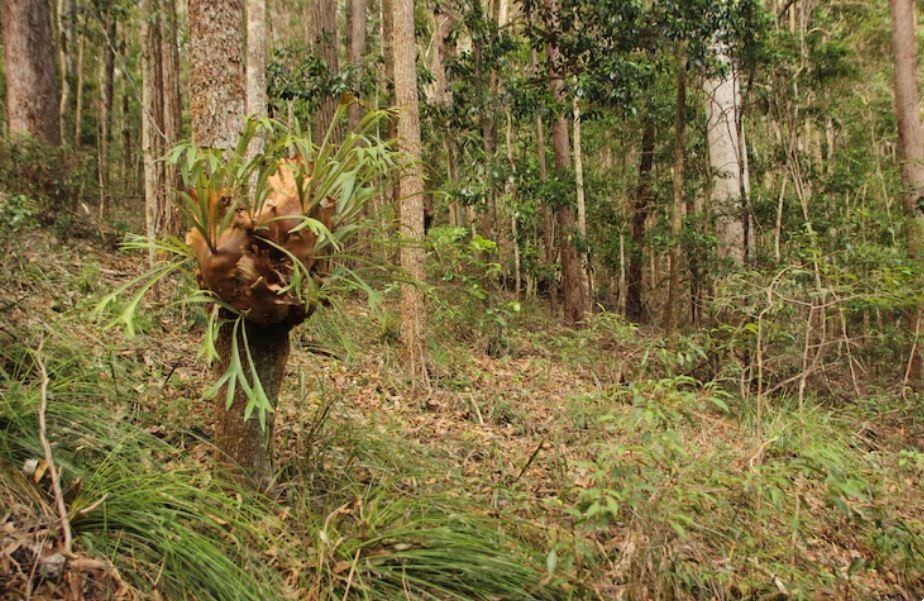
This model might be more effective in theory than in reality. The communities that reside in or close to these forests have their own justifiable needs and claims, and purchasing and maintaining land is costly. The indigenous peoples who have been managing these landscapes for generations may be marginalized by private acquisition, even if it is done with good intentions, according to some local advocates. It would be incorrect for anyone closely observing this to dismiss the tensions because they are real.
It is difficult to dispute the urgency, though. Lowland tropical forests disappear more quickly than any other forest type in the Asia-Pacific region, according to remote sensing surveys. This is because lowland tropical forests are easily accessible, they are located on level land that can be used for farming, and they were traditionally the first to be cleared. Even fifty years ago, Samar’s lowland forest cover was much greater than it is now. Outside of a few disputed borders, what is left is dispersed, under stress, and essentially unprotected.
There is precedent for the private land acquisition model elsewhere. A few years ago, the world took notice of a Swedish billionaire’s decision to purchase and shut down a logging company that controlled 400,000 acres of Amazon rainforest. Smaller groups in Southeast Asia and Latin America have employed comparable strategies to safeguard vital corridors on a scale closer to Samar’s. Forests don’t wait, while governments move slowly. This is what unites them.
It’s genuinely unclear if Samar’s patchwork of discreet transactions will result in something long-lasting. The packages that are being purchased must be connected. They require oversight, management, and some kind of long-term legal protection that endures shifts in funding or ownership. Additionally, rather than being an afterthought, the communities that coexist with these forests must be included in the plan.
Speaking with those involved gives the impression that they are aware of all of this. that the goal of the secrecy is to prevent land prices from rising before the work is finished, not to conceal something improper. Everyone with a hectare and a title begins doing math as soon as word gets out that someone is purchasing.
Naturally, the jungle is unaware of all of this. It simply stands there, carrying out its routine. The issue is whether the individuals who write the checks are able to do so quickly enough.
