


A regional issue ceases to be regional at a certain point, which is typically quiet and unglamorous. That turning point for bird flu occurred sometime in June 2026, when a greater crested tern discovered off the coast of Robe, South Australia, tested positive for H5N1. The last inhabited continent without a verified local case of wild birds was Australia. Then it wasn’t.
That confirmation came as a slow alarm to those who make a living monitoring poultry markets; it wasn’t shocking, but it was unnerving. Twelve H5N1 cases had been reported by Australian authorities in three states by the middle of July. Officials cautiously stated that no commercial farms had yet been affected. However, scientists were equally cautious to point out that more cases were probably on the horizon.
What came next was quick and, looking back, predictable. Imports of chicken and eggs were halted almost immediately by Papua New Guinea, one of the major consumers of Australian poultry. No lengthy review procedure. There is no grace period for diplomacy. The trade door just shut. It’s the kind of move that was once considered dramatic. It is becoming commonplace in 2026.
That may be the most remarkable aspect of the current situation. Since about 2021, epidemiologists have been monitoring the clade 2.3.4.4b strain of H5N1, which has spread to every continent. Outbreak-related trade disruptions are now part of the industry’s plans rather than sporadic crises. Countries are responding without waiting to see how bad things get. In a backyard flock, they are sometimes the first to act upon a single detection.
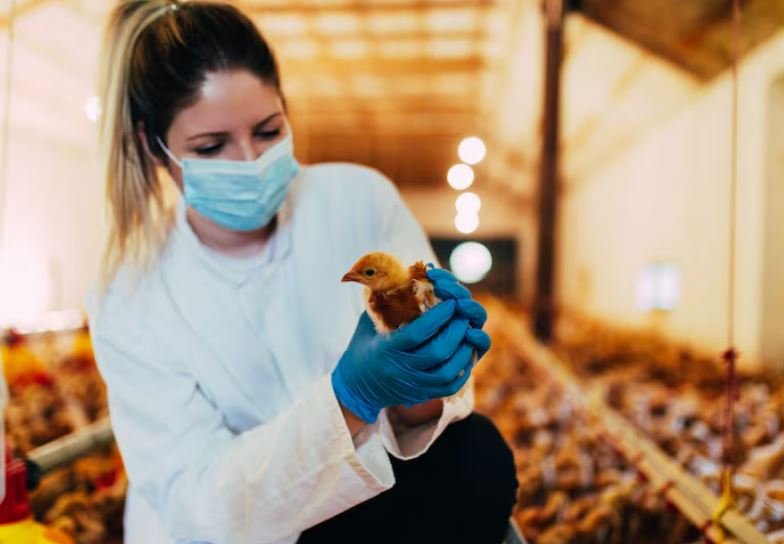
The most striking example of what unchecked spread looks like over time can be found in the United States. A record 147 million birds have been lost in all 50 states and Puerto Rico since the beginning of 2022. In about a month, Ohio lost nearly six million birds, primarily laying hens and turkeys. This is the biggest increase in egg prices since 1980. Farmers have received compensation totaling more than $1.19 billion from the federal government. The fact that the virus infected dairy cattle is another detail that truly shocked scientists. Over 940 herds were afflicted. This jump into cows had not been observed in previous outbreaks, and its emergence in the Netherlands in early 2026—the first case in cattle outside of North America—suggested that the pattern might not remain limited to a single nation.
Back in the Southern Hemisphere, New Zealand was confronted with an almost cinematic-scale situation. 550,000 free-range hens from four Mainland Poultry farms were placed under lockdown due to a second bird flu case. That represents a sudden restriction of about 40% of the nation’s egg supply. The industry’s response, which calls for a regional alert system with green, amber, and red zones akin to Covid, demonstrates how drastically the way people think has changed. Few people in the poultry industry would have looked to pandemic-era policy frameworks as a model twelve months ago.
Australian economists are now candidly discussing the possibility of inflation if the virus spreads to commercial farms. According to RMIT University Associate Professor Thi Thu Hao Van, if H5N1 infects poultry populations, widespread culling becomes a real possibility, with immediate consequences for food security. The biosecurity recommendations, which include keeping equipment clean, limiting contact between domestic and wild birds, and quarantining new stock, seem fairly straightforward. Maintaining it on thousands of farms—many of which are intentionally free-range—is a completely different story.
The industry currently feels that the previous approach, which involved responding to outbreaks, paying farmers, and waiting for the season to end, is no longer appropriate. In 2026, bird flu is not seasonal. It’s not contained. Furthermore, there is insufficient predictability in the trade restrictions it causes to allow for any kind of confident planning. Recently, the Philippines confirmed a new outbreak in the province of Oriental Mindoro. A flock of 39 birds in the backyard were all killed. A tiny number, but a reminder that the virus continues to find new entry points, especially through live-bird markets and areas of Asia that are heavily farmed.
The question of whether governments and producers can develop systems quickly enough to keep up with a pathogen that travels through migratory birds, crosses borders, and now appears to survive in cattle remains unanswered. In the majority of the major producing nations, there is no widely accessible vaccine for commercial flocks. The main method of containment is still culling. And the birds that began the most recent chapter in this tale are still in the air somewhere along the coast of South Australia.
