


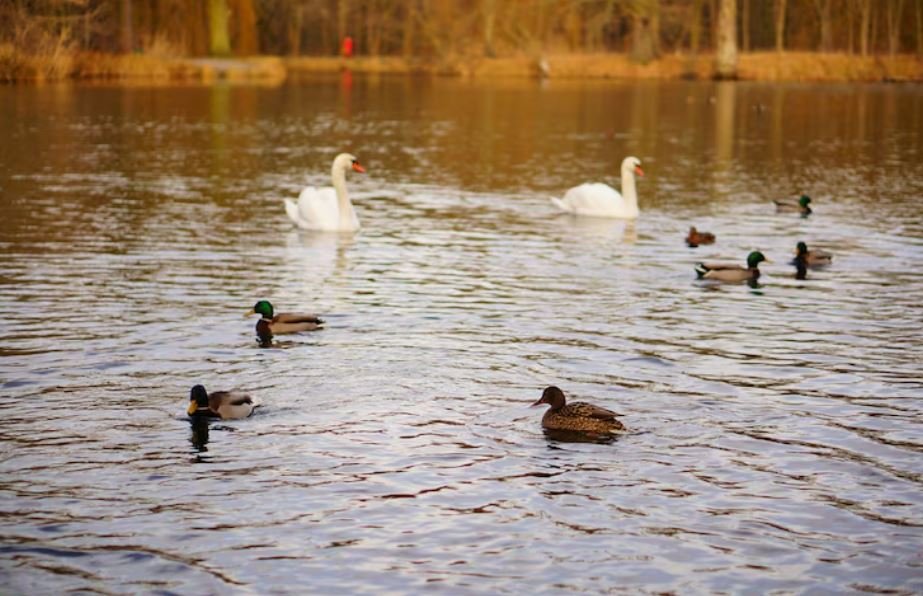
Watching a mallard paddle silently across a city pond with bread crusts floating nearby, pigeons crowding the bank, and kids pointing from the edge is unsettling. It appears to be quite typical. This is precisely why it is so simple to overlook the spread of avian influenza through urban parks until it is discovered.
This past winter, scientists and wildlife rehabilitators in New York City reported a sharp increase in suspected H5N1 cases among urban bird populations. Raptors, gulls, and waterfowl are among the creatures that coexist with millions of people on a daily basis. There was no distant wetland where the cases were exploding. They were appearing in public ponds, city parks, and locations where city dwellers mindlessly feed ducks on weekend mornings.
Research from Atlantic Canada has begun to shed light on how widespread these outbreaks can be, even in local populations that don’t travel far. Antibody seroprevalence in the local duck population reached 100% during a single winter outbreak, indicating that nearly all of the ducks in the monitored group had contracted the disease, according to a study that tracked wild urban ducks in St. John’s. No one was spared by the virus. It went all the way through the flock. The following year, a second wave from a different Eurasian lineage arrived, indicating that these are not one-time occurrences but rather recurrent ones.
When you imagine a crowded urban park, that level of saturation is worth considering. The waterfowl at a public duck pond are not kept apart from the larger flyway, and migratory birds have no regard for city limits. They engage with birds that fly by. Water is shared between them. Once introduced, the virus doesn’t require much assistance.
Authorities have repeatedly stated that most people’s casual park visits pose little risk to public health. However, “low” does not equate to zero, and the truth is that urban outbreak response is still lagging behind the global scope of H5N1. Since 2021, at least 485 bird species and 37 mammal species have been impacted. Bears, dairy cattle, sea lions, and foxes have all been reported to carry the virus. Humans have also been affected; between 2003 and April 2025, the WHO received reports of 973 confirmed H5N1 human cases, with a case fatality rate of slightly less than 50%. However, the majority of these cases involved prolonged, direct contact with infected birds or contaminated environments.
The difficulty of sustaining awareness in an urban environment is a feature that public health messaging frequently ignores. It is possible to cordon off a farm. It is possible to close a wildlife refuge. A different kind of problem arises in a public park with a duck pond in the middle of a large city. Every day, people pass through it. Along the banks, dogs run. At the water’s edge, toddlers crouch. There are signs warning people not to touch sick birds, but most people ignore them.
However, research is showing that urban waterfowl populations actively participate in viral circulation rather than being passive victims of these outbreaks. Swans, geese, and ducks that live there may carry the virus, recover, and then contract it again when a new lineage shows up. Immunity declines. For strain-specific antibodies, the St. John’s study found that a population that reached full seroprevalence in one winter can become susceptible again in about six months. By December, the pond that appeared secure in the spring might not be the same.
Cities have yet to fully resolve this practical tension. In public parks, feeding waterfowl is common, subtly encouraged by the presence of friendly birds, and nearly never prohibited. Additionally, it keeps birds accustomed to human space, concentrates them in ways that facilitate transmission, and produces precisely the kind of dense gathering conditions that accelerate the spread of viruses. The majority of municipal governments have been slow to provide a definitive response to the question of whether cities should actively discourage it during active outbreak periods.
The park’s ducks are not adversaries. Nobody benefits from that framing. However, there is a good reason to pay more attention to what inhabits urban green spaces—not in a panicked manner, but with a sober recognition that the distinction between city ponds and wild flyways has always been more hazy than we have chosen to think.
