


Millions of birds take a desperate risk every autumn somewhere above the well-kept hedges and colorful flower beds of suburban America. They are riding thermals over highways and shopping malls, burning through fat reserves, and navigating by stars, all while looking for one thing: enough food to keep going. Even in well-meaning yards, what they discover is essentially useless.
It has an almost paradoxical quality. Even with an abundant appearance—roses climbing trellises, ornamental grasses swaying, imported shrubs bearing waxy berries—a garden can serve as a mid-migration bird’s nutritional desert. Lack of greenery is not the issue. It’s the wrong kind of deficiency.
There is more to migratory birds than just general hunger. It has long been known from studies on avian nutrition that many species rely on very particular food sources both prior to and during migration in order to accumulate the fat reserves necessary for sometimes thousands of miles of flight. In order to survive, songbirds in particular are hardwired to seek out insects and native fruits. Some native berries contain fatty acids that seem to speed up premigratory fat accumulation in ways that non-native alternatives just can’t match. When birds arrive at Delaware Bay in the spring, stopover ecologists have observed them devouring horseshoe crab eggs for days before taking off again. Food isn’t comfort at that point in the journey; it’s fuel, and the wrong fuel doesn’t work.
In most of its current forms, the suburban yard provides very little of what is important. The ornamental plants that are most frequently offered at garden centers in North America are chosen not for their ecological value but rather for their beauty, resistance to disease, and year-round visual appeal. They are essentially invisible to insectivorous migrants because many of them support almost no caterpillars. According to a 2007 study by entomologist Doug Tallamy, whose work has since gained widespread recognition, popular non-native ornamentals like the Bradford pear and Burning Bush support nearly none of the hundreds of caterpillar species that native oaks support. May warblers don’t give a damn about how your yard looks. Whether or not there are insects in the leaves is important to them.
Since the desire to assist is genuine and the gesture feels significant, it is also worthwhile to be truthful about the bird feeder situation. However, the majority of supplemental feeding in suburban areas, such as commercial mixes, bread, and seeds, offers the incorrect kind of nutrition at the incorrect time of year.
According to a study on public feeding in Amsterdam that was published in the Journal of Animal Physiology and Animal Nutrition, the food that urban birds were most frequently given was nutritionally imbalanced and, in certain situations, actually made malnutrition worse rather than better. When birds require particular macronutrients to get ready for the physiological demands of prolonged flight, more calories aren’t the solution.
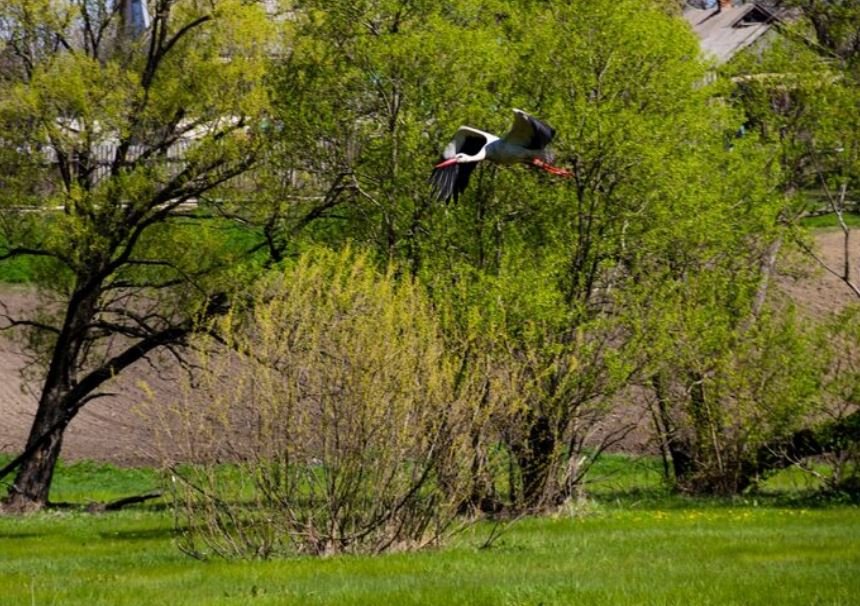
In controlled environments, the Smithsonian’s National Zoo has spent years learning this lesson. There, curators and nutritionists control the diets of migratory songbirds and shorebirds kept in captivity by making seasonal adjustments, such as increasing the amount of insects during breeding and migration seasons and decreasing the amount of plant-based foods during peaks.
Even in captivity, the birds closely adhere to seasonal physiology. Weight, behavior, and health all suffer when the diet is inadequate. There is no keeper keeping an eye on the fat reserves of a backyard bird. Within the range it is willing to search, it has everything it can find.
Slowly, gardeners are beginning to think about this in a different way. The number of native plant nurseries is increasing. In community garden guides, the term “wildlife habitat garden” is used more frequently. Yards that satisfy fundamental ecological requirements, such as native species, pesticide reduction, and water sources, are now being certified by some municipalities. This may indicate a significant shift in the way suburban homeowners perceive the function of their land within a broader system. It’s also possible that the majority of the 90 million acres of residential lawns in the United States have not yet been affected by this niche movement.
The idea of what a migrating bird actually sees while flying over a typical suburb—a patchwork of grass monocultures, ornamental exotics, and leaf-blown cleanliness—is more difficult to dispel. It appears to be a desert from above. Not the dramatic kind with hawks and dunes. The quiet kind, where everything appears to be going well until you realize there isn’t anything growing that a hungry traveler could really use.
