


From the outside, the crates didn’t appear to be much. The kind of cargo that passes through Philippine ports on a daily basis without anyone noticing it has standard packaging and labeling. However, when they were pulled aside for examination by Bureau of Customs officials at the Zamboanga port, they discovered something quite different: dozens of rare parrots that were alive, under stress, and headed for Tokyo.
This type of discovery is not as frequently featured on the front page as it ought to be. Seizures of wildlife are often overlooked in favor of more serious news, treated more like footnotes than as windows into something much more comprehensive and structured. However, anyone who has followed Southeast Asia’s illicit exotic bird trade is aware that shipments like this are common. This data point is part of a pattern that has been developing for many years.
The parrots found in Zamboanga are thought to be protected species under the CITES international wildlife treaty. Customs officials in Shenzhen recently used this framework when they stopped two travelers after finding live parrots in their pants pockets. Even though that detail sounds ridiculous, it captures a true aspect of this trade. It is structured in the middle but improvised around the edges. Someone gives an order. Someone provides. There is a ship.
It has long been known that illegal wildlife trafficking originates in the Philippines and passes through the country. Collectors and dealers are drawn to the archipelago because of its exceptional biodiversity. Ten years ago, Surigao wildlife officers stopped a van that was carrying almost one hundred exotic animals, including wallabies, long-beaked echidnas, and yellow-crested cockatoos. The animals were concealed in tiny containers and were thought to be going to a wealthy buyer in Manila. The approach used back then wasn’t all that dissimilar from the current approach. Transport, deliver, and conceal. If the term “luck” is appropriate, the animals that make it through the journey are the fortunate ones.
Japan has had a complex relationship with the exotic pet market for many years. In some collector circles, there has been a consistent demand for rare birds, especially parrots with striking intelligence or colorful plumage. There is a documented, regulated legal trade. However, the illicit version coexists with it, providing species that aren’t accessible through the appropriate channels. Although the precise source of the Zamboanga shipment’s order and the length of the supply chain are still unknown, the destination itself provides insight into the economics at play.
The wider context in which the Zamboanga bust occurs, rather than just the seizure, is what makes it noteworthy. The region’s customs officials seem to be becoming more competent. In a single operation at Lok Ma Chau in late July, Hong Kong apprehended 250 suspected illegally imported live birds. At the Texas-Mexico border, two parrots were discovered by U.S. Customs and Border Protection concealed inside a pedestrian’s personal belongings. More than 1,600 birds bound for Kuwait were stopped by Nigerian customs. These are not isolated occurrences. Enforcement is gradually catching up to a trade that has long operated in the shadows.
Observing all of this gives the impression that the pressure on networks involved in wildlife smuggling is actually growing. It’s another matter entirely whether that pressure is sufficient to upset the economics and cause the risk to outweigh the reward for the individuals actually managing these shipments. In the past, penalties in the Philippines have not kept up with the value of the goods being transported. For a syndicate, a fine that is insignificant does not serve as a deterrent. It serves as an expense of conducting business.
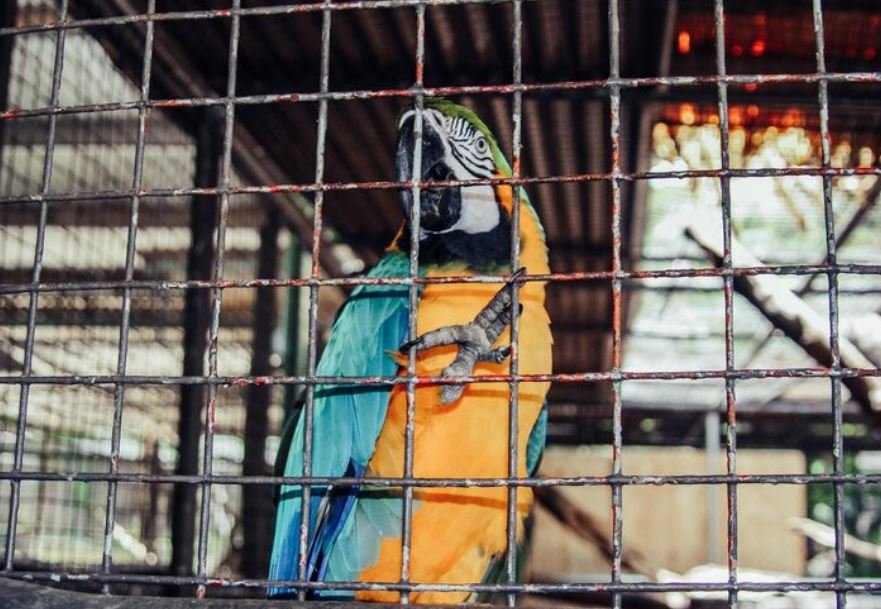
The parrots that were found in Zamboanga are currently being held and are probably being cared for. Some people will get better. Others might not, depending on the duration of their journey and the circumstances they faced. The animals themselves, the physical reality of what smuggling looks like for a creature that has no idea what’s happening to it, are the part of these stories that is frequently overlooked. When you imagine a crate on a dock with birds waiting inside, it’s difficult to ignore that.
More will be revealed by what transpires after the seizure, such as whether charges are brought, whether the supply chain is tracked down, and whether anyone above the shipping level faces actual repercussions.
