


Remote workers are familiar with a specific type of fatigue. It’s not the fatigue that follows physical exertion. The hours of video calls, the persistent screen glow, and the blurring of work and personal time until both feel like neither are more akin to a gradual exhaustion. A strange thing began to happen somewhere in the middle of all of that. During lunch breaks, people started going outside to sit by garden hedges and observe squirrels. Not as a means of increasing productivity. simply because it was beneficial.
This change may have gone mostly unnoticed because it didn’t appear to be particularly significant. It didn’t have an app, a subscription, or a wellness influencer to promote it. Someone would simply leave through the back door, stand by the fence for ten minutes while two sparrows quarreled over a feeder, and then come back to their desk with a slightly less depressing feeling. That eventually became the norm. It turns out that the real mental health work usually takes place during routine.
For some time now, research has been pointing in this direction. Research on nature-based therapy, or what some clinicians refer to as ecotherapy, has consistently shown that individuals who spend meaningful time in natural settings experience improvements in their mood, self-esteem, and depression scores.
According to a 2023 pilot study that was published in the International Journal of Environmental Research and Public Health, nature-based therapy improved mental health and what the researchers called “connectedness to nature.” It also reduced depression. That may sound abstract, but then you realize you haven’t given your inbox a second thought in twenty minutes while standing barefoot on your lawn and watching a hedgehog move through the flower bed.
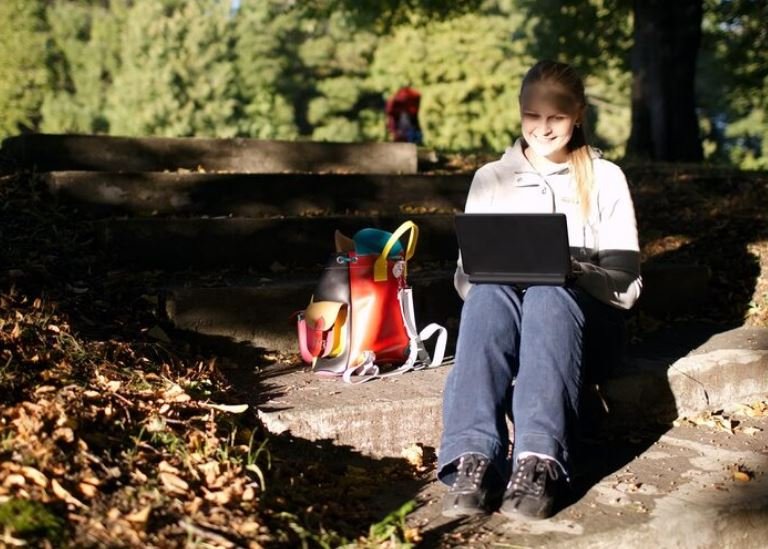
Not only did remote workers have greater access to nature, but they also began to notice the little things. A robin touched down close by. Outside the window, the sound of rain on leaves. These were not spectacular experiences in the wilderness.
They were incidental, local, and everyday. Strangely, it seems that this ordinariness contributes to its success. People who regularly feel connected to nature—not dramatically, but routinely—tend to report higher life satisfaction overall, according to the World Wildlife Fund and other organizations that work at the nexus of public health and conservation.
All of this seems to have been accelerated by the pandemic. Green and blue outdoor areas, such as gardens, parks, and ponds, became the main outlet for a large percentage of the populace during lockdowns. According to research, those who had access to these areas performed significantly better mentally than those who did not. Individuals with higher nature connectedness scores appeared to adjust to behavioral disruptions more quickly. The backyard wasn’t a way to make up for staying put. It became the unifying factor for a lot of people.
The fact that near-home wildlife interaction requires very little is part of what makes it so accessible. You don’t need to plan, hike, or have your own gear. Birds are drawn to a handful of sunflower seeds placed on a windowsill. Insects and eventually the birds that consume them are drawn to an area of unmowed grass. The ecosystem reacts more quickly than most people anticipate. And witnessing that happen on a daily basis, in between meetings, over coffee in the morning, creates something that is difficult to describe but simple to experience. Anxiety-free attention. a non-goal-oriented observation.
For the majority of those who engage in it, it really doesn’t matter if this is considered formal ecotherapy. Animal-assisted therapy, garden therapy, and structured outdoor sessions are examples of how some practitioners formalize wildlife and nature interaction into treatment, and the outcomes in clinical settings have been meticulously documented. However, the version occurring in apartment balconies and suburban backyards is more casual, intimate, and likely more common than any study has adequately documented. Millions of remote workers may have accidentally discovered a form of nature therapy and continued doing it because it was effective.
The contemporary remote worker is physically at home but mentally scattered across time zones and platforms, creating a peculiar kind of spatial limbo. As improbable as it may seem, backyard wildlife provides a kind of grounding that screens just cannot match. Quarterly targets don’t matter to the fox that crosses the garden at dusk. The blackbird perched on the fence is not awaiting a response. Strangely, there’s a sense of relief in that indifference.
