


Lesser prairie-chickens congregate on flat, open areas known as leks each spring to perform their mating dance in the stillness of the Kansas and Oklahoma grasslands before dawn. The males make a low, booming call that reverberates throughout the plains, inflate bright orange sacs on their necks, and stomp their feet quickly. It’s one of the most amazing wildlife displays in North America. And because there aren’t many of these birds left, very few people have ever seen it.
Since the 1800s, the population of the lesser prairie-chicken has decreased by about 97%. It’s hard to sit with that number. It is a near-total collapse that is unfolding in slow motion across a landscape that most Americans never consider. It is neither a gradual slide nor a manageable dip. The survival of the bird has become inextricably linked to the survival of the ranchers who own and operate the private ranching lands where approximately 95% of the remaining birds now reside.
That’s the interesting part. Ranchers and environmentalists have not always been easy allies. Due to conflicting views on land use, grazing rights, and federal oversight, the relationship has frequently been strained and occasionally overtly hostile. Therefore, it wasn’t the obvious outcome that anyone would have anticipated when an alliance began to form between these two groups, centered on saving a dancing chicken from extinction.
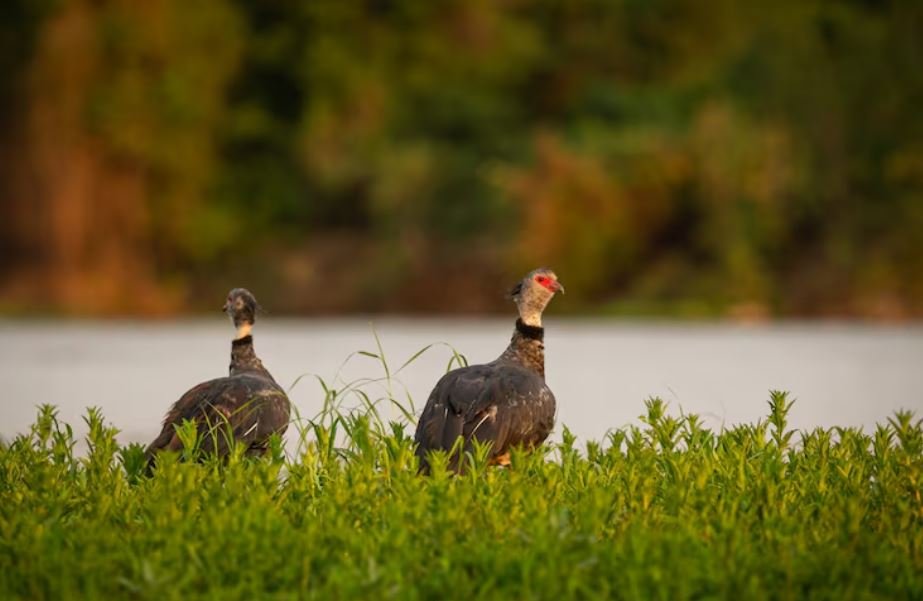
One of the more authentic examples of this change is the Lesser Prairie-Chicken Landowner Alliance, or LPCLA. A seemingly straightforward goal has brought together ranchers from Kansas, Oklahoma, Texas, Colorado, and New Mexico: save ranching to save the land to save the bird. In a short film made in collaboration with the Cornell Lab of Ornithology, Kansas rancher and LPCLA co-lead Stacy Hoeme put it bluntly: “To save chickens, we have to save the ranchers first.” That framing is important. Ranchers are not asked to give up their livelihoods in order to protect wildlife. It makes the case that the two are related.
It’s important to comprehend the economics underlying this. Compared to almost all other land uses, grassland ranching makes less money per acre. Since the 1980s, the number of ranchers in the Great Plains has decreased by half, and when a ranching operation fails, the land rarely remains grassland.
It is transformed into suburban development, energy infrastructure, and row crops. Everything that relied on the grassland ecosystem vanishes along with it. The LPCLA contends that if ranchers aren’t compensated fairly for the conservation services their land offers, such as clean water, clean air, and wildlife habitat, those services will quietly disappear until it’s too late.
The North American Grouse Partnership and the World Wildlife Fund are two organizations that operate under the same general premise. Since its launch in the Northern Great Plains in 2011, WWF’s Sustainable Ranching Initiative has assisted ranchers in implementing grazing practices that genuinely improve the health of grasslands. It has also installed fencing, dug wells in previously unreachable areas, and introduced monitoring tools that give ranchers more control over the whereabouts and movements of their cattle. Grassland songbirds are flourishing alongside cattle on the same ranchlands where, not too long ago, it was thought that grazing and wildlife couldn’t coexist. The results have been quantifiable on the ground.
These kinds of agreements, rather than top-down policies or legal disputes, may produce the most long-lasting conservation results. Ranchers who are familiar with the land they have worked for generations may find common ground with conservationists who are aware of what is being lost. Many questions remain, including whether these partnerships will be sufficiently funded by federal programs, whether enough ranching operations can continue to be profitable in the ensuing decades, and whether the lesser prairie-chicken has enough time left. The pressure on the grassland ecosystem, which is the most vulnerable on the continent, has not decreased.
However, it’s difficult not to sense that something genuine is taking place as this alliance takes shape in the southern plains’ badlands. At dawn, the bird is still dancing. That is not insignificant.
