


The final golden eagle in England did not perish in combat. Hunters, poisoned carcasses, and a spectacular final stand on a moorland ridge were all absent. At the age of twenty, he simply vanished by himself in the Lake District’s Haweswater Falls in 2016. Before that, he had been performing his aerial courtship show year after year for over ten years, diving, spiraling, and attempting to communicate his presence across a blank sky. No woman ever responded. The final eagle in England perished while waiting.
It’s difficult to ignore that picture for a second before discussing the politics of what comes next.
The British government committed £1 million in April 2026 to support the long-term reintroduction of golden eagles to England, with Northumberland being the most promising location. The initiative will be led by the charity Restoring Upland Nature, which has successfully managed the reestablishment of twenty-eight birds along the Scottish border over the course of eight years. Depending on public consultation with farming communities and landowners, chicks may arrive as early as next summer.
It seems like positive news. And it is in a lot of ways. By most ecological standards, England is among the developed world’s most depleted nations. According to a 2023 study, one in six species are currently in danger of going extinct. In recent years, the government has already supported the reintroduction of white-tailed eagles, pine martens, and beavers. As Environment Secretary Emma Reynolds pointed out, the golden eagle is a keystone species; just by being at the top of the food chain, its presence alters entire ecosystems.
This is where the conflict begins, though, and it’s important to take it seriously rather than brushing it off.
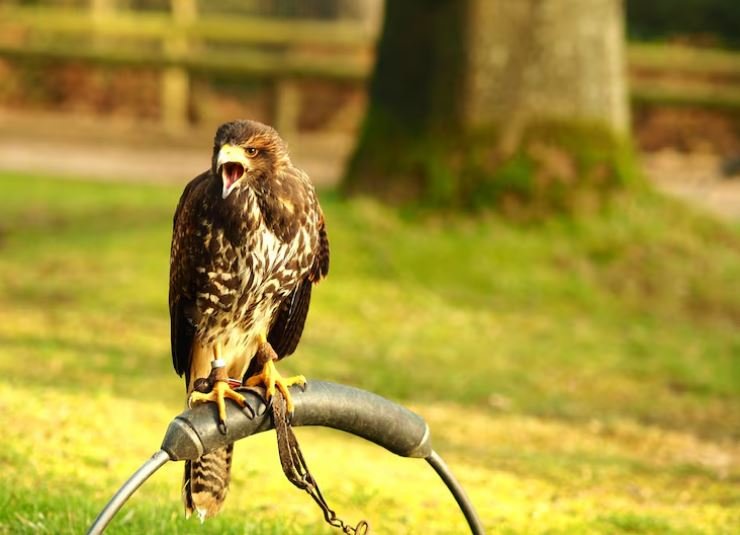
Concerns about the potential effects of an apex predator returning to those hills have been voiced by farming communities, especially those that raise sheep on upland terrain. Scientific evidence supports the ecological assurance that golden eagles cannot physically carry anything much bigger than a young lamb. Sheep that are adults are safe.
However, “emotionally reassuring to a farmer who has spent thirty years working a hillside” and “scientifically accurate” are completely different. Sometimes, conservationists undervalue the significance of that disparity. Forestry England’s species recovery manager, Ed Parr Ferris, has discussed how eagles help manage mesopredators like foxes and badgers, which may indirectly help sheep farmers. It remains to be seen if that argument succeeds in consultation sessions.
This also has a longer historical shadow. By the middle of the 19th century, gamekeepers, egg collectors, and landowners drove golden eagles out of England and Wales because they were considered a threat to livestock and grouse stocks. The Victorians were meticulous in their approach. What made a brief comeback to the Lakes in 1969 was a remnant, a tiny, brittle chapter that was never able to grow. Eventually, even that population was reduced to a single lone male. Knowing the odds were stacked against him, the birdwatching volunteers guarded his nest for decades.
Ecological restoration is not the only goal of the reintroduction program. In the words of Dr. Cat Barlow, CEO of Restoring Upland Nature, “a golden eagle can do something that a peat bog restoration project almost never can.” People may look up as a result. When someone witnesses something enormous, dark, and incredibly fast traveling at 200 miles per hour across a Northumberland sky, they may suddenly develop an interest in rewilding. That instinct is supported by a legitimate theory: charismatic species provide opportunities for greater public involvement in nature recovery in ways that more subdued, unobtrusive efforts just cannot.
How well this goes will likely depend on whether the consultation process treats the concerns of the farming community with genuine respect or as a challenge to be overcome. There is some cautious optimism in the Scottish border program. It was successful. The birds took up residence. As if scouting ahead, some have already been seen drifting south into England on their own terms.
According to most evaluations, the land in the Pennines and Northumberland is ecologically ready. The human landscape still requires persuasion. And that is ultimately where the true test of rewilding occurs, not in the hills but in the discussions that take place at farm kitchen tables and parish meetings long before the first chick ever leaves Scotland.
