


A backyard chicken coop hidden behind a suburban home has an almost pastoral quality; a few hens clucking through the afternoon is a tiny step toward self-sufficiency. In North America and much of the world, this scene has become remarkably commonplace over the last ten years. One of the fastest-growing segments of small-scale poultry keeping has been quietly constructed by urban homesteaders, hobby farmers, and families in mid-sized subdivisions. It has a healthy vibe. Most likely, it is. However, public health researchers and veterinarians are also becoming more and more concerned about it.
Property lines and good intentions are not important to avian influenza. Small, poorly managed flocks, such as those kept in backyards and on hobby farms, carry real and underappreciated risks, not only for the birds themselves but also for the larger disease landscape surrounding them, as research from Bangladesh, Pakistan, and parts of Africa has begun to make clear.
Backyard chickens that had access to pond water, shared feeding space with other species, or lived close to areas where wild birds congregated had significantly higher odds of H5 and H9 seropositivity, according to a 2022 study that covered 42 villages in Bangladesh. Here, the details are important. Risk is caused by more than just the existence of small flocks. It is the specific, everyday practices used to maintain those flocks.
The picture slightly changes but does not completely vanish in more developed nations. Millions of birds have died from bird flu outbreaks on commercial farms in the United States in recent years, and big producers are under tremendous pressure to uphold stringent biosecurity.
In contrast, backyard flock owners frequently operate without official guidance, without veterinary relationships, and without a true understanding of what highly pathogenic avian influenza looks like before it’s too late. Within a few miles of impacted farms, outbreaks often follow spikes in wild waterfowl populations, which most hobbyists would never consider tracking, according to research from the University of California Cooperative Extension.
Overstating the threat in this situation would be a mistake. Large commercial operations are not intrinsically more dangerous than small flocks. For years, some scientists have maintained that the industrial model, with its high densities of genetically similar birds, is actually the more disastrous failure point in the event that a virus does manage to infiltrate. Twelve hens in a backyard flock won’t collapse in the same manner as a facility that houses half a million birds. That’s a point worth clinging to. However, it shouldn’t be used as justification for complacency, which is the more typical path this discussion tends to take.
The hobby farm and subdivision setting is particularly challenging because it is situated in a sort of regulatory and educational blind spot. Commercial producers are encouraged to take disease prevention seriously by financial incentives, industry associations, extension agents, and biosecurity audits. None of that applies to the family who, after watching too many homesteading videos, chose to purchase six Buff Orpingtons.
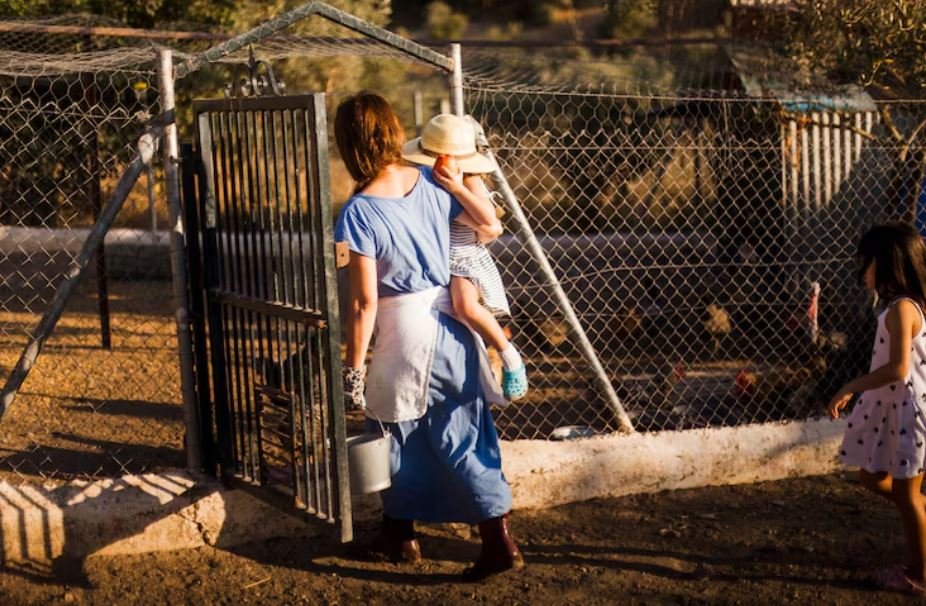
There is no system that can consistently provide them with information about identifying early respiratory symptoms in poultry, keeping wild birds out of their feed, or quarantining new birds before introducing them to a flock. In late 2024, Michigan State University extension researchers made it clear that backyard and small-scale chicken owners must continue to be watchful. It was wise counsel. How many people heard it is unknown.
Additionally, this discussion seldom touches on a geographical reality. The old lines separating residential and agricultural risk zones have been blurred by the spread of suburban development into formerly rural farmland, resulting in a patchwork of land use.
On the outskirts of a subdivision, a hobby farm is neither quite a farm nor quite a neighborhood. Because biosecurity frameworks were created for a world with clearer boundaries, they were never really intended to handle interactions like migratory birds resting on a fence line, wild waterfowl passing through a retention pond two blocks away, or the neighbor’s ducks wandering through an open gate.
Instead of depending on broad assumptions, researchers at the University of Minnesota have started creating more accurate modeling tools that map how a virus might travel through a particular farm’s environment. The field most likely needs to move in that direction.
However, it takes time to reach those who are raising chickens in their backyards in Phoenix, Ontario, or rural Pakistan—people who are acting in a genuinely reasonable manner and who, for no fault of their own, may be sitting at an intersection of geography and habits that the virus knows how to exploit. There is still a huge knowledge gap between what science is discovering and what small flock owners truly understand. The next issue most likely arises from that gap.
