


The American redstart is a small warbler found in Jamaica. It lives silently in the island’s forests for the majority of the year, eating insects while it waits for the ideal opportunity to start its arduous journey north to breed. However, that moment has been coming later and later in recent years. The insects are no longer present as they once were. The ecosystem has dried up. In an attempt to make up for time it might never fully recover, the bird waits—and waits—until it is forced to take off quickly, flying faster and harder than it should.
That tale, which was chronicled in a long-term Cornell University study, encapsulates something that has been subtly developing throughout the bird world: the calculus of migration—when to go, how far to go, and whether to go at all—is becoming more difficult to figure out. The timetables that birds have adhered to for thousands of years are being disrupted by climate change. And as a result of that disruption, a question that previously appeared to be almost philosophical is now urgently practical. When birds decide not to migrate, what happens to them?
It is worthwhile to consider the number of birds that are actually included. A little over half of all bird species do not migrate at all. Most people are surprised by that number because they typically believe that migration is the normal behavior of birds, something that all birds do when the seasons change. In actuality, resident species—those that remain in one place throughout the year—have placed a different evolutionary wager. In the hopes that food and shelter will last, they have exchanged the high energy costs and physical risks of long-distance travel for the dangers of spending the winter where they are.
That wager made sense for a long time. Birds that live there don’t have to travel thousands of miles. They don’t have to deal with storms over open water, predators hiding along flyways, or the confusing expanse of lit-up cities. By most biological standards, migration is truly cruel. According to studies, a bird’s annual mortality rates are highest during its spring and fall migrations. Many birds just don’t return.
Thus, staying put makes sense. The logic was developed for a world that is no longer quite real, which is the issue.
Resident birds’ habitats are changing due to the same climate forces that are interfering with migratory timing. Insect populations are affected by warmer winters. Changing rainfall patterns alter which plants bear fruit and when. An out-of-date map is being used by a bird that evolved to know precisely when food would be available in its home range.
Observing this in various research studies gives the impression that local species are being caught in a slow-motion squeeze that is real enough to appear in population data but not dramatic enough to make headlines.
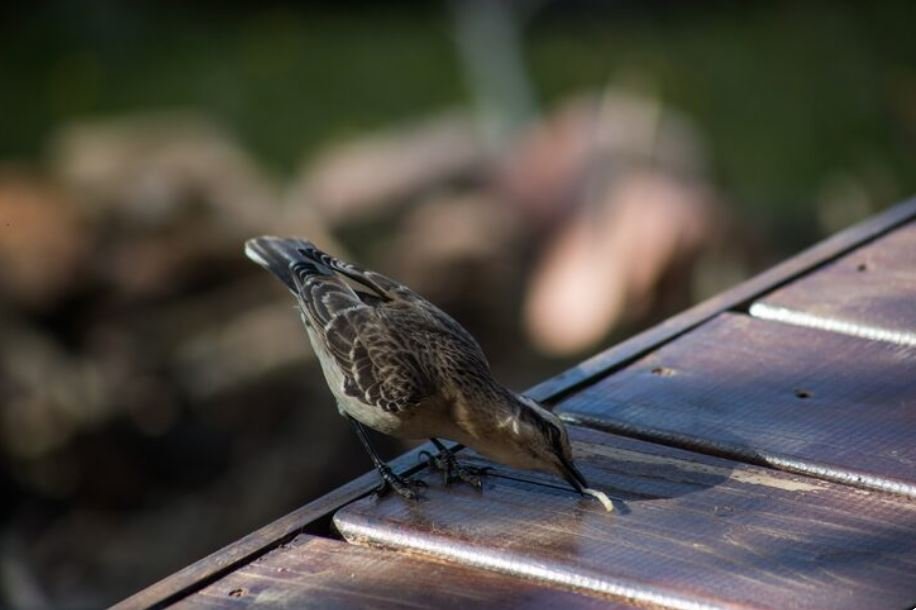
Despite tracking a migratory species, the American redstart study is useful in this context. It discovered that birds that postponed leaving Jamaica could migrate up to 43% faster in order to make up for it, but this speed was accompanied by a decline in overall survival of more than 6%. There are costs associated with even partial compensation. Those figures are not abstractions for birds that may only have one or two opportunities to breed and only live for a year or two. They are existential.
The trade-offs are different but equally significant for resident species. They bear the cost of commitment rather than the cost of migration. When those factors change, a bird that has staked its survival on a particular forest patch, seasonal food source, or local climate pattern is completely exposed. Theoretically, migratory birds can change their range by traveling the entire circuit north or south in response to climatic shifts. Birds that live there take longer to geographically adapt. They are rooted in a way that sometimes feels less like stubbornness and less like wisdom.
However, non-migration may be more adaptable than it appears. It’s possible that partial migrants—species in which some individuals migrate while others do not—represent the most adaptive strategy of all. For example, wood storks don’t follow a set schedule; instead, they move according to the availability of food. Certain finches react to seed crops by changing their range. An increasing amount of research indicates that behavioral flexibility—the capacity to react instead of adhering to a predetermined script—may be more important than whether a species migrates at all.
Looking back at all of this, it appears obvious that the birds that are succeeding aren’t always the ones using a specific tactic. They have the flexibility to change. The American redstart is capable of pushing its boundaries. Certain local species are subtly changing their habitats or food sources. The birds that are already at the edge of their range, their habitat, and their biological ability to react are the ones that are of concern. Staying put is neither a wise nor a risky decision for them. It’s the only remaining action.
