


A small group of volunteers wearing hi-vis vests are already counting dead birds on the downtown streets of Dallas before the majority of the city is awake. Tucked up against building bases, warblers, sparrows, and doves are occasionally covered in ants and occasionally barely alive. One of the worst offenders on their circuit is the 72-story Bank of America tower, which is made of glass and light. One morning, a wren was discovered outside it; it appeared to be sleeping. It wasn’t. During the night, it had struck the building at full speed.
America’s migration season has a dark side that most city dwellers are unaware of. One of the main causes of a wider decline in bird populations is building collisions, which are thought to kill about a billion birds annually in the United States. There are about three billion fewer birds in North America today than there were in the 1970s, a figure that scientists have called astounding. Although there are numerous factors contributing to this decline, the issue of building collisions is one that cities can, remarkably, address rather quickly.
Lights Out mandates, which require city-owned buildings to turn off or dim unnecessary lighting during the peak spring and fall migration windows, are a result of this realization. In late 2021, New York City passed two such laws requiring buildings owned and occupied by the city to turn off outdoor lighting between 11 p.m. and 6 a.m. during migration periods. According to some estimates, Chicago’s program, which has been in place since 1995, saves about 10,000 birds every year just in the city’s business district. More than 45 cities currently have active Lights Out programs, and the number is still rising, according to the National Audubon Society.
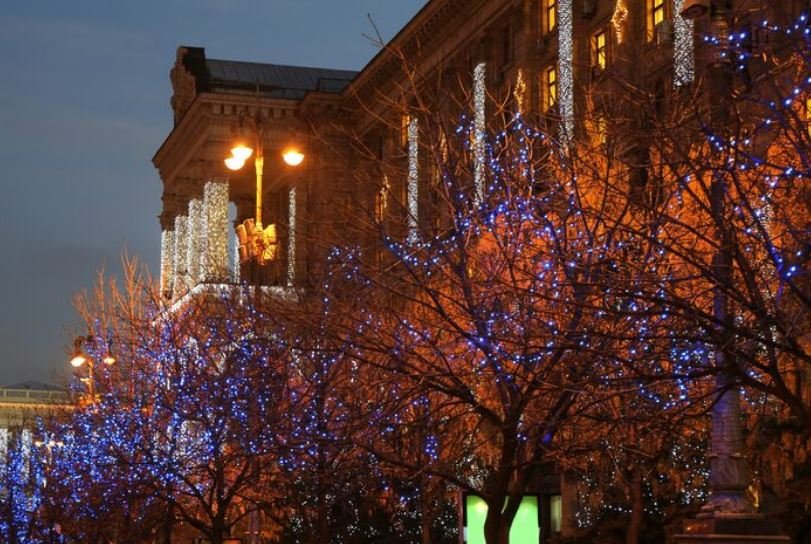
The science underlying these initiatives is quite simple. The majority of migratory birds use the moon and stars as a guide while traveling at night. According to data from the NYC Bird Alliance, city lights confuse them and cause them to veer off course from a distance of up to three miles.
After being lured into an urban setting, birds that survive the night encounter a second danger at dawn: reflective glass that reflects the sky and trees, providing no sign of a solid surface in front. According to research from the Cornell Lab of Ornithology, collisions in a single Chicago building during spring migration were reduced by roughly 60% when only half of the windows were dimmed. When ground-level spotlights were turned off during the yearly 9/11 Tribute in Light, dense clusters of confused birds dispersed almost instantly, according to a later study conducted in New York.
The most remarkable thing is probably how quick and inexpensive the solution can be. Turning off a light doesn’t require new technology, a lengthy regulatory timeline, or a substantial budget, in contrast to stopping habitat loss or slowing climate change. Collisions at one monitored site in Philadelphia decreased by 70% as a result of a voluntary Lights Out program. As is frequently the case, inertia proves to be the largest barrier; buildings may switch management, voluntarily sign on only to quietly withdraw a few years later, or simply never take part because no one asked.
For publicly owned buildings at least, this is one of the reasons proponents have advocated for formal mandates rather than voluntary programs. Some conservationists still believe that the laws that have been passed thus far fall short. Although city-owned buildings are covered by New York’s current ordinances, a third bill that would have expanded regulations to private properties stalled in 2021 and hasn’t moved forward since. Commercial Manhattan’s bright skylines, which have some of the highest recorded bird mortality rates, are still mostly ignored.
The situation is especially dire in Dallas, which is located on the central flyway and sees an estimated one in three migratory birds pass through Texas each spring. Local activists are pressuring the city’s convention center to install bird-safe glass during its ongoing renovations, and Reunion Tower has voluntarily turned down its lights during peak migration. Although uneven, progress is real. One Texas Conservation Alliance organizer claims that “Dallas is still very bright,” and it’s difficult to dispute that.
In all of this, there is something worthwhile to sit with. Cities invest a lot of money and energy in their illuminated skylines, which serve as symbols of vitality, wealth, and ambition. Additionally, billions of birds request that those same cities just become a little darker twice a year for a few weeks at a time. Measurably, birds perform better in areas that have paid attention. As it happens, one of the simpler things we can do is to turn off the lights. It’s still genuinely unclear if enough cities will decide to do it.
