


Today, if you stroll along a section of the California coastline, you may notice something that doesn’t feel right before you can identify it. The cliffs are not as noisy as they ought to be. It appears that the water is calm. However, if you follow the tideline long enough, you’ll find them—loons, grebes, and pelicans—lying on the sand with their bodies unharmed and their feathers intact. In a storm, they didn’t wash up. They just went hungry.
Scientists claim that this prolonged marine heatwave, which has been off the West Coast for more than a year, is one of only three that have lasted this long in recorded history. The cold-water fish that seabirds rely on, such as krill, anchovies, and sardines, do not go extinct when surface temperatures rise in this manner. They sink. They withdraw into the colder, deeper water below, which is inaccessible to surface-diving pelicans. Food isn’t what’s left on top. It’s just empty, warm water.
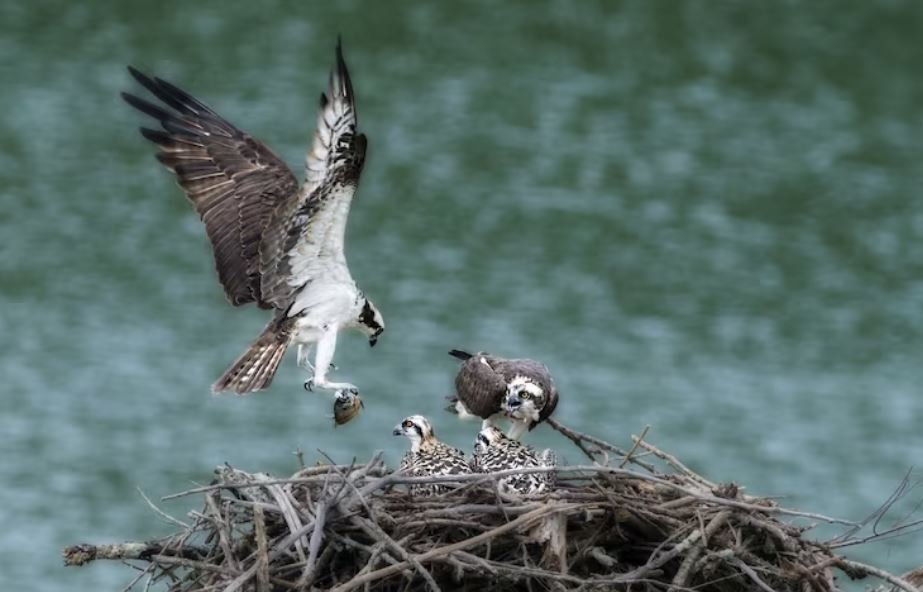
The timing couldn’t be worse. Parent birds require the most fuel during nesting season, not only for themselves but also to continue feeding young that are not yet able to hunt. Scripps Institution of Oceanography researchers at UC San Diego have reported seeing cormorants enter the beach and perish in fifteen minutes. Not ill birds. birds that are not hurt. Only birds with nothing left. Long before anything washes up on land, that type of death occurs slowly and silently out at sea. It’s highly likely that the number of carcasses on the beach is only a small portion of the total.
Who is dying is what makes the current situation more difficult to ignore. Scientists might treat it as typical attrition if it were limited to young birds, the inexperienced ones that consistently struggle during their first season. However, mature adults are washing up with them. That’s the detail that makes this season something to be taken seriously instead of just a bad one. This is also the reason why scientists are currently hesitant to provide assurances. An impending El Niño could raise ocean temperatures even further, according to NOAA. An estimated four million common murres, or more than half of the species’ Alaskan population, perished during the Blob, a similar marine heatwave that occurred between 2013 and 2015. The population hasn’t fully recovered yet.
This is part of a larger pattern that has been developing for many years and extends far beyond California. Emperor Penguins have been observed to skip breeding seasons in the Southern Ocean due to warming water. As water temperatures rise in the North Atlantic, a tiny oil-rich copepod that is barely the size of a rice grain has decreased, along with the sandeels, herring, and mackerel that terns and puffins depend on.
The timing of the first plankton blooms in the Bering Sea has shifted due to warming, which has an adverse effect on cold-adapted diving birds throughout the entire food chain. Although the mechanism varies by location, the result remains consistent.
Certain species may be able to adapt. This year’s study on black-legged kittiwakes in Alaska revealed that, in certain situations, birds with high energy demands during breeding can make up for it by migrating farther the following season, seemingly replenishing reserves and producing more chicks the following year. However, the high-effort birds‘ survival rates fell to 67% from 83% in the control group, indicating a severe trade-off. There is a price for flexibility. Furthermore, it is not a long-term strategy to absorb that cost year after year for species that are already under stress. Simply put, the decline is slower.
There have been five species of tropical boobies observed migrating northward; these birds have no place in California waters. Their arrival demonstrates how drastically the Pacific’s thermal map has changed. It’s not just that the ocean is warmer. The birds that inhabit its edges must decide whether to stay and perish or pursue a coastline that might not remain cold long enough to matter as the ocean changes.
Because the science requires it, researchers speak carefully. However, there’s a sense that cautious language is beginning to feel insufficient as you stand on the edge of this story and watch a system that took millions of years to balance itself get knocked sideways in a matter of decades. To put it simply and without drama, one postdoctoral researcher told the Associated Press, “We don’t know how bad this is going to get.”
It’s probably worth sitting with that sentence more than any dataset.
