


There is a mid-rise office building in Makati that dates back to the early 1990s and still has the original aluminum-framed single-pane windows. The building’s air conditioning system struggles against the glass on a Tuesday afternoon in April when the heat index slightly rises above 40 degrees Celsius. Until you’re seated on the wrong side of that wall, it’s a minor detail that is simple to ignore.
Beneath the glittering skyline of Metro Manila, this is the quiet reality. For many years, glass has shaped the aesthetic aspirations of Philippine commercial architecture. However, an increasing number of engineers, architects, and property managers are starting to pose a more difficult query: what if the glass we used for construction wasn’t the proper glass in the first place?
In Metro Manila, there isn’t much discussion about urban glass retrofitting. It is not guided by a government mandate or a single spokesperson. It does, however, possess momentum—slow, pragmatic, incremental momentum. Businesses are replacing their outdated clear glass facades with low-emissivity or double-glazed ones. Building owners are realizing that maintaining the status quo is costly due to the convergence of energy costs and carbon commitments. The industry seems to be coming to a conclusion that it may have ought to have addressed earlier.
In crowded urban settings, retrofitting windows is rarely simple. Replacing glazing systems frequently requires managing budgets that weren’t initially planned with retrofitting in mind, navigating tight access points, and coordinating around active tenants in a city like Metro Manila, where buildings cram into Ortigas, BGC, and Quezon City. The technical difficulty is genuine. The price is the same.
Nevertheless, the case for doing so continues to grow. In tropical regions, glass serves as both an aesthetic material and a thermal and acoustic barrier that directly influences a building’s energy consumption. In the Philippines, cooling loads are greatly increased by outdated glazing, which results in massive monthly and annual electricity costs. The payback period for contemporary glazing systems is frequently shorter than building managers anticipate when architects and engineers do the math.
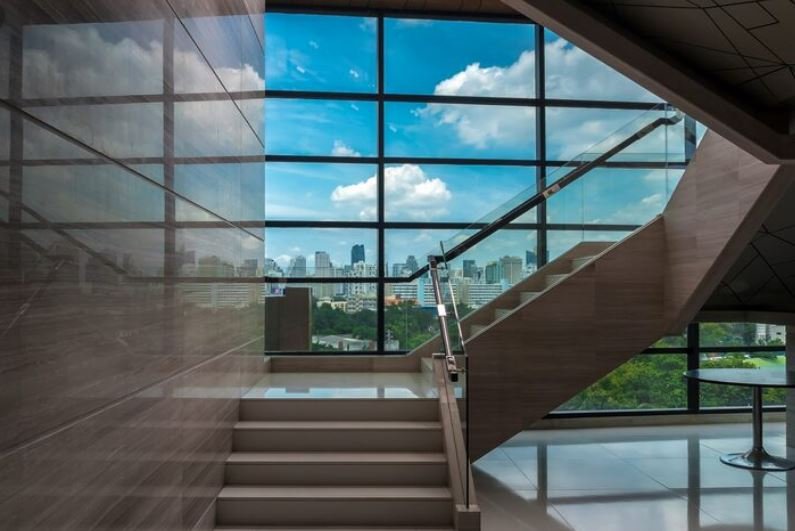
The impact of globalization on architectural glass choices in this region of the world is another issue. International design standards were widely adopted throughout Metro Manila with little consideration for the local climate. The humidity and sun intensity of the South China Sea cause a curtain wall system intended for a temperate European city to behave differently. During the development booms of the 1990s and early 2000s, glazing decisions may have been influenced more by aesthetic aspirations than by thermal realities.
Instead of viewing the retrofitting problem as a purely technical solution, some companies are tackling it with true design ambition. Improved framing systems, bird-safe glass patterns, and context-sensitive specifications that take building orientation and shading into consideration are all being worked on. When done correctly, the outcome is more than just a building that is more efficient. It’s a structure that works better for its occupants and has less of an impact on the surrounding environment.
Metro Manila still has a long way to go. Even though this movement is necessary, it will take years to register in any quantifiable way due to the sheer amount of aging commercial stock spread across its seventeen cities. Whether national or local governments will launch a concerted policy push to hasten the transition is still up in the air. Project by project and client by client, the change is currently occurring.
However, there’s a sense that something has changed as you watch it happen, whether it’s in the specifications that cross architects’ desks or in the discussions about lifecycle costs between engineers and property managers. Beyond just reflecting the sky, the city is starting to consider what its glass was really doing.
