


The Golden-cheeked Warbler, an endangered bird, spends its winters in the pine-oak hills surrounding the colonial city of San Cristóbal de las Casas in Chiapas, Mexico, rather than in some isolated cloud forest. Below, tourists stroll along cobblestone streets. Diesel smoke and noise fill the markets. And this little yellow-faced bird finds what it needs somewhere above it all. When you sit with it, it’s an odd image. A nearly extinct species, picking a city.
The reason that detail keeps coming up is that it subtly challenges a widely held belief that wildlife and cities are mutually exclusive. In the absence of the other, that one flourishes. An increasing amount of data indicates otherwise.
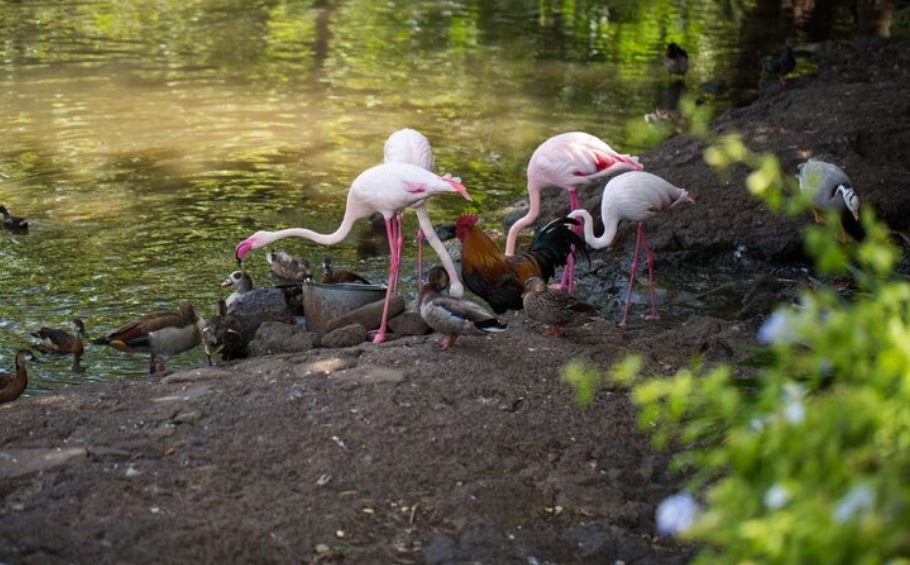
In most cases, urbanization had a positive effect on biodiversity, both directly and indirectly, according to a study that looked at over 1,500 cities worldwide. Most conservation narratives don’t tell that story. The standard version includes concrete, extinction, and habitat loss. Furthermore, that version is accurate. However, it is not complete. Because some species have been becoming extremely adept at coexisting with humans in tandem with that pressure, a phenomenon that has largely gone unnoticed.
They are sometimes referred to by researchers as urban adaptives—species that actually take advantage of city life rather than just tolerating it. Peregrine falcons build their nests on the ledges of skyscrapers. In London, red foxes are picking up the beat of the garbage collection routes. Coyotes moving through Chicago’s highway interchanges with what appears to be intentional patience. These creatures didn’t wait for conservation regulations. After they adjusted, they remained.
What that means for the larger picture of biodiversity is worth considering. Over half of the world’s population currently resides in cities, and over the next 20 years, that percentage is predicted to rise to 70%. There is no slowdown in the trend of urbanization. This implies that the wild species that make it through this century will frequently be the ones that learn to live with seven billion neighbors, artificial lighting, pavement, and traffic noise. Whether we agree with that or not, it’s probably true.
Urban wildlife is often viewed in conservation circles as a consolation prize, something to cherish while the “real” nature vanishes elsewhere. However, it is getting more difficult to defend that framing. Not all of the internationally acknowledged critical locations for the protection of species are located in isolated wilderness. Some are situated inside or close to cities. For thousands of waterbirds traveling through the Atlantic flyway, including endangered White-headed ducks, the Bay of Cádiz in Spain, which is encircled by urban areas, is a vital refueling stop. Municipal boundaries don’t matter to these animals.
What matters to them is whether a city’s green areas are connected, whether its parks are maintained for both wildlife and aesthetics, and whether the water flowing through them is clean enough to sustain a food chain. Green corridors, such as tree-lined streets, riverside walkways, and connected parks, are consistently identified by research as some of the best strategies for promoting urban biodiversity. From Baltimore to Amsterdam, cities that have made these investments exhibit wildlife communities that are significantly richer than those that have not.
Additionally, the argument for urban biodiversity is not just ecological. People who live close to a variety of plants and animals report lower levels of stress, stronger immune systems, and better mental health outcomes, according to numerous public health studies. Greener cities are cooler. Vegetation by the side of the road reduces noise. The aquatic creatures that most people never consider are essential to clean urban waterways. Cities’ biodiversity follows a functional logic unrelated to sentiment.
It’s still unclear how much of the future will be shaped by intentional conservation design and how much will belong to urban adaptives. Most likely both, in unpredictable ways. However, there is a sense that the relationship between nature and the built environment is more negotiable than the old narrative implied when one observes how some species have adapted to city life, not just surviving but, in some cases, thriving. We’re still catching up to what the warbler in Chiapas seems to know.
