


In central Ohio, a hawk builds its nest close to a highway overpass. For years, the locals have observed this red-tailed hawk, which appears to be in good health and unaffected by the traffic below. They fail to notice what scientists have begun to more thoroughly record: birds that nest close to high levels of noise pollution lay fewer eggs, raise fewer young, and in certain situations completely alter their calls, compressing frequencies to be heard over the cacophony. The hawk is not adjusting with grace. It’s making up for it. There’s a distinction.
One of the more subdued ecological issues of our day revolves around that distinction. Not the dramatic elements, such as pictures of burned forests or oiled pelicans, though those are also important. This relates to something that is more difficult to capture on camera. It concerns what happens when the environmental cues that wild animals have depended on for millions of years start to malfunction, gradually rather than all at once, in ways that confuse rather than kill.
Animals use a complex system of biological cues to navigate their environment. Magnetic fields are read by migratory birds. Salmon locate their birth rivers by tracking chemical traces in the water. Elephants can communicate over kilometers of savannah by using infrasound, or low-frequency rumbles. Whales sing in patterns that reverberate across whole ocean basins. These are not straightforward actions. They rely on a world that remains roughly readable, and they are precisely calibrated systems that have been shaped over evolutionary timescales.
The world is becoming unreadable. Researchers are still working to fully understand how noise pollution from shipping lanes interferes with whale communication. Sea turtle hatchlings are drawn inland toward highways by light pollution rather than seaward toward the ocean. This phenomenon is well-documented along Florida’s Gulf Coast, where volunteers have spent decades attempting to reroute confused animals. It has been demonstrated that air pollution modifies migratory species’ behavioral patterns by disrupting timing cues that dictate when and where animals move. It’s possible that even minor disturbances, compounded over generations, are creating animals that are marginally less precise and attuned in ways that don’t manifest in population counts until it’s too late.
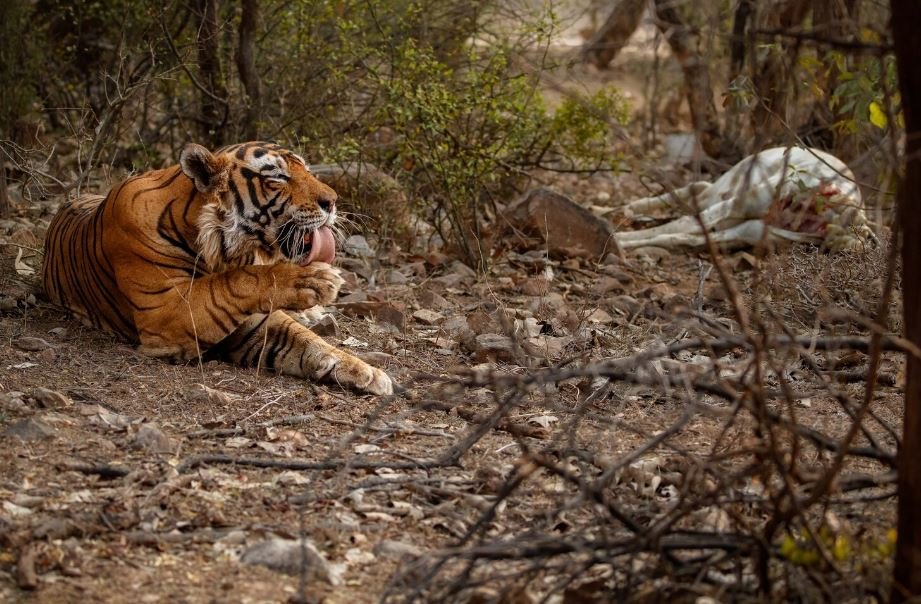
This is especially challenging to track because the disruption doesn’t appear to be disruption from the outside. When an elephant herd is driven into a broken stretch of land between two farms, it still appears to be an elephant herd. To a casual observer, a pod of dolphins that have been driven from their typical feeding area due to underwater noise still appears to be a pod of dolphins.
The breakdown occurs internally, as evidenced by the stress hormones that flood their systems, the slightly altered navigation, and the breeding behaviors that change when their sensory environments become unreliable. Fast-paced environmental change has been shown to put strain on wildlife’s immune systems, hormone balance, and ability to reproduce. These are not impersonal issues. They result in animals that are more prone to illness, have less consistent reproduction, and live in smaller populations.
This is further complicated by habitat fragmentation. Animals lose more than just territory when forests are divided into patches and grasslands are broken up by roads and fences; they also lose the continuity of the environment that their instincts were designed to perceive. Human settlements have disrupted the hunting ranges of African wild dogs.
Caribou find it difficult to follow migration routes that have been disrupted by development. There’s a feeling that we’ve altered the environment more quickly than evolution can adapt, and every decade, the difference between what an animal’s instincts anticipate and what the real world offers widens.
The worry isn’t speculative. Over the past fifty years, wildlife populations have decreased by more than two thirds. That number includes a variety of factors, such as poaching, overfishing, and direct habitat loss, but it also represents a more diffuse issue that is more difficult to attribute to a single human choice. It is the total weight of an increasingly bright, louder, chemically complex, and fractured world. Animals still have some instincts. However, those instincts are sending signals that are no longer entirely coherent because they are functioning in an environment for which they were not intended.
It’s difficult to ignore the potential long-term consequences of that mismatch, not only for the affected species but also for the ecosystems that rely on them to continue operating as they always have. When a migratory bird arrives two weeks late, it has an impact on more than just itself. It has an impact on the insects it eats, the plants those insects would have pollinated, and the animals that consume those plants. It is truly challenging to model how the disruption spreads. However, it’s evident that the internal compass that wild animals possess, developed over millions of years of evolutionary pressure, was never intended for the environment that humans have created for them. And we’re still constructing.
