


A record of nearly 4,300 years of environmental history can be found deep within a cave in northwest Jamaica, hidden beneath layers of brown paste that most people would quickly leave. About 5,000 bats, who have been feeding, roosting, and leaving their waste on the same cave floor since the early Bronze Age, are the authors of that record. A seemingly insignificant fact turns out to be something much more important. Scientists are starting to understand that these accumulated layers of guano may provide answers to issues that no satellite, sensor, or climate model has been able to fully address, such as how animal migration patterns are changing in the contemporary era.
This may seem like a stretch. However, the underlying science is not as strange as it might seem. Guano builds up in distinguishable layers, much like sediment cores extracted from lake beds or ice samples extracted from polar glaciers. Every deposit records a moment in time, including the food the animals consumed, the chemicals floating in the air, the agricultural activities taking place in the area, and—most importantly—which species were present and in what patterns. Over the course of centuries, those snapshots accumulate into what appears to be a comprehensive journal—one that was not intentionally written but is surprisingly readable.
After extracting a 129-centimeter guano core from that Jamaican cave, a team from the University of Ottawa under the direction of PhD candidate Lauren Gallant discovered an almost overwhelming amount of detail. Following the Industrial Revolution’s coal combustion, lead levels increased after 1760. Mercury first appeared around 1400 B.C., most likely as a result of pre-Incan societies in the Andes of Peru engaging in mining.
Carbon isotope shifts documented the Taíno people’s arrival and their planting of maize, followed by Columbus’ introduction of sugarcane. The world was holding its breath during the Cuban Missile Crisis in the early 1960s, when cesium-137, a radioactive isotope only produced by above-ground nuclear testing, peaked. Environmental geochemist Chris Wurster of James Cook University said, “It really is a remarkable change in the chemical record,” after reviewing the study.
A more nuanced aspect of this same chemistry is pertinent to the study of migration. Guano’s isotopic makeup reveals not only what the animals consumed but also where they traveled to consume it. Bats and migratory seabirds obtain their food, as well as the chemical signatures it contains, from ecosystems that may be hundreds or thousands of kilometers away.
These animals take traces of those far-off environments with them when they return to their roosting or nesting locations. Changes in those signatures over time may indicate that animals are using different routes, going to different locations, or traveling at different times than their ancestors did.
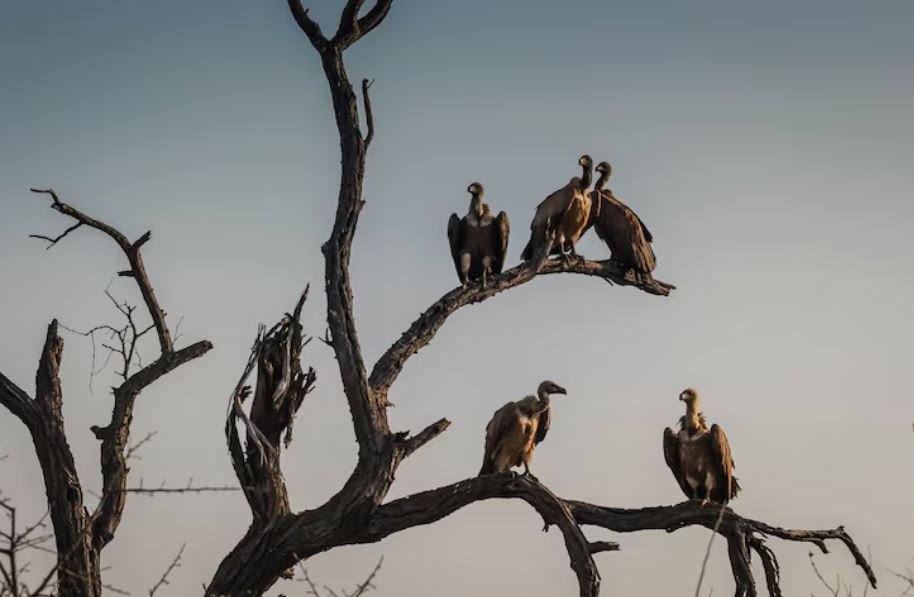
Researchers are cautious not to exaggerate what the guano record can verify because this type of inference is still evolving. There is a real distinction between demonstrating that migration routes have changed and identifying a change in diet chemistry. However, the circumstantial evidence is growing. Seabird colonies that used to regularly nest at locations close to Peru’s coast—the same birds whose droppings were historically mined so violently that Spain and Peru went to war over the Chincha Islands in 1864—show layered chemical changes that correspond with known disturbances in fish populations and ocean temperature. The birds seem to have followed their food. The guano recalls the source of that food.
Early in 2026, new archaeological findings were published, giving this tale a new angle. Nitrogen levels in maize samples from ancient Peruvian burial tombs were so high that only intentional seabird guano fertilization from the neighboring Chincha Islands could account for them, according to a University of Sydney study. It appears that controlled access to bird droppings was a major factor in the Chincha Kingdom’s agricultural and political dominance. It serves as a reminder that guano has always contained more economic, ecological, and now increasingly biological information than people realized.
Ancient guano archives are especially valuable because of their resolution. Guano layers allow for highly accurate radiocarbon dating in ways that are more difficult to accomplish with stalagmites or lake sediments. The deposition is regular and yearly because bats roost in the same places every year. A colony discreetly submitting its environmental report, season after season, without being told to do so, has an almost dependable quality.
It seems like science is just now starting to pay attention to these archives. Some of the deposits, which date back hundreds of thousands of years, have been examined from caves in Kurdistan, Romania, and the Philippines. Due to the same agricultural appetite that fueled the guano trade in the 19th century, the majority of prehistoric guano has long since been harvested and dispersed throughout farmfields. What’s left is limited and brittle. Now, the question is not just what these layers can tell us, but whether enough of them will endure long enough for the appropriate questions to be posed.
