


Seeing a long-held belief subtly crumble under the weight of evidence brings a certain kind of satisfaction. The wildlife photography community upheld a fairly strict hierarchy for years, with full-frame at the top and everything else being tolerated. Smaller sensors, smaller bodies, and smaller lenses made up Micro Four Thirds systems, which were thought to be more appropriate for novice or travel snappers than for serious practitioners tracking raptors across open ridge lines or chasing kingfishers at dawn.
That view is getting very old. When you spend actual time at a mountain trailhead or wetland reserve, where photographers congregate before first light, you begin to notice something. The bags are becoming more compact. They have shorter lenses. Furthermore, many of the photographers carrying those small equipment are skilled, methodical, and producing work that can withstand close examination; they are not amateurs hedging their bets. After years of investment, some people switched from Canon and Nikon systems, and they’re not going back.
Once you’ve driven a full-frame setup through challenging terrain, the appeal is easy to comprehend. A 600mm full-frame lens of professional quality can weigh nearly five kilograms by itself. You’re carrying something more akin to a tiny piece of furniture up a mountainside when you include the body, a tripod, and the remainder of a field kit.
Micro Four Thirds completely alters that calculation. A 300mm lens can provide an equivalent reach of 600mm thanks to the effective 2x crop factor, and it may weigh less than 1.5 kg. The entire equipment fits in a hiking daypack, leaving space for a rain jacket and water.
There is more to portability than just comfort. It’s imaginative. Photographers of wildlife who are adept at quick movement, stealthy repositioning, and handholding in difficult situations—such as crouching in reeds or leaning around a boulder—will be able to capture images that someone positioned behind a bulky tripod-mounted rig simply cannot. More than most gear discussions realize, the ability to be mobile, responsive, and physically present in a scene is important.
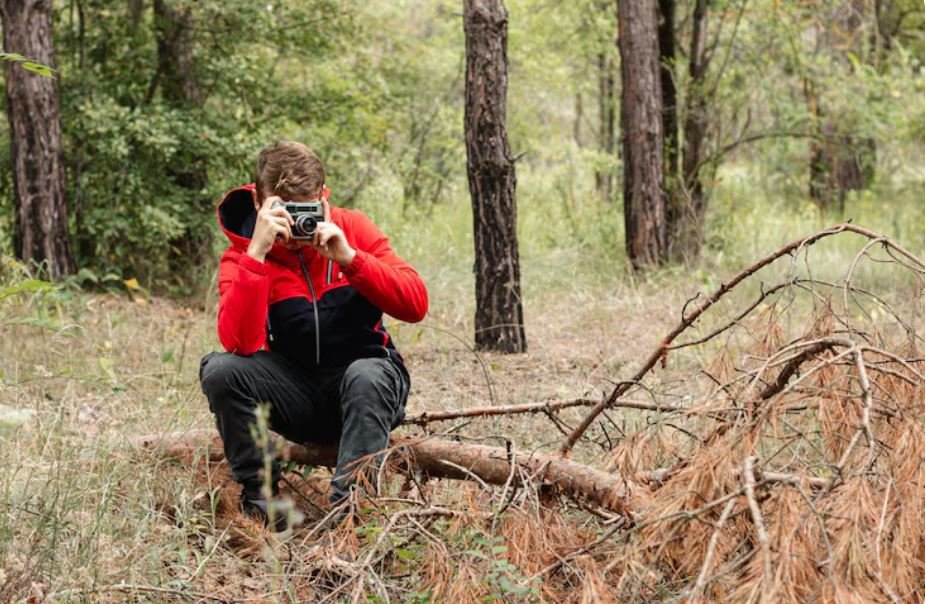
Since the sensor size issue does arise—and not always in an unfair manner—it is worthwhile to address it head-on. Smaller sensors do have more difficulty at high ISOs, and there is a noticeable difference between MFT and full-frame in truly bad light. However, backcountry wildlife photography rarely requires the highest level of low-light performance, particularly when it comes to bird work in open spaces. The majority of field photographers actually work in conditions like golden hour, bright overcast skies, and midmorning shade. The performance gap has been significantly reduced by modern MFT sensors from OM System and Panasonic, and wildlife shooters now have a functional advantage unrelated to sensor size thanks to computational features like Pro Capture, which pre-buffers images before the shutter is fully pressed.
Additionally, it is more difficult to reject the cost argument than the full-frame community occasionally implies. The cost of a 600mm f/4 lens in a full-frame system is approximately $13,000. The cost of an MFT system’s equivalent reach is much lower. This is important for a professional who works as a photographer. It is even more important for an enthusiast who wishes to undertake significant backcountry work without taking out a second mortgage.
The way the conversation has changed is almost funny. When Micro Four Thirds were disregarded in wildlife circles a few years ago, very few people took notice. Photographers who made that claim in public are now publishing corrections and acknowledging that they tested the equipment and ended up eating humble pie. This includes at least one well-known educator who wrote for a major camera publication. In photography communities, where brand loyalty can be surprisingly strong, such an honest reversal is uncommon.
It doesn’t appear that MFT is inherently better. The compact sensor system offers a truly compelling set of trade-offs for backcountry and field wildlife photography, where reach, weight, and mobility interact in complex ways. This is something more specific and possibly more useful. Not for all shooters. Not under all circumstances. But for more circumstances than the general consensus ever acknowledged.
The size of your sensor is irrelevant in the backcountry. It doesn’t matter if you arrived, stayed long enough, or received the shot.
