


An English summer is characterized by a certain sound, a rising, insistent phrase that older country people sometimes refer to as “a little bit of bread and no cheese.” It originates deep within the tangle of bramble and hawthorn, somewhere low in the hedge. For the majority of British agricultural history, the song of the yellowhammer—a small bunting with a head that appears to be dipped in egg yolk—was merely background noise, unremarkable as birdsong tended to be in a landscape full of it. These days, you have to look for it in many places.
Over the past 25 years, the number of yellowhammers in Britain has decreased by about half. The species is on the RSPB’s red list, which is a serious designation. It indicates that the decline has been severe, persistent, and not clearly reversing. Even though a number of factors have come together to affect the bird, such as decreased winter stubble, more effective grain harvesting, and the use of pesticides that destroy the insects and seeds that chicks rely on, the loss of hedgerows lies beneath it all like a fault line.
In a significant way, some of Britain’s hedgerows are old. Certain hedge structures on Dartmoor are older than the Pyramids of Giza because the reaves, or stone-and-earth banks, were built during the Bronze Age. Even the smaller hawthorn borders that unite the English Midlands are frequently centuries old, and the ecological complexity that has developed over that time cannot be swiftly replicated. These are more than just shrub lines. It was once discovered that over 2,000 different plant and animal species were visible to the unaided eye in an 85-meter section of a well-grown Devon hedge. After reading it, that figure stays with you for some time.
Britain lost about 25% of its hedgerow network between the 1940s and the 1990s, or about 4,000 miles annually at its height. Malice was not the cause. It was equipment. Combine harvesters require space to rotate. Prairie-scale fields are necessary for prairie-scale cereal farming. Additionally, hedges take time to manage and compete with crops for nutrients and moisture. The hedge was a liability when the post-war food policy prioritized maximum yield over all other considerations. The landscape that took their place was cleaner, more effective, and much quieter from an ecological standpoint after thousands of miles were cleared.
For the yellowhammer to survive, a hedge must be dense, wide at the base, and messy enough to offer true cover rather than a well-kept box of clipped greenery. If the surrounding structure is thin, the birds are extremely vulnerable to predators because they nest low, near the ground.
Size—height, width, volume, and the presence of trees—is the most important factor, according to studies on hedgerow birds. A flailed hedge provides nearly nothing of value to a nesting yellowhammer because it is cut hard each year with a revolving flail, leaving it sparse and flat-topped. The map still shows it. It simply no longer serves as a habitat.
When you speak with those who work in this field, you’ll notice how frequently the word “management” is used—not because there aren’t any hedges, but rather because of how the ones that are are handled. Rotational cutting lets a hedge grow outward and thicken by trimming it only every two or three years instead of every year.
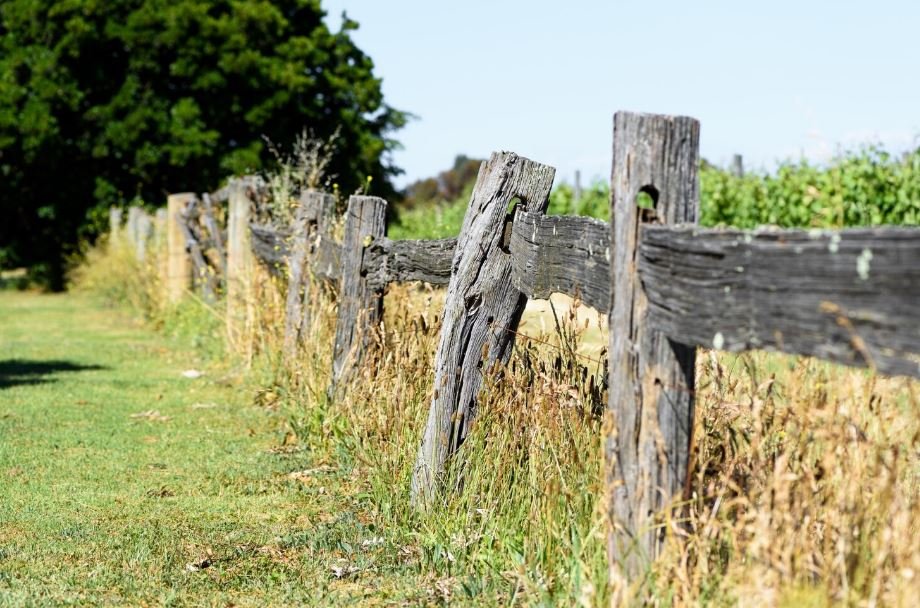
The hedge base’s wide, uncultivated margins provide ground-level cover for nesting birds. These interventions are not difficult. In relation to the scope of the issue, they are comparatively inexpensive. However, without national policy and funding to support it, effective hedgerow management is unlikely to spread widely, as researchers have observed for decades.
A tidy hedge is a dead hedge is a saying that has been around for a while among wildlife observers. It captures something genuine even though it sounds purposefully provocative. The desire to maintain the appearance of managed rural land, such as clean verges, cropped shrubs, and straight lines, goes against what hedgerows really need to do. For a yellowhammer, what appears to be neglect from the road can mean the difference between a viable nesting cover and nothing at all.
In some parts of Scotland and the North of England, the yellowhammer can still be heard singing along field margins where the hedge has been allowed to do what hedges have done for 5,000 years: grow tangled, complex, and impenetrable in the best possible way. Instead of feeling like a recovery, it feels like a stay of execution. Decisions made at the level of farm management and agricultural policy, which may not seem related to a little yellow bird singing into an April sky, are crucial in determining whether it develops into something more than that.
