


A certain type of photograph is one that refuses to give itself up right away. You glance at it once and feel something, but you’re not sure what it is. You take another, longer look, and something else comes to light: a detail you overlooked, a tension you initially failed to notice. Such pictures are common among the Hasselblad Masters winners of 2026. And that seems to be the main point more than anything else.
One of the more understatedly prestigious competitions in the field of photography is the Hasselblad Masters of Photography. It has real weight among professionals, but it lacks the cultural clamor of some other awards. Over 108,000 photos from photographers in 160 countries were received this year; this volume indicates how many people are currently working seriously in the field and how important it is to be known by a name like Hasselblad. In each of the seven categories—landscape, portrait, street, architecture, art, wildlife, and Project 21, which is only open to photographers under 21—participants submitted three-image portfolios.
Before the Grand Jury took over, a shortlist of seventy finalists was created from that huge pool. In the end, seven photographers prevailed. A Hasselblad medium-format camera, €5,000, and an invitation to contribute to the biennial Hasselblad Masters book—a publication that serves as a kind of time capsule for the state of serious photography at any given time—are given to each recipient.
Grand Jury Chair and Executive Director of the Hasselblad Foundation Kalle Sanner explained what brought the winners together in a way that sounded less like competition jargon and more like a real observation: the best photos defy simple interpretation. The viewer who stays is rewarded. Sanner said, “Photography’s real power lies not in what it shows, but in what it withholds, reframes, and quietly insists upon.” It’s a statement worth considering because it clarifies why some photos endure while others vanish the instant you turn away.
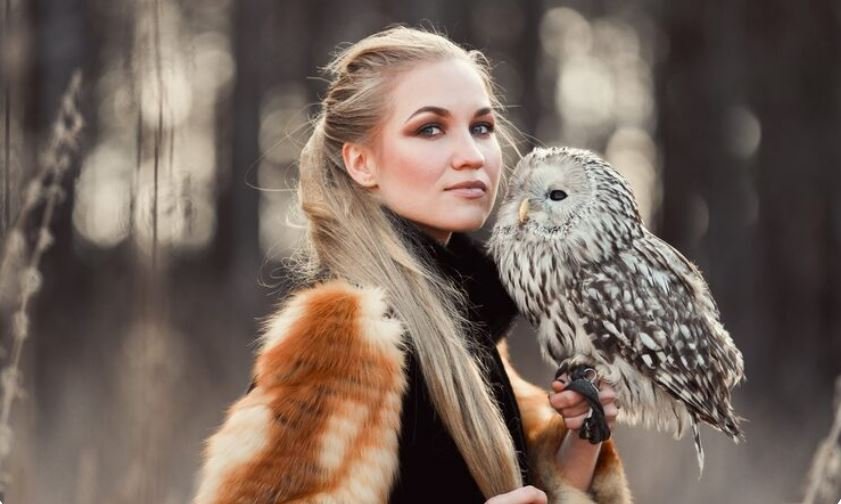
A certain level of patience has always been drawn to the Wildlife category. This year, Alfred Minnaar won it with a series called Dwellers of the Night, a body of work that views nocturnal animals as presences to be comprehended rather than as subjects to be recorded. The portraits defy the trophy-shot tendency that can reduce wildlife photography to mere spectacle because they are multilayered in both technique and intent. They give the impression that the photographer waited for the animal to stop posing for the camera, not just for the ideal light or time. It is difficult to determine whether that reading is completely accurate. However, something in the pictures begs for it.
The 2026 winners were covered by Kate Mothes, the arts writer for Colossal, the widely read platform for contemporary art. Mothes has experience in art writing, editorial work, and curatorial practice. Finding the thread that makes technically challenging photography feel approachable without oversimplifying what makes it worthwhile is a skill that Mothes’ coverage of the Hasselblad Masters exemplifies. Mothes has spent years introducing challenging or layered visual work to wider audiences. When a competition like this generates work that functions, in Sanner’s words, on multiple interpretive levels at once, that framing is important.
Irish photographer Rohan Reilly, one of the other winners, won the Landscape category with his series Ephemeral Visions, which revolves around a row of poplar trees along the Italian River Po that are submerged in still water under gentle, diffused light. The trees serve as barriers against flooding. In Reilly’s photographs, they also take on an almost surreal appearance, completely losing their functional appearance. It’s the kind of change that requires years of planning, including researching weather trends, coming back year after year, and waiting for unmanageable circumstances. With Otherness, a study of young twin women from the Netherlands that employs stillness and near-symmetry to pose subdued questions about identity, Svetlana Jovanovic won the Portrait category.
Taken as a whole, the 2026 Hasselblad Masters are intriguing because not much of the work feels ostentatious. There are no dramatic encounters with the sublime or bursts of color. The competition appears to have shifted—or possibly always has—in the direction of something more constrained and challenging. pictures that need to be seen. Work that, when you turn away, doesn’t finish explaining itself.
It’s more difficult than it seems to accomplish that. And that might be the reason why only seven photographers won the title out of 108,000 submissions.
