


For twenty years, wildlife photography was characterized by a certain sound. The swift, decisive, and distinctly real mechanical clap of a mirror rising inside a DSLR body. Long waits on riverbanks, innumerable mornings spent in chilly hides, and the momentary choices that distinguish a good frame from an exceptional one were all accompanied by it. Now that something truly better has emerged to replace it, that sound is fading, not because it failed anyone.
In wildlife photography, the transition from DSLR to mirrorless cameras was gradual and most definitely not the result of advertising campaigns. It occurred as a result of autofocus systems becoming so advanced and quick that it became genuinely challenging to defend the mechanical limitations of mirror-based cameras in the field.
Phase-detection autofocus via the optical viewfinder gave the DSLR an unquestionable advantage in wildlife photography for many years. Early mirrorless systems just could not match its speed, dependability, and predictability. Photographers who invested thousands of dollars in Nikon’s 600mm telephoto glass or Canon’s EF 500mm had every reason to remain stationary. The glass was outstanding. The bodies were long-lasting. Additionally, there was something reassuring about viewing the world through a viewfinder since there was no electronic interpretation between your eyes and the scene.
However, producers of mirrorless products were moving forward. Sony took the lead and made significant progress, incorporating phase-detection pixels throughout the sensor and developing subject-tracking algorithms that got better with each firmware update. With its R-series bodies, Canon eventually introduced the R3 and R5 Mark II, cameras with animal-eye tracking so dependable that photographers who had spent years perfecting manual focus adjustments came to rely on the device. To be honest, the ease with which these systems focus on a cheetah speeding over uneven terrain or lock onto a bird’s eye through foliage still surprises me.
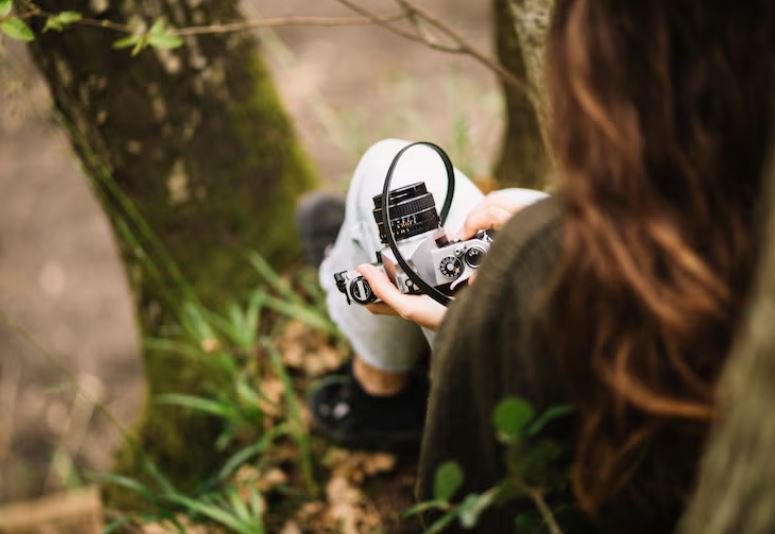
The case might not have been resolved by the autofocus argument alone. Weight was ultimately the deciding factor for working wildlife photographers. When combined with a current-generation 500mm lens, a contemporary mirrorless body can weigh nearly a kilogram less than the corresponding DSLR kit. That number is an abstraction on a day shoot in flat terrain. It becomes very real on the third morning of hiking through swamps in Botswana or trekking through steep terrain in East Africa. Longer days, more patience, and better photos are all possible with lighter equipment, and patience is the most valuable asset in wildlife photography.
Silent shooting is another issue. Modern mirrorless cameras with electronic shutters make no mechanical noise at all, and there is a discernible change in wildlife behavior as a result. When a DSLR runs silently, animals that flinch or flush at the constant crack of its mechanical shutter stay calm. It may not seem like much until you see it in action.
What the DSLR was is not diminished by any of this. Used bodies are now reasonably priced entry points for novice photographers, and Nikon’s D500 and D850 continue to be genuinely capable cameras. Even when modified for more recent mirrorless mounts, Canon’s EF glass continues to function flawlessly. The technology simply stopped advancing rather than collapsing. Years ago, Canon acknowledged that the development of lenses for the EF mount was virtually complete. Nikon did the same. Mirrorless platforms have become the focus of nearly all R&D resources, and this trend is continuing.
However, it is important to be truthful about what has been lost during this change. Even excellent electronic viewfinders can’t quite match the directness of an optical viewfinder for every photographer. Mirrorless systems still require additional planning for battery life. Additionally, the sheer amount of legacy DSLR glass—decades of industry investment—represents a kind of optical legacy that the more recent mounts are still striving for.
However, tools that eliminate barriers between the photographer and the moment are more valuable in wildlife photography than in almost any other field. These are not incremental conveniences, such as shutters that are silent enough to not disturb a nervous bird, autofocus that tracks an animal’s eye through broken light, and bodies that are light enough to carry for ten hours. They are what distinguish a shot from a near-miss.
The mirror lived a long and fruitful life. It was simply replaced by something faster.
