


When conducting research, there’s a moment that makes you stop cold. The kind where a scientist looks at a GPS track on a screen and says, aloud, to no one in particular, “That can’t be right.” This is not the kind that immediately makes headlines. That’s essentially what happened when a Swansea University team observed streaked shearwaters, which are tiny, graceful seabirds weighing only 580 grams, fly straight into a typhoon’s eye.
Not away from it. In its direction. After eleven years of tagging adult shearwaters in the Sea of Japan, one of the world’s most cyclone-prone areas of open water, the discovery was published in the Proceedings of the National Academy of Sciences. The birds were able to fly in any kind of wind. As their speed reached typhoon strength, they continued to soar. Additionally, some birds tracked the storm’s eye for hours at a time during the strongest storms, sometimes getting as close as thirty kilometers to the eye wall, where winds reached speeds of over seventy-five kilometers per hour.
This wasn’t carelessness. Apparently, it was survival math. A specific geographic trap is created by the Sea of Japan. Birds foraging close to Japan’s Honshu coastline become trapped between the approaching storm and land when a cyclone approaches from the southwest. In that case, flying away from the storm’s center entails flying with the wind, which makes sense until you realize those winds are pushing in the direction of the coast. It’s not just awkward when a shearwater lands uncontrollably. Predators, collisions, and the nearly impossible ability to take off again from solid ground await on the other side, making it potentially lethal.
Instead, the birds soar into the mayhem. It’s the kind of choice that seems crazy until you consider your options.
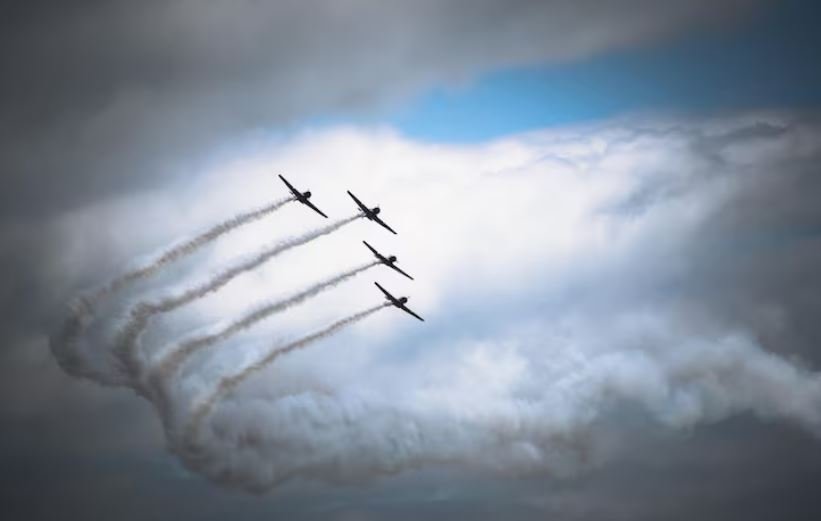
This is made possible by the shearwater’s unique flying style, which also links this behavior to the much broader discussion about changing jet streams and climate change. Instead of depleting their own reserves, these birds are dynamic soarers that draw energy from the vertical wind gradient. They are in their element when there is a strong wind. However, that equation is evolving. The winds that these birds have evolved to take advantage of are arriving in different ways, at different angles, and during different seasons as jet streams move closer to the poles and storm systems grow larger and more frequent.
Changing wind fields may make seasonal migration more difficult for many species, especially the southward autumn push, according to earlier research, including work highlighted by BirdCast and others monitoring migratory patterns under future climate scenarios. Instead of relying on dependable tailwinds, birds are discovering crosswinds. The cost of energy is not insignificant. Depending on the circumstances, flying against or across a headwind may require about twice as much energy as riding a favorable current. That difference can mean the difference between a bird arriving and not arriving at all when it travels thousands of miles across open ocean.
The rate at which populations will adapt is still unknown, as is whether the term “adaptation” accurately describes the demands placed on them. Importantly, young shearwaters do not have the “map sense” that adults acquire over many years at sea. They have an innate sense of compass. They are unable to determine the location of the land and make adjustments when a storm strikes. Thousands of young birds wash up onshore after cyclones, disoriented, exhausted, and unable to get back up. This phenomenon has been documented in wrecks throughout Japan and beyond.
That picture has a subtle sobering quality. In order to prevent something worse, adult birds that have spent years learning to read the wind and the ocean fly strategically toward the most hazardous area of a storm. Young birds wind up on beaches because they follow their instincts. Beneath it all is a wind environment that is gradually but noticeably rearranging itself in ways that the nervous system of no shearwater was designed to foresee.
The researchers observe that both flight ability and navigational knowledge seem to influence the ability to respond to cyclones. Climate-accelerated storm intensification puts pressure on that combination—learned, accumulated, and hard-won. The likelihood of that knowledge failing, the math failing, and the energy budget running out somewhere over an increasingly unpredictable sea increases with the frequency of extreme events.
